Are You Prepared to Lead Gen Z's Introvert Wave?
Get Promoted Without Becoming Someone Else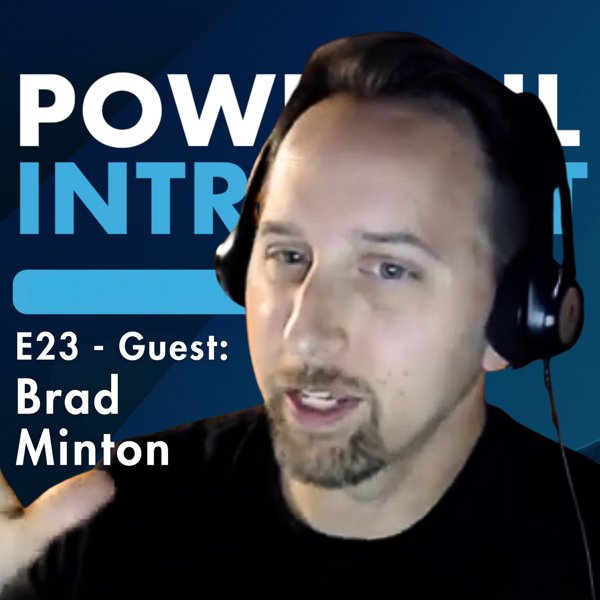
Brad Minton, career counselor for Gen Z and founder of Meant to Be Career, shares findings from his work in higher education and career coaching suggesting that Gen Z skews dramatically toward introversion—driven by COVID, hyperconnected social media culture, and a values shift toward authenticity and purpose over conformity. He argues this creates a coming wave of introverted talent entering the workforce, and that organizations and leaders who understand introvert strengths will have a significant competitive advantage. His own story—from quiet kid to karate instructor to career counselor—models exactly the kind of non-linear, quiet-authority leadership path he now helps others navigate.
It's not what you know, it's who knows that you know what you know.
Many young adults strive for independence—they want to be the commanders of their own life and buck the idea that there's a prescribed way of doing things.
We've got brilliant, brilliant thinkers, extraordinary creative minds who are not the loudest in the room, and you have to take advantage of these assets and make sure they have a space and a medium to bring that genius out.
Key Stories
- The 70% Classroom: Brad ran a personality-type poll across five high school senior classrooms and found roughly 70–75% indicated introvert preference—far above the general population estimate. He wonders whether this reflects genuine introversion, post-COVID communication comfort, or a cultural shift in what’s considered ideal.
- Brad’s Karate Journey: Starting at age 9 as a quiet kid who didn’t know where he fit athletically, martial arts gave him a structured path to teach and lead—where teenagers looked up to him even as adults trained alongside him—proving that leadership ability doesn’t correlate with age or volume.
- The Client Who Pivoted to CrossFit: A 24-year-old banking employee, passionate about fitness, transitioned to coaching CrossFit after only two to three years in finance—a Gen Z entrepreneurial move that Brad champions as exactly the kind of authentic, purpose-aligned career pivot this generation is uniquely positioned to make.
Techniques & Frameworks
- “It’s not what you know, it’s who knows that you know what you know”: Brad’s upgrade to the old networking adage, emphasizing that depth of relationship—not quantity of contacts—is what generates real opportunity.
- Career GPS: Brad’s coaching philosophy of helping people map their own path rather than following a prescribed route, particularly relevant for Gen Z who resist one-size-fits-all career ladders.
- Martial Arts as Leadership Lab: Brad recommends activities like martial arts as intentional leadership development contexts outside work—communities where you teach, receive feedback, compete, and lead across age groups in a psychologically safe environment.
Full transcript
Just because winter pests are out of sight does not mean they are gone. Many insect-state active indoors, while ants begin waking up as the soil warms. That combination makes late winter and early spring a key time for prevention. Bloom Pest Control helps homeowners get ahead of pest activity with care you can trust and sell Luciens built for the season. Protect your home now before pests get comfortable. Get a quote today at bloompestcontrol.com, Bloom Pest Control, the health of your home starts here. Number 195971. When you’ve got Omaha Stakes convenient everyday protein waiting at home. That what’s for dinner panic turns into your weeknight win. And now’s the time to buy during the Omaha Stakes Spring Savings event. Save big on their exclusive lineup of mouthwatering steaks, gourmet burgers, air chilled chicken, pork, seafood and more. Go to OmahaStakes.com for an extra $35 off when you use promo code audio at checkout. That’s OmahaStakes.com, promo code AUDIO. Terms apply, seasite for details. Many young adults strive for independence. They want to be the commanders of their own life and buck the idea that there’s a prescribed way of doing things. They like to be able to have ownership and control of what their destiny is. That doesn’t mean that they can’t work with other people. Far from it, it just means that they’re not going to buy into this belief that you have to climb the corporate ladder and you have to do things the way that previous generations have done. Welcome to the powerful introvert podcast. I’m Greg Wanger. I’m here today with Brad Minton. He is a dedicated career counselor for Gen Z, my favorite generation, who provides what he calls career GPS. He helps them explore and find their path to career fulfillment. I’m still looking for that, so maybe you can close on that. Brad transitioned from a career in therapy to career development back in 2011. And he’s worked in higher education and then more recently has launched his own successful business meant to be career. He’s the host of the your career GPS podcast, which covers careers, personal branding, networking, job searching and things like that. So welcome to the show, Brad, really great to have you. Thank you, Greg. Excited to be with you today. So as you know, this is the powerful introvert podcast. So the most pressing question is, are you an introvert or an extrovert? I’m a proud introvert and it is something over time that I’ve definitely come to learn and embrace what my particular brand of introversion really is, just like anything else. Even amongst introverts, we can be quite different in terms of how it expresses in our life and the things that we draw meaning from and how those attributes really manifest in our work. Love the introvert pride where it is, is our badge here. I imagine this had an impact on your career. How’d you get into therapy? Yeah, you know, I’ve always been one of these people that have this hyper mentality, just kind of hard-grained into my DNA. When I was a kid, I wasn’t the best student, but I was always that one that was willing to help the teacher out. You know, willing to go the extra mile if they needed help cleaning up after class or participating in a particular project. I would be very quick to volunteer. Not always quick to lead, but quick to help and support a particular thing. And so I just kind of knew that I was just a helper over the course of time, kind of really reflecting on what I wanted to do with my life and my career. I love conversations. I love talking to people. I love learning about their past, their interests, what excites them. And I really enjoy listening. And so it made a lot of sense to me as I was kind of going through high school. I took my first psychology class and I said, wow, this is really cool. And that really led me on my academic journey and ultimately got my bachelor’s in psychology and then a degree in counseling with the intention that I was going to be a therapist. And did you end up pursuing that for a while? I did. Yes. I was born and raised in Virginia. Grow up there. Started my career there. And in 2008, I was on the path of starting a family and looking for sort of a new adventure. And my wife is from Michigan. And so when we realized our family was going to grow, we decided to make the move to Michigan where she was from originally to be closer to her family. I had a lot of work in mental health here for a period of time. I was working in a residential treatment facility working with adolescents who were coming from difficult circumstances. And I had this sort of treatment protocol of what I was supposed to do because a lot of these were court order. They were in the juvenile justice system. And so there was a lot of reporting, a lot of things like that. That was really where things kind of pivoted for me. But of everything that I could work with them on and address, I loved the topics about education and career. Every one of the adolescents who were there had to have that built in their treatment plan. And I just started taking an inventory of like, that’s the only thing about this work that’s really exciting me. I mean, the rest of it’s okay, like building relationships. But just that one really, really lit the spark and then it led me to believe, I don’t know if this is right for me. If this is where I’m meant to be and no pun intended. And so I made a little bit of your company. Exactly. And so I made a little bit of a detour. I said, you know, maybe school counseling is where I’m supposed to be. So I actually ventured off into that with the hope of getting into the K through 12 system and working with kids. Because I still enjoyed working with youth, but maybe less in that mental health capacity. And it was at that time, I just happened to meet someone who was in the higher ed space. And just a random chance meeting we’re having a conversation. And she says, if you ever thought about being a counselor with a college and I was like, no, that really wasn’t on my radar. And it’s so crazy how things like that happen. And that literally changed the trajectory of my life because she told me about a job opportunity. I applied for it. I’d like to say that she probably had a good hand in me getting it. And I stayed in higher ed for 10 years. I loved it. And I just really, really fell in love with having those conversations about their goals, their ambitions, what they want to achieve, what they want to do. I love kind of seeing people become who they aspire to be and being a part of that. So you started out helping people in really difficult situations, as if struggling with mental health and tough life situations. I think seeing the excitement of what is going to really help them out of that, that leverage them out of that is really altering their career path. It could actually really change the course of their life. That part excited you and that led you to helping people in general to do that. And I understand you also do pro bono work. So you’re still giving back into these communities for people who can’t necessarily afford that. Yeah. Right now it’s a little bit of everything. And so really found this calling where I can lead into coaching, having that future focus, being very people centric in every aspect that I do. So presently I have three simultaneous roles that really allow me to do that. I work for an educational services agency in Wayne County. And my work there is kind of cool. It’s a little bit different because it’s on that education path where students are graduating from high school and then trying to figure out what’s next. So I get the opportunity to have career conversations, but also help with post-secondary enrollment, credential attainment, being able to connect them to trade programs and things that really are in alignment with who they are. Their strengths, their capabilities and the goals that they have for their life. I’ve got my business meant to be career where I get to work with individuals that are not just in the Metro Detroit area. I’ve got clients from Pennsylvania and Texas and California and things like that. So I’m not limited location wise and I get to meet the most interesting people doing that, providing career coaching remotely. One of the other things that I know we were maybe going to talk about was martial arts. It’s been a part of my life and my world since I was 9 years old. I get to train and coach young martial artists in their journey to being competitors. Awesome. Yeah, definitely. Come back to that. I think when we talk about leadership, but first I wanted to talk a little bit about Gen Z. I have two kids in Gen Z in 19 and 21. I just love so much spending time with them and their friends and hearing their perspectives on life. It’s so different from my generation. What is your experience working with Gen Z? How do you perceive their differences from past generations? Yeah, it’s really interesting because I’m in that middle ground. I’m a millennial, a little bit of an older millennial. And there’s some sort of neat characteristics that I think many young adults have. It’s the sign of our times that they strive for independence. They really want to be the commanders of their own life and buck the idea that there’s a prescribed way of doing things. They like to be able to have ownership and control of what their destiny is. That doesn’t mean that they can’t work with other people far from it. It just means that they’re not going to buy into this belief. And I say them generally speaking because everybody’s different, but it’s not always going to buy into this belief that you have to climb the corporate ladder and you have to do things the way that previous generations have done. Many are sort of entrepreneurs in their own right. Whether they own a business or not, they’re thinking about their own ventures. They’re seeing themselves through social media as influencers. Even if they don’t have like millions and millions of followers, they see themselves more as a brand in that respect. They’re very conscious of what they put out there and making sure that they like the finished product. But one of the cool aspects of my job is being able to get them to think about that from a personal standpoint and shifting it to professional. Seeing how that actually intersects, being able to create fun TikToks and Instagram reels and things like that leisurely is great. How could you even intersect that with the things that you’re passionate about that you could pursue a career in and what would that look like? And they want to be aligned with a purpose. They want to feel like what they’re doing actually matters is making a difference. It’s something that’s equity driven. It’s inclusive. It’s for the betterment of the world or betterment of society. They want to feel like they’re part of a group or organization that really cares about what they care about. Much more so than previous generations where it was like, well, I could work for any job and get a paycheck. And it didn’t necessarily have to have that serious alignment. But feeling like the people who run those organizations really get that and are part of it. Yeah, I think a lot of that ties together the need for mission for kind of a control, filling us to just follow a script, play by the rules and interest in improvising, doing things differently, the social media awareness and then wanting to have a more mission driven, surface driven kind of career. It seems like those are pretty tightly bound. So how successful do you see them? You know, I think even back to my generations, you’ve had idealism and you’ve wanted to do that. How much of that is idealism versus a really different viewpoint that is very likely to shift the culture? That’s a good question. You know, I don’t know. It’s very interesting. Some of the conversations or discussions about generational changes and how they see the world, I mean, gosh, in my kids’ lives, my kids are under 16, but gosh, what have they lived through? You know, I’ve got two kids that are Gen Z and then one who’s probably Gen Alpha. So we’re kind of making that transition into the newer generation. But I mean, Lord, going through a recession, experiencing the numerous conflicts that we’ve had overseas, the political turmoil, the COVID pandemic, I mean, it just seems like every couple of years, there’s some big mass shootings in schools. There’s so many of these big, really defining events, but they’ve all happened in such quick succession. For my generation, it was 9.11. That was a big thing that sort of impacted our perceptions and how we saw the world and what we deemed important. But with this group, it’s flooded. It’s all the time. It’s in our consciousness all the time. The news is extremely negative. And you see all these terrible things that are happening all over the country and the world because that’s the images that we get on a cost of basis. And if it’s like, well, if I’m going to control my own destiny, if I get to choose what I do with my life and my career because I’m fortunate enough to live in the US, then I’m going to be happy doing it. You know, I want to do something that’s going to fulfill me personally because there’s so many variables out there that I can’t control. Absolutely. I see that and I was taking a little bit of a devil’s advocate position. I absolutely believe this generation is different and they are going to change the world. Just in terms of career, so you’re helping them on this journey, their career journey. They’re really starting to enter the workforce now. What kind of career challenges are they experiencing? One of the biggest challenges that I have seen on a consistent basis with a lot of the college grads that I’m working with is the ability to step out of the comfort zone. I don’t know for whatever reason it just seems to be a little bit tougher and it could be because this younger generation has grown up online. They’ve grown up in a situation where there could be a little bit of a barrier sort of speak between you and another person. Going through COVID forced us to interact and change the way that we approach things and it gives people an out. I don’t have to force myself into those maybe uncomfortable situations even if it’s to my betterment. Going to a career fair. Even though logically that might be a really, really valuable thing to do, but it’s uncomfortable right, even regardless of introversion, extroversion. Extroversions that don’t want to do is that thing like that. Those high return types of things, reaching out to professionals at prospective companies that you have interest in trying to build your social capital because I think one of the things that they do struggle with is feeling as though they have something of value to offer and feeling as though when doing professional networking, it’s this belief that it has to be almost like this transactional kind of thing where you give me something, I have to give you something and they go, I have nothing to give. There’s a lot of misconceptions about what professional networking is and feeling like they have to be this really polished version of themselves who has it all figured out and are really just ready to go and that leads them with a deficiency mindset when they’re going into it. Super interesting. One thing I’ve observed is there’s much more awareness about your mental health and your personal capacities and there is more willingness to take care of themselves and say, oh, I’m not feeling up to this. I’m just going to stay in it. That would have never occurred to me. There is a social thing going on. You go, it doesn’t matter how you feel or you go to school, it doesn’t matter how you feel. I was raised by boomers and you suck it up is really the message and this generation wasn’t brought up with that. Even if we were treating them like that, everything they saw online would be like, don’t let your parents treat you like that. We didn’t have these resources. There’s a lot in that that I think is super healthy and admirable and there’s also realities that you face. Those things are challenging and like you said, if you’re an introvert, those are going to be even more challenging and you’re just not used to putting yourself out there in that way. I think that’s a little bit of a double-edged sword there that’s interesting that you’re observing that. Yeah. You’re absolutely right. I don’t remember what the exact statistic was, but it was something really, really interesting not too long ago that came out about how many Gen Z individuals will actually bring a parent with them to a job interview. The need for that safety net, it’s actually startling that does happen. It’s this real reluctance to be able to push past those things even though they could mean more productive outcomes. A lot of times it’s just being able to build up to that work into that and understand the potential gain and the potential benefit that comes from it and so it’s really demystifying it. That’s good. You start to help people with that and I see a lot of parallels between this and just helping people who are quieter naturally and people who are introverted because just reflecting on my past experience when I was younger events are extremely uncomfortable. But through exposure, advice, you gain much more comfort with these things and you think about what’s the impact you want to have and so you gain some motivation and then you know, there’s all kinds of things you can do. But I don’t know how different that would be for anyone who’s feeling that discomfort. So it seems like it’s just a cultural shift in general in the direction of introversion may be enabled by the shift to online and these life-shaping events. COVID in particular I think it’s got to be a little dramatic impact. It’s certainly on my kids in their lifetime. Yeah. Yeah. I’m very curious about it. I’m really, really fascinated. I actually went into a classroom. This was last year. This was really, really fascinating to me. If you were to just sort of guesstimate the general population, right, you’d probably say that maybe about half lean towards introversion, half lean towards extroversion, you know, you would just maybe naturally assume that. But I was actually doing a presentation classroom with seniors at a local high school and we’re talking about that. We’re talking about personality preferences and it was kind of related to the MBTI and how to use that in terms of, you know, career choice and sort of understanding natural tendencies and work environment. Myres and myres. Yeah. Yeah. Most famous, right? Yeah. And so made it sort of interactive to where it kind of like a kuhut style where students could actually use their phones and they could type them based on the results of the assessment, what their personality types were. And we did this across, I think, five different classrooms. I would easily guesstimate that 70, 75% indicated that they were introvert preference. Interesting. Yeah. Yeah. But again, talking about the generation, this was the generation that was going through COVID and pivotal social development timeframes. And so it was very curious to me and it made me kind of wonder where they kind of answering those questions based on their communication styles now, what feels comfortable to them now or is that really how they would like to be is that more kind of as a consequence to where they needed to be at that point in time. So I don’t know. It just, it kind of brings up more questions. It’s super interesting because the way society feels about a traversion or extroversion is it’s cultural. You go to Asia and the quiet is the ideal. And you know, it’s it’s abhorrent here. Oh my God, he’s too quiet. He’s not talking up. I’m finding this super fascinating because this could be a shift in our culture and as that comes through, it’s an introvert wave that’s coming through our culture and there’s going to be a lot of people who are really upset and maybe unnecessarily so because we’ve been so overly fixated on extroversion. Yeah. I love it. I would agree with that. I think it’s an opportunity. It provides a really, really great opportunity as we do things a little bit more in that virtual space to be able to make sure that diverse voices are seen and respected. And I think a lot of the best organizations are really embracing that and understanding that an inclusive work environment is going to benefit the entire organization. We’ve got brilliant, brilliant thinkers, extraordinary creative minds who are not the loudest in the room and that you have to take advantage of these assets and make sure that they have a space and a medium to be able to bring that genius out. Absolutely. And that’s part why I’m here doing this work and we’re also counting on you, Gen Z, as we said, especially as the older generations retire. So I’m excited for that. Brad, I wanted to ask you a little bit more about your martial arts work. How did that influence your own leadership? Oh, geez. So martial arts is just such a really amazing story in the context of my life. I do kind of think about this often. I’ve always been kind of the quiet kid just naturally being an introvert but also just being quiet. I was just prefer listening. I just preferred taking things and reflecting before I took action. As a young kid, I was athletic in sports but I just didn’t know where my fit was. And I remember my mom had told me about this new karate school that opened up and offered to take me and so started there and I just said, wow, this is really, really cool. And over the course of time, as I was kind of going through the classes, working up the ranks, I realized that this was a strength. This was one of those opportunities that you don’t often get in school as a child to be able to learn a particular technique, learn a form, learn a fighting technique or what have your weapon and then be able to immediately get back to somebody else who doesn’t. Be able to provide guidance and support for younger belts. And that’s one of the things that martial arts, I think, does really, really well. It provides teaching opportunities to those that maybe wouldn’t usually teach and allows them the capability to give their unique brand of coaching and development to other individuals. And so within one school, you’ve got all these different ranks, all these different levels, all these different years of experience, all converging together and doing the same thing. And that’s just really cool. And so over time, even as a teenager, getting my black belt very early, working through the ranks, competing, I was seen as that amongst my peers, even amongst the other adults. I’ve had many adults at the time who were in their 20s, 30s and 40s who were training with me as a teen who said years after the fact that like, I’ve looked up to you, even though like you were way younger, it was just so humbling to be in a position like that where I could be younger. And that really lifts you up and makes you feel extremely valuable to know that what you provide to other people isn’t correlated with your age. It’s about what you do and the power of your example. It was a fantastic opportunity for you, for anyone who’s quieter opportunities for leadership and teaching and really realizing your potential and probably that you didn’t realize you had. And now as I’ve transitioned into adulthood, I took time off of martial arts to get my degree to start my career. But when I was starting a family, it just made so much sense to get back into it, to revisit the roots or to speak and then get my kids involved. And that’s one of the coolest attributes that I get an opportunity to see now is the fact that from a different perspective, being able to see my kids go through the rank and then also them be able to teach, to coach, to be able to support younger kids. My son is 13, extremely, extremely talented. Does competing and everything like that. But I see how awesome he is with some of the younger kids. And it’s just the coolest thing is just, and he’s a quieter kid too. He’s a little bit more of a reserved, cautious, analytical kind of a kid. But man, I mean, he’ll come out of his show when he’s in that Doge Anglore. That’s cool. And so fitting that this is all coming out of an Asian tradition or these values are esteemed that way and they created a structure to support people in this way. Pretty cool. Absolutely. Do you ever steer people who you advise on the career counseling side in that direction? Yep. Sometimes, sometimes I can certainly vouch for how those things impact a person. Just a mental health standpoint. I think it’s just overall having some sort of outlet, having something outside of work, outside of school that allows you to join a community, to maybe get some physical exercise even better and allows you to be able to do certain things that maybe work or school is not going to provide you the same luxury of being able to do. So in that case, it’s a lot of being able to work with so many different age groups, ranks and levels, teaching different types of things, the power of competition, right? In my work, it’s not a very competitive place, you know, other than the job search. But for many of the clients that I work with, that could be just a great place to be able to build in and find a community and then even kind of see how that can kind of take off. Because one of the things that I mentioned before, which NC just had a recent client who is early as 24 years old, made a career pivot into something like that. She was super passionate about health and fitness and she was very, very involved in her gym and CrossFit. And it was so phenomenal that she had been only working like two years, three years, doing more banking and finance and just kind of like, that’s not me. This is who I’m supposed to be. She just kind of went with where the wind kind of took her initially. And then she really kind of said, well, this thing over here that I do that I have a community with that allows me to push through my boundaries and lifts me up and makes me feel good, why can’t I do that all the time? Why can’t I dig more to that? And she really ventured into kind of finding that place and where that made sense for her and made that pivot and she’s doing phenomenally well with it. I mean, so it’s one of those things that for that young, Jen entrepreneurial kind of mind that can start as a side hustle and then build into something more. That’s great. It’s super inspiring. I hope to see many more of Gen Z’s, those pivots where maybe past generations were more fearful to do that. And it’s not too late for you all anyone else in our generations to make these pivots. We were comparing notes about podcasting just before the show. You have over a hundred episodes. That’s a lot. That’s a real achievement. How did you first start getting into that and what are some of the things that you’ve learned along the way? First of all, you’re going to pass me in no time because I’m on a bit of a hiatus with my podcast, but it’s not a competition. No, no, but it’s been a labor of love. At the same time that I started my business, I kind of found my niche within career development. And I was ready to kind of take that leap of, okay, what? I’m going to be starting a business. I think it’s great to be able to experiment with content creation and with being able to put my own personal twist on something, have my own creation that I get to leverage and be able to coach and educate in a slightly different way and experimented with some other things, writing with the videos and TikTok and things like that. And all of those are great, but I’m podcasting suited my style, how I approach things. I love depth conversations. I love controlling my schedule. I love being able to prepare, being able to research and met all of those types of things and I love listening. So for me, and I’m sure you’re the same way in a lot of respects, it just checked so many more boxes than some of those other content creation mediums. But one of the best results that I never would have imagined that has come from it is just the relationships that I built. Being able to connect with so many people in my space from all over the country, all over the world, I’ve been so fortunate to have guests from the UK, from Australia, from New Zealand. It’s just been extremely, extremely powerful to have great conversations with so many people that I consider friends now. I’ve got to know them more intimately over the course of time and these are individuals that just like you and I did, we’re exchanging ideas about podcast episodes or potential guests or being able to formulate introductions. So because I know these people, I can connect them to future opportunities and they can do the same thing for me. That’s the power of networking. But I have always told my Gen Z clients because they go on this old saying that it’s not what you know, it’s who you know. And I always say, well, there’s another step to that. It’s who knows that you know what you know. And if people have a chance to know you in depth, then you’re really going to see the fruits of opportunity come. But if you just have a ton of acquaintances, I don’t know if that’s going to lead to a whole lot of you know, meaning and purpose. It’s great to have lots of people who you know that you have an awareness of, but if you don’t understand what a person really cares about, what their unique strengths are, what they can do, the value that they add, it’s hard to be able to recommend them for things. So I think that’s one of the most amazing benefits of this whole podcasting journey. I completely agree. It’s been unexpectedly rich and rewarding just to be able to have conversations like this with people like you and yeah, excited to see your thinking about rebooting it to your podcast. Absolutely. Yeah, it’s on the horizon. It’s just, it’s one of those things where you have to go into it and really know that you can give it what it needs, like what you’re doing. I mean, you’re really, really thoughtful and conscious about the approach and what you want to put out there. And so it’s the same thing. You just have to make sure that you’ve got all your ducks in a row. Yeah, yeah. You’re fired up and ready to go. We’ll be excited to listen. Yeah. 100%. So where can people find out more about your work and your business? Couple of different places. My website, it’s sort of a central point. It’s meant to be career.com. That’s spelled M-I-N-T-T-O-B-E-C-A-R-E-E-R. And yeah, from there, I’ve got links to some work that I’ve done, content that I’ve created including my podcast and if it’s helpful to set up a consultation with me, you can certainly do that there as well. And then active on LinkedIn, very active on LinkedIn. You can find me at Brad W. Minton. And then yeah, occasionally I’ll put out some things on Instagram and TikTok. Not as much, but I’ve got those as well. And then my podcast, your career GPS podcast is on Apple and Spotify. Fantastic. Thanks so much for being on the show today and sharing your experience and your wisdom. Absolutely. Thank you so much for having me.