Introverts — Harness Your Creativity, Grow Your Influence Through Intellectual Property
Increase Visibility & Influence Authentically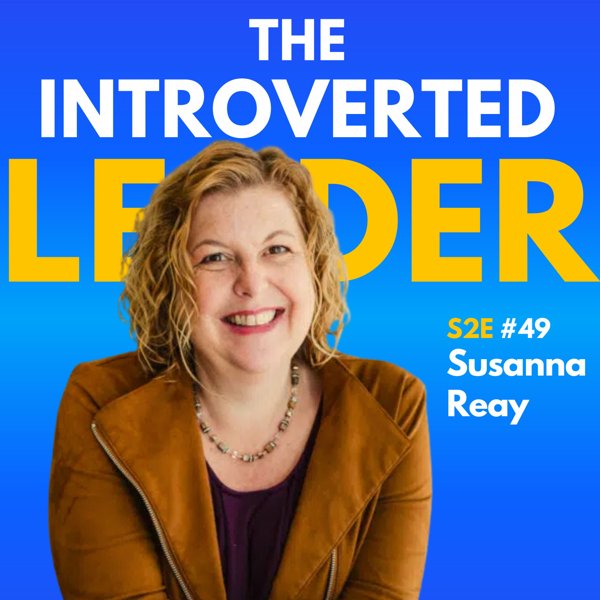
Susanna Ray teaches leaders how to turn expertise into simple visual frameworks — what she calls "shrink-wrapping" your knowledge — so your ideas travel without you having to be in the room. For introverts, this is a visibility strategy that doesn't require performing extroversion: the framework does the heavy lifting while you conserve energy. She also pushes back on AI as a replacement for deep human creativity.
Don't outsource your creativity. That's your superpower as an introvert.
Sometimes the best answers are the ones we've dug into a bit deeper and allowed to percolate longer.
Hold on to what is uniquely you.
Key Stories
- The Ed Sheeran creativity story: Susanna shares a clip of Ed Sheeran saying he couldn’t sing or play guitar at 14 — talent is cultivated through hours of practice, not born. Applied to introverts: your depth of thinking is practiced, not accidental.
- Training herself to be creative 9–5: As a designer, Susanna had to train her brain to produce creative work on demand rather than waiting for inspiration — a discipline that applies directly to introverted knowledge workers.
- Sleep on it as leadership practice: She actively advises clients to sleep between sessions, finding that the subconscious produces better solutions than real-time pressure.
Techniques & Frameworks
- Shrink-wrap your expertise: Distill what you know into a simple, repeatable visual framework that communicates your authority without you having to be present.
- SPARK approach: Susanna’s method for building authority that compounds over time through consistent intellectual property.
- Sleep on it: Deliberately delaying decisions and solutions to let the subconscious process — framed as a leadership tool, not a productivity failure.
- Don’t outsource your creativity to AI: AI can refine and condense, but the deep original thinking — the introvert’s edge — can’t be replaced.
Full transcript
It’s tax time y’all, if you want to file free, this next one’s for you. Love that jam. Up next, commercial! Into it, TurboTax Free Edition, see if you qualify at TurboTax.com slash free. Don’t miss the deadline. File by 415. No sketches except for earned income tax credit, child tax credit, student loan interest and schedule 1A. She teaches leaders how to turn what they know into simple, visual frameworks. So your best ideas become really easy to remember, repeat and share. This is great news for introverts because this kind of framework protects your energy. It’s just a remarkably efficient communication device and it does the heavy lifting of explaining for you even while you sleep. This lowers the pressure on you to have to perform to be visible. In this episode, we cover one why slowing down can be the fastest path to your own best insights. Number two, how to shrink wrap your expertise using visual frameworks. And number three, how Susanna’s spark approach helps you build authority that compounds over time. This is a great episode. Let’s dive in. Here’s my conversation with Susanna. Susanna, really great to have you on the show today. Thank you for joining. You’re for inviting me. It’s an honor. Absolutely. So we’ve spoken before and you’ve told me that everyone perceives you as really bubbly in person. And that was my experience talking to you. And so people automatically assume there’s no way Susanna is an introvert. So what is everybody getting wrong? The big thing here is this belief that when you’re introverted, you’re shy, which means you can’t talk to people. You can’t communicate. You can’t be passionate. You can’t be excited about what you’re talking about. And that’s the biggest thing that gets me. I mean, as your listeners will know, by now listening to your podcast, introversion is more about where we gain our energy and one of the reasons. I fell loved working online. So I can just stop. I can turn off and then no one can see me falling asleep on the sofa. Absolutely. So let’s talk a little bit about your views on leadership, how you help people with that. And you’ve talked about building buffers around high energy events. And you counsel people to sleep on it. Or that’s something you do. Could you talk a bit about that? Tickly in today’s world, everyone’s in a big rush to come to solutions and ideas. And I actually feel good leadership allows people the time and space to think about what the right solutions are and have that extra time. I would call it creative time as well that when we stop and pause, so even when you’re leading and a team, if you want them to instantly come up with solutions, yes, you might get some answers, but are they the best solution? Sometimes more combination, and this is where quite often when I’m working with clients, we’ll have a session on one day. And then I will just say, as you said, to sleep on it, because the next morning we’ll wake up and our brain are subconscious. Absolutely amazing. How it will trickle down and go, no, this is the piece that you need to pull forward. And then you can regather and come together in that space. You know, we’re 2025 right now at the point of recording. AI is going ballistic with all the generative stuff, where it’s all like speed to speed to speed to speed, like just put in this prompt and outcomes and answer. There’s something magical in that timing to actually go on the journey of exploration to find the right solution. And I think AI could give you prompts and suggestions, but I think it’s too easy to go for the easy answer. And I think sometimes the best answers are the ones that we’ve dug into a bit deeper and allow to percolate longer. That’s right. And to get more young in, you know, you’re tapping into the deeper subconscious. If you go even further, there’s collective consciousness that you’re tapping into. But that’s been my experience that I work daily with Gen AI and use it for a lot of things. And it’s great for sparking ideas and, you know, coming up with things. But truly creative ideas, it’s really not doing that. It’s helping you refine. I think it’s amazing at condensing and collating and sharpening things that you’ve produced. But the real thinking, it’s not doing that. And that’s really maybe some extroverts are doing it on the spot. But I think really where introverts shine is this time where they’re space and they’re really tapping into that deeper side. And as much as in my experience, extroverts, they might talk because extroverts need to talk out their answers. So that’s how they brainstorm is very much verbally, whereas introverts are internal. But bow actually need the time to find the right solution. So an extrovert might say something fast, but is it the best solution? Probably not still. They still need that time. And like we all need a bit of pushback as well. And I think this is one of the biggest issues when we’re using generative AI ourselves. Is it just a greens with Earth? And it didn’t, oh, what an amazing idea you just had. That’s fantastic. Should we go off and explore this a little bit more? And you’re like, okay. And then off it goes. And it does a ton more, but it’s probably shot you in a completely opposite direction. To where if you’d actually just taken on your wisdom and experience and collective thoughts that you would have come to on your own, at the end of the day, right now, generative AI is only based on existing ideas and probabilities and patterns that humans have already come up with. Whereas the human mind is amazingly creative. Like you have most fantastic people creating new ideas. The whole time and what I’m slightly afraid of with it is actually diminishing that creativity because you do also need to train your brain to be creative. And this takes me back to when I first started working out of college as the designer for the firm. And from being able to be picking choosing my hours, you know, when do I feel creative? When do I want to paint and do these things? To suddenly it being, no, I’ve got to be creative between nine and five. It was very much boundary in time. But I had to train myself to get more creative in that way. And I think this is sometimes where people underestimate really what talent is. Talent is some natural inclination, but an awful lot of practice, an hours behind that to then suddenly get all their talent. And you actually know you’ve done hours and hours and hours of things in the background before you get there. Right. Talent has really been cultivated and developed with long hours of practice. There’s a great clip out there on that. I don’t know if you’ve seen Ed Sheeran. And he says, he is a clip of me when I was 14. I couldn’t sing. I was hopeless. And he was like, I could barely play the guitar. He then practiced. And obviously he’s now a best-selling singer, artist. There’s some great examples of famous people as well. Not everything just lands near place. You do need to put the hours in. And that’s my willingness around the Gen AI is people aren’t putting the hours in anymore. It’s like, don’t outsource your creativity. That’s, I think that’s the biggest takeaway I have here. It’s dangerous and really is. And a lot of ways this is your superpower is an introvert. Yeah, very much so. Hold on to what is uniquely you. I think there’s so many people in this world we hear about in Poster Syndrome and everything. Because they feel like, oh, and then they begin to think the AI is better than their thoughts. It’s not. I just want everyone to know. It’s not. Your natural human thoughts are better than the AI. Yes, you can use it to challenge you and maybe bring things forward. But I then wonder if you just sat down without touching AI, whether it would be faster or more insightful without going down that route at all. Yeah, it’s a good point. And I think playing with the technology can be a distraction also from doing the hard work. Yes. It’s a simple point. About all the so many rabbit holes. It’s like, I call it shiny objects in shame. Because before you know it, you’re like an hour and a half in. And for me, things like that, I’ve never been a gamer. So I don’t go into games, but I see people who get stuck in Minecraft world or something for hours. And I kind of feel AI is a bit like that. It’s addictive because the moment it gives you an answer, it says, aren’t you want me to do this? And then you could just go, yes. And then it goes, and it outcomes something else. And then you go, and before you know it, it does it, it eats your time basically. And you then need to go in and edit it and make it back your own and go, well, which points are pertinent? And I do feel, let’s give ourselves some credit here. We’ve got experience and wisdom. Lived lives. We’ve had interaction, but we can pull on. I do like AI when we come into things like perplexity, which help us with the research. I like that because it gives you the sources, though at the same time, I have gone into the internet echo chamber with these sources when you find like three different people, each echoing and referring to the other. And you can’t find the originator of any original research, which when I hit those, I’m just like, right, that one’s out of the window. It’s obviously not true because if it’s not based on real research, and I think again, this is probably my age coming in, but I actually respect proper studies, proper research, let’s get real data, not just many depth of 78% of the people on the internet prefer cats over dogs. Put it out there. People believe her. And they go, cats are very popular this year. No, just made that up. No citations. Absolutely, but again, this is point that people just believe what is written. They don’t look into it. And unfortunately, the whole media landscape has gone down that route. There’s very little fact-checking, reality-checking. And this is where I get from just asking people to engage with their own brain and trust themselves, and their instinct over the technology. So how do people build that muscle? Because all these things we’re talking about have so much momentum, like the scroll and the social media, the chat with the flaring robot. The just, they have a momentum of themselves. So how do you slow down? You just stop. You step away from the computer, step away from digital. And one of the favorite tasks and why I’ve become known for framework thinking is I’m a huge advocate for pen and paper. So how do you slow down? You stop. You just get yourself a pen and a plain piece of paper. Step away from the screen and start drawing out what it is that’s going on in your head. And I say draw out purpose that it’s not just about words. It’s beginning to look at, well, what are these connections happening of what you’re trying to achieve? What does that look like? So even if it’s that you’re wanting to design your website, you can draw that out any content. You can draw that out if you’ve got expertise you’re wanting to share in a team meeting. What does that look like? Because when we make it visible and we simplify it down to the core pieces, then suddenly it becomes shareable, teachable, memorable and people understand what we’re doing. And this is where I think we get lost in work. And for me, it’s let’s get it back down to a single piece of paper and try and simplify what is the core of what you’re wanting to portray. It might get expanded out again, but we need to simplify because when you meet someone and you want to talk about your ideas, then it’s got to be simple. And I quite often say that when you create a visual framework for your business, it’s got to be simple enough to draw on a poster because the moment, yeah, I want people going down that small. I don’t break size rise. That’s the way it plays to a juggleist me. Oh, that’s a lot of space. Oh, a piece of paper I can put in tiny writing and squeeze it all in. And I might know, I want this to be simplified in the sense of like, what are those key three points or five points? What is it that you really want to bring out into the world? And that to me is how you need to slow down before you can really speed up and amplify your message. And I think a lot of people are getting caught in this overgenerated trap and let’s simplify so we can then amplify. That’s great. That’s very thought provoking. And so you’re helping people who are entrepreneurs, small business people, do work with larger enterprises as well on this. For me, I love the energy of the smaller entrepreneurs and the businesses. I want to work with the founder of the CEO. So if it was a CEO of a big corporate, absolutely. I’m in there. But if it’s like three levels down and then nothing’s ever going to come to it, personally, I get frustrated was when you work with small and medium business, you have a smaller number of stakeholders that you bring in and you can pull together. That’s the piece that I love. I like the speed you get in smaller companies. Yeah, I’ve definitely seen firsthand where there’s a lack of clarity and then you can increase the clarity with simple concepts and how that becomes the rallying cry for everyone in the company. We just have a clear understanding of what we’re doing the purpose and how it’s done. But then to be able to very simply communicate that to your customers, to the markets, seems invaluable, really. Absolutely. Because as you say, there’s the internal communication as one is the external. The larger the organization, the more likely it turns to Chinese whispers, unless you’ve got this visual, that very clearly shows it. And this is where I’m a huge fan of capturing the expertise, the knowledge that they’re wishing to share visually. Because then you don’t get these elements of doubt. People stop reading between the lines and they just see the lines. And that makes that clarity not move into Chinese whispers as people pass one thing onto the next. Particularly who I work with are service-based, knowledge-based businesses. So it’s invisible expertise that’s held within the employees or within the found and making that valuable, scalable, but most of all visible, so people can understand what’s. Do you have a concrete example? Are you able to talk about one of your clients, some kind of example for the audience? Absolutely. I think one of the simplest examples which everyone will know but might not realise is if we take back the listeners 15 years to when Simon Sinek first stepped on stage for his ten talk and he was talking about leadership and the warts and the how, which is what everyone was focusing on. And he introduced his golden circles concept which has the why in the middle. Now, start with why has become intellectual currency and people refer to it without even knowing Simon Sinek’s name. But this is where he bought this complex, like how can you focus to communicate with the marketing from everyone’s like the what and the how and if I know you need to start with why and he showed it as the bull’s eye target. So it was just three circles, you can draw that on a poster. So I find that using a sort of famous example because some people don’t, I get that is sometimes the easiest when I’m in discussion with this in terms of sharing what does that look like or how do we simplify it. But frameworks that come in all shapes, sizes, they can be based on geometrics. I mean, we’ve been talking psychology and Maslow’s hierarchy of needs, the triangle that pyramid where you’ve put seven layers inside of it. That is a visual framework which has been sharing again complex psychological concept. But very simply because people could go, okay, the bottom learn, then we need to build on it. And you go from the real base understanding and needs that you need warmth and fire and food and to until you get all the way to the top, which is self-actualisation, which is where a lot of people in 2025, they’re sort of working those top levels because if they’re earning enough money, they’ve got all the empathy, they’re getting the business side, thought it. But that is again, a visual framework that 80 years on beyond when Maslow created it is still producing revenue for his business because he created that very simple visual framework. And then if I go even further back in time to the sort of dawn of civilisation, some masters might be aware of something called the Tree of Life. Now across from man architecture to Egyptian to capitalistic, the Tree of Life, develop, form philosophers at the time trying to explain the interconnectivity of things. And why did they pick a tree? Because a human mind knows that it’s a symbol that they can recognise and understand. So they hung their ideas off a visual that is tree shaped for people to understand, oh, there’s this central trunk and there’s some branches that come off and then roots we understand that this could be about connectivity. So there’s some very famous examples that I always say, like I’m passionate about visual frameworks but I didn’t invent them and for me, it’s now I’m really passionate about helping business owners, managers, leaders communicate their ideas visually so they can get that traction and maybe even leave a legacy behind the after. I love that and it strikes me thought leadership doesn’t even cover it. Although it’s included in this because it’s deeper than that or potentially bigger than that. There’s metaphor symbol. It’s capturing these concepts in a way that makes them more transferable and potentially something that halves you and then it has a much wider impact on the world. So that’s the goal there. I take it as a how do we transform something that you’re working on, these ideas that you have, how do we crystallize them in a visual way to make them enduring? Totally and this is why I mean, I always say framework thinking as well in the book that I’m in the process of writing right now, the tagline is how to sketch scale and sell what you know because I take people through my sparked process which starts with like the self is the S. So you’ve got to start intrinsically and this is my piece of like only your creativity. Don’t out the sauce about what is it you believe in your values and then we look at the P which is your premise which is this is more than your niche. It’s again, what’s your unique lens on your topic on your world? What have you seen that others might not see or something that frustrates you that everyone else is doing and you know there’s a different way of going about this that could create a better solution. So we sort of delve into that and then it comes to the A the piece of R. I we’ve got to visualize this to make it simple but the second the last two which is referring to the IP pieces is we look at reach and kudos and so reach is how do you scale from that one piece of architecture into electoral architecture. What does that look like because once you’ve systemized your ideas you can then teach it you can certify it you can license it to others and this is where you create those bigger impact ripples which ultimately most business owners I know in the service space they started because they had a passion to help people they wanted things to be better in the world so they want to send their ideas further afield and create the impact ripples and this is where it is looking at how can you do that reach because one person could go and you go so far so how do we systemize and scale it and the kudos bit is when it comes back around when you’ve been quoted as that thought leader in the space what’s being said in the room not shrapnel are you writing your books on this are you speaking on stages on your topic because again every great speaker and if you think every conference you’ve been to the speakers who are the most memorable at some point they pull up a side and on that slide is a visual framework of the concepts that they’re sharing on stage it’s not fun of words it’s visual it’ll have a few headings but it’ll be a structure which they will be vocalizing and talking through as they connect and engage the audience with that idea and that’s what we want which is exactly obviously what Simon Cinec did back 15 years ago with his TEDx talk and then it was literally an easel you can go back and watch this it was an easel he drew one circle then the other then the other and I wrote the three words on top of it that is how simple it needs to look but behind it absolutely is the thinking complex yes is there research and data behind it yes and when I’m working with clients I always say we don’t invent a visual framework for their business we uncover it because we’re uncovering it from the work they’re already doing with client is what they’re naturally doing but we want to is that archaeology what uncovering the gold that is already inside of them and true and it is also a creative act yes everything has to be creative in my words as an artist first and then I move into business and studied it in all directions but I see them so interrelative I think business is creative through and through because you’ve got a bit of to think outside the box and I guess yeah certainly back to the AI piece I feel you get stuck more inner box with AI then moving out of it definitely a reason to think and grab your piece of paper and create some space to draw some things out the bleach your report app is your destination for sports right now the MBA is heating up march bandis is here and MLB is almost back every day there’s a new headline a new highlight a new moment you’ve got to see for yourself that’s why I stay locked in with the bleach report app for me it’s about staying connected to my sports I could follow the teams I care about get real-time scores breaking news and highlights all in one place download the bleach report app today so you never miss a moment this is just beauty and stopping and letting your mind think so well what do I do what does that not my even what simple shape does that appeal to so some clients they might feel well I take my clients is it more a walk to a garden is it a spiral or is it more regimented like something like the Eisenhower matrix which people know is a very fixed quadrant of something’s important and urgent not important not urgent and you’re just popping things into boxes the Eisenhower matrix is another framework again very well know he’s got his name on there and it’s used and that’s a legacy that’s held behind but there’s different frameworks of different purposes there’s been diagrams there’s another famous example is the icky guy concept have you come across icky guy yeah for the listeners this is where you’ve got four intersecting circles and is a Japanese term so the center is your icky guy and that’s your passion that’s where you really want to be working for because your passionate about it you can earn money from it it connects with other people and you can build like the community but that as well is a visual framework very well known established building the legacy and I believe every business should have their own visual framework I don’t think you should be leaning upon others you should actually create your own intellectual property so you can have that reach and really make that bigger impact you also talk about authority how do you go about building authority I kind of start with your framework yeah yeah so for me there’s a lot of talk out there about visibility personal branding you’ve got to be out there and it feels like a content hamster wheel and my authority inversion principle actually says the opposite you want to start with your intellectual property to then build your visibility from that you don’t just want to be visible for visibility’s take and when you’re building your authority your authority has to be built on substance it can’t be built on sand but disappear overnight and quite often with personal branding it’s more like who’s the most visible who said the most viral thing and that can peak and it can disappear overnight it’s like the one hit wonders what you actually want to do is build those series of albums over time which is your authority in the space and that’s based on your intellectual architecture which is why I start with the framework thinking piece because if somebody really wishes to build authority in their space they need to bring unique ideas to the forefront they need to explain it clearly they need to communicate it well and all this comes through using visuals and from that you can absolutely build your visibility and having personal branding visibility is part of authority but I don’t believe visibility equals authority authority needs a substance and the proof behind it and this is where if you’re looking to build authority in your space writing books speaking on stages show you know your stuff basically because there’s no hiding you’re not busy plugging into AI and even when you’re writing books all publishers even Amazon these days they double check what you’re inputting for plagiarism and AI checking so they want original work because they realize they saw a spike in AI generated books and it was just like no humans want original thought and that’s how you build your authority with original thought that’s right and your personality gets embedded in that to what extent are these frameworks personal I mean you’re working with companies but also individuals could these frameworks only come out of a unique personality like even a business has a personality but especially you know you’ve got co-founders or the founding members so you want to embed the personality in the values whether it’s a single founder if it’s a founder led business and very much this bear heading yes it will be a lot of them but you can very much embed businesses do have personalities as well I do still believe in business branding I mean shock I know there’s so much talk around personal branding these days but dependent on the product the service a business brand is actually really quite important and you get to a point that sometimes the CEO you don’t really want to have a personal brand so what you want to make sure is whenever you’re creating the framework is it is reflecting the personality either the business or the business owner and that would depend on the scale of who is creating it basically where’s it coming from so you just down I know you have a book that’s coming out relatively soon it’s not out yet for people who can’t wait and want to get started maybe thinking about or working on this what’s one activity they could do now the one activity I would encourage them to do is to think their premise what I call their unique service premise this should be something that like riles you up a bit makes you slightly mad or angry or frustrated in your industry that you know there’s a better way of doing it and then thinking about well how can I weave that into my story my message what does that look like because that’s going to be at the center of what a framework might be for your business for what you want to stand for because when you’re creating a framework for your business it’s about could he or flag in the sand and going this is what I stand for and quite often the premise is at you know it’s the heart it’s the power of like why are you doing it so it is that big why behind it so what does that look like so I’ll be saying what does that look like and what’s the outcome that you want to take your people on so they’re in this sticky place that you’re finding is a bit frustrating this is your premise and you want to take them across a bridge to a new country a new destination as they go along that bridge what are those milestones that they need to pass to know they’re doing the work in the right way in the way you would envision for your people and I would literally draw this out I would have a piece of paper and I’ll let you have an A4 piece of paper or lesser size if you’re in the US at this point and on one side have A where they are now and B on the other side where they want to get to and think about what’s that journey in terms of call milestones and when you’re thinking about that I want you to think about how it looks in the every day to that purse what’s that ultimate impact look like so I don’t want you to say if you’re a live coach that you want to make people happy happy is a side effect it’s a symptom it’s what are they doing that means they’re now happy would be my question for you in that are they booking a holiday are they going water skiing at the weekends or are they going for walks like what physically doing that shows happiness or joy if they’re going overwhelmed to joy I quite often have coaches who come to me and I’m like no like everyone’s it buts overwhelmed mean what are they actually doing are they doing scrolling on their phone where they actually want to get out and go for walks every day and that’s actually what happiness means because they’ve stepped out of the house so it’s thinking about what practically that change looks like and this applies you know from the micro level that I’m talking about all the way into to corporate because you’re still wanting to instigate change in people and what does that change look like in the other day what does that change look like in the every day but making sure again just pulling us back to that unique service premise of is that making sure people are following the track that you know works not just what everyone else is saying in the industry because we want to overlay your values and your perspective in your lens on the world at the same time there which is a bit more complex than we can obviously share on this which is why I’m writing the book on it because it’s getting quite long and I need to still edit it but yes it should be out in 2026 all right we’ll apply human editing to your book and we’ll look forward to this really excited if people want to learn more about your work and follow along for when your book comes out where can they go one of the best places I’d say come and connect with me on LinkedIn so I’m there under my name Susanna Ray which is R E A Y and my website is also Susanna Ray dot com been around long enough in the online world but my name is where you find me but if you’re listening to this I’d love you to come on LinkedIn connect with me and then just send me a little note and say hey I listen to Greg’s podcast I love what you said and we can start a conversation there that’s what I love to do because a new term maybe for you I call myself a bit of a text revert I love chatting in Texas in Texas and text as in T E X T I know I was like announcing that I was like oh that’s not quite what when you write it it’s really clear which is what you’re doing with text message so I love chatting to people on text in DMs on LinkedIn so yes if you’re listening to this by all means let me up on LinkedIn reach out let me know what’s landed with you and let’s connect that way because I do like human connection you know and I’ve really enjoyed talking to you today thanks so much for being on my show Susanna it’s been a pleasure all right let’s take a moment to recap what Susanna shared because this is one of those episodes that can really change the way that you lead and communicate number one remember your best work doesn’t come from rushing it comes from creating space even sleeping on the problem to allow the deeper better solution to emerge number two start simplifying what you know into a one-page visual when you’re thinking is clear enough to draw it out it becomes easier to share, teach and repeat and that saves you energy all right number three build your authority with intention own your creativity define your premise visualize the idea and then start scaling your reach so you can start earning the kudos that compound when people start citing your work over time one last step subscribe to the introverted leader so you don’t miss an episode especially if you’re in the business of building quiet authority and you need practical tools that you can start applying immediately I’m Greg Wanger keep leading with quiet confidence and I’ll see you next time