Stop Being Overlooked — How Introverts Communicate Value Without Bragging
Increase Visibility & Influence Authentically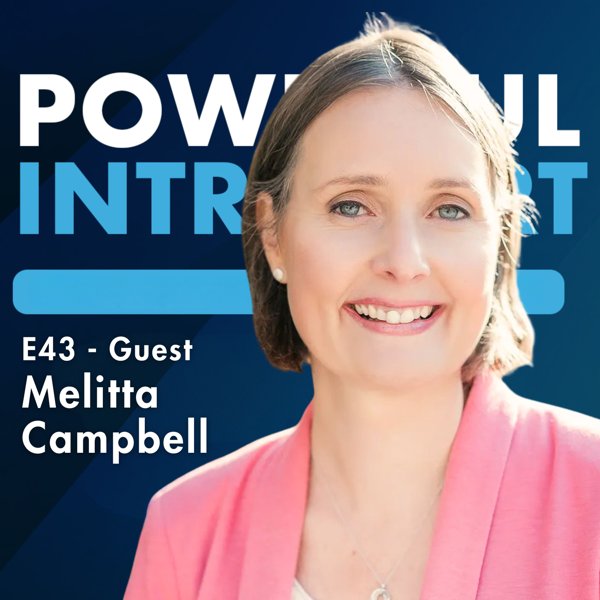
Melita Campbell is a shy introvert, author of "The Shy Girl's Guide to Networking," and creator of the "value whispering" methodology — a way to communicate your impact with clarity and confidence that feels service-oriented rather than self-promotional. She developed the core insight accidentally after being thrown out of a job interview for saying "we" instead of "I" — realizing she had not stolen anyone's credit but had willingly given away her own. The episode is a practical toolkit for introverts who want to be recognized and promoted without ever feeling like they are bragging or performing.
I hadn't stolen credit from anyone else. I had willingly given away my own.
If people can't clearly see your value, they can't reward you, promote you, or advocate for you.
Confidence comes afterwards. It starts with courage. You take courageous action and then the confidence builds.
You have so much value wrapped up in your struggles, your mistakes, and the things you haven't yet done. All of this is clouding that value — like mining for a diamond.
Key Stories
- Thrown out of the job interview: At 25, an interviewer told Melita to leave because she couldn’t stand “any more of her lies” — she kept saying “we” for work she had done largely alone, which the interviewer misread as stealing others’ credit. A few days later Melita realized the interviewer was right that she hadn’t claimed her own value. Her next interview, speaking specifically about what “I” did, resulted in a job offer before she got home — and rapid promotions to reporting directly to a CEO within four years.
- The pregnant meeting moment: Melita was having awful morning sickness, barely listening, when the entire room went silent and colleagues looked at her expectantly — “Are you going to challenge him on that?” She had become so consistently clear about her values and what she stood for that the team just knew.
- UX designer and furniture: A client described her UX work without passion, but when looking at past work mentioned 10 years designing furniture by hand. Melita connected the two — “that’s the ultimate user design” — and the client immediately started speaking about her work differently, attracting speaking invitations and new clients.
Techniques & Frameworks
- Value Whispering: A three-part framework — (1) Find your true value (strengths + hard-won insights + vision for the world), (2) Understand your value in context (how it specifically serves this team, client, or project), (3) Weave that value through everything you do consistently and quietly. The “whisper” is about consistency and specificity, not volume.
- VICTORY networking framework: Vision → Intention → Confidence (build it through courageous action, not the other way around) → True self → Obstacles (plan for them) → Rules (give yourself permission to leave after five minutes) → You’ve got this (final pep talk). Designed for shy introverts going into social environments.
- Three networking stages: Before the event (preparation and mental framing), during (active management including strategic breaks and focused goal-setting), and after (follow-up to deepen relationships made).
- Mining for diamonds: Coaching clients by “chipping away at the rock” to find the hidden value in their experiences — often the most powerful value is buried in struggles and failures they have been taught not to mention.
- “Is that true?” question: A rapid mindset reset for limiting beliefs — asking “Is it actually true that I’m not a good presenter?” often surfaces that the belief has never been tested.
Full transcript
Do you ever feel like you’re doing great work, but it somehow stays invisible? Because talking about it feels like bragging, or you don’t want to be that guy, that person. For introverts, this is one of the hidden career blockers, not a lack of talent, but a lack of visibility that feels authentic. And the truth is, if people can’t clearly see your value, they can’t reward you, promote you, or advocate for you. Welcome to the powerful introvert podcast, helping introverted leaders embrace your underrated, quiet strengths to get promoted and earn what you deserve. I’m Greg Gwanger, I have 25 years of leadership experience, and yes, I am an introvert. Today, I’m joined by Melita Campbell, who teaches a concept she calls value whispering. It’s a way to communicate your impact with clarity and confidence without turning into just a louder version of somebody else. In this episode, you’ll discover, one, how to make your value obvious without that self-promotion anxiety. Number two, a simple way to talk about your work that feels grounded and service-oriented, not salesy or performative. And number three, how to build visibility habits that don’t drain you, including networking approaches that match an introverts, energy, and style. If you’re ready to stop being overlooked and start getting recognized on your terms, this conversation is for you. Here’s my conversation with Melita. [♪ OUTRO MUSIC PLAYING [♪ It’s such a pleasure to have you on the show today. Welcome. Thanks, Greg. I’m really looking forward to this conversation. It’s great to be here. I’ve been looking forward to this since we spoke earlier in the summer. You have a podcast as well. Could you tell us a little bit about that? I podcasted, it’s the art of value whispering. It started out as a driven female entrepreneur, because I felt there weren’t enough female leaders out there talking about what it really takes to succeed in building your own business. But then I felt that all the common aspects had been covered. But the one thing that we could benefit from going into more deeply was, well, how do you communicate your value in a way that feels authentic? As you say, it doesn’t feel braggie, doesn’t make us feel like we’re being pushy or acting out of alignment. And so I refocused it just on talking about how do you market yourself? And I think whether you are an entrepreneur or whether you are someone within an organization, the technique is the same, but it also feels very weird when you have to talk about yourself and say, hi, I’m amazing. I can do this for you, even with extroverts that doesn’t always sit right with us, with our heart and our soul. So value whispering is really the methodology that I’ve developed over close to three decades now from my own experience and from coaching leaders within corporates and entrepreneurs. So that’s what we talk about and I’m looking forward to sharing some of that wisdom here today. Fantastic. You mentioned this is something that helps women in particular and it sounds like it’s good for anyone who isn’t completely comfortable with self promotion and many introverts are. I’m curious, do you consider yourself an introvert or extrovert? I’m definitely an introvert. Actually, on the podcast recently, I had a panel discussion with a few different introverts who all have a podcast or sharing our own perspective on each version because I think people tend to think, oh, it’s being shy. Oh, it’s not speaking up for yourself and that’s not the case. Every introvert is different. We all have different strengths, but myself personally, I am a very shy introvert which is one of the reasons why I have a podcast so I can keep pushing my comfort zone and stay comfortable with being visible and speaking out loud. Otherwise, I do tend to very quickly shrink back and hide behind my keyboard. Well, yeah, it could as to for that. And I know there’s a lot of effort that goes into a podcast and it’s actually very rewarding for introverts. I’ve spoken to a lot of introverts who are podcasters and introverts are really good at one-on-one conversations and really enjoy them. And I think a lot of us find it very rewarding in that way. Yeah, and you can get deeper into a topic which was the space that we really enjoy. So yeah, I really enjoyed our experience I started nearly five years ago. I don’t think I really imagined how far the podcast would go or how long I would do it for, but I’m sure at the beginning I hadn’t really thought that five years on I’d still be out there every week enjoying it as much as I am, but yeah, it’s a great experience, as you say. That’s fantastic. Five years is quite an achievement. Thank you. So I’m curious how many of the people that you talk to are actually extroverts because one of the things that kind of struck me pretty early on once I started doing this work is I would talk to people and I quickly discovered that people can be quiet in situations where we normally attribute it to shyness where there are structural imbalances to women, women of color, people of color who naturally in the situation don’t feel comfortable and it’s not a traversion. Yeah, exactly. I think we can all be shy in certain situations and if we don’t feel safe, we won’t speak up. So I know, for example, in the LGBTQ community speaking up and being heard is something that a lot of them shy away from when they’re definitely not introverts. Some of them obviously. But it really depends on the situation, how confident we feel in that situation and how safe as well with the people around us and how safe we feel in sharing our message openly. So I think it’s not quite as black and white as, oh, they’re not speaking up because they’re shy. There’s more play there, I think. But I think for those of us like myself who are shy and aren’t speaking up because we’re not necessarily finding the gap in the conversation or the words or it’s more of an internal barrier to speaking up, there is definitely things that we can do to change that situation for ourselves as well. So I think there’s some personal responsibility for leaders to make sure that they’re creating that safe space where everybody regardless of their preferences or background or personality feel comfortable speaking up. You need that diversity with voices, right? We do and if only for selfish reasons, you want the best diversity of ideas and the strongest ideas really to make everyone feel included and safe and contributing is contributing to better outcomes, better economic outcomes for your company, for yourself, for your group. Yeah, and if people don’t feel heard and understood and able to speak up, then as we saw recently, we had that whole quiet quitting situation. So we need to make sure that people feel engaged and feel part of the conversation and able to be part of that as well, so that we can make sure that we’re engaging all of our talent as well and keeping them. I want to go back a little bit to a little earlier in your childhood and you always realized you were shy and how did that play out, maybe from childhood into your early career? Yeah, I think looking back, it was very much as we said, I was very shy. So if we were going to a neighbor’s Christmas party or I was going into the playground at school, I was very quiet and timid. But having said that in my classroom environment where I felt very comfortable and loved my teacher and I’d been with my classmates for several years, I was loud, I was always given the main part in a play and the drums to play anything to let me express myself and compare some of that energy out to my, I think that was my teacher’s tactic. So although I felt shy and I was definitely introverted, there were situations when I felt a bit more confident and able to speak up and be myself, but as I went through my parents divorced, we moved country, I started to go through teenage years, bit by bit, I lost my voice more and more. But then I let other people speak for me and it wasn’t necessarily a bad thing because I didn’t the boat, I wasn’t seen as trouble, I did well at school, I put my head down, when I got a job, I’ve seen as a good team player that then I remember I went for one job interview, I must have been about 25 and my dream job ended when the company went to receive a ship. So I’d been interviewing for six months to get another job and I was getting more and more desperate. As time went on and I went into this particular interview and it was a whole day full of workshops and tests and panels and all sorts and the last hurdle was this interview. But I felt quite confident going in because I thought I’ve made it through everything else, I thought I’d done okay and then 10 minutes into the interview, the interview threw me out. She told me to get out because she just couldn’t stand any more of my lies. And I was, yeah, I was in shock that I wasn’t lying but what I was saying in it interview was, I was explaining how we did this and we did that. And so she thought that meant I had so little value myself but I was passing other people’s work off as my own and that I was claiming the result of the we but I was like, oh, I’ve only worked in small companies, there was no we, it was only me but I hadn’t really stood up for my value. So I kind of cried all the way home. But a few days later when my pity fog cleared, I realized she was right, I hadn’t stolen credit from anyone else but I’d willingly given away mine. I hadn’t really embraced the value that I’d brought to each of the companies that I’d worked with. So my next interview I told them, well, this is what I did, this is why I did it, this is what I learned from the mistakes, this is the impact and really started to justify and embrace the values that I brought without bragging necessarily but really being clear about the difference that I made and where that had come from. And I got the job within, I hadn’t even got home. From my key in the door until I was here and I got to say you’ve got the job. So I started a week later and they said that was the best interview they’d ever had and they were kicking each other under the desk not to give me the job on the spot. From six months of failed interviews to getting my dream job, and this was for one of the largest organizations in the UK which I’d always wanted to work with but didn’t feel I could because I’d only worked for small companies but that was really the very first instance of value whispering, I got the job straight away. So I was then able to continue embracing and communicating my value in a way that meant I just got promotion after promotion, I got moved to Geneva and I ended up reporting direct to CEO within four years from going from like really quite low down in the organization to the very top in a very short space of time. I’m working, this was in banking. So in private banking in Geneva as a woman without a banking background and that was unheard of but it was all through this value whispering technique. A couple of things in there, one, it just strikes me how failure can be our greatest teacher. So all of this insight, it’s really crystallized in the wake of that failure. And then you hit on such a powerful vein of a method and it also just seems so naturally perfect for someone who’s an introvert. An introvert feels like whatever I say, I want it to be authentic, fact-based, it’s real, this is me and so that’s exactly how you are achieving this almost a jujitsu move is very factual and that would unlock confidence because guess this is true. And so that naturally gives you confidence and calm the immediate reaction I’ve always had historically and I think a lot of introverts have is this is bragging. Self-promotion is funny because that’s kind of what you see and you only see an extraversion of this or someone who is funny or bragging or authentic. So it’s got to look different. Yeah, and I think when we look at things like sales, people step away from sales because they feel the same. It’s pushy, it’s inauthentic, it’s making people do what they don’t want to do because we’ve experienced sales done badly and we’ve called it sales, but sales done well, we don’t call it sales, we say, oh, they really helped me, they listened to me, they had plenty of time, we’re applying words of caring and authenticity when sales is done correctly. And I think it’s the same when we’re talking about our value, when we’re talking about our worth and our expertise and how we help people, very often we have seen people be quite brash and bragging and we’ve all been to that networking event where someone just came in, dominated the conversation, talked about themselves and gave their business card off and walked off without even saying hello to anyone and we don’t want to be like that. So we have seen that’s what talking about your value badly looks like, but we haven’t necessarily understood what it takes to communicate our value. So when I got that job in banking, it was to specialize in internal communication up until that point I’d worked in marketing and PR. So it was taking those skills internally, but through that career, I realized that nobody’s taught how to communicate, let learn how to communicate your value and I ended up working directly with the top leaders to helping coach them in leadership and communication specifically. So how do they communicate their value upward because they had to be spokesperson people and they’ve never had that kind of training, but also how do they communicate and engage with their teams in a way that it’s clear what their value is, they had to then communicate the value of the team but also bring the team into that dialogue as well and that narrative. So it was looking at the marketing and PR and that value whispering that I’d learned accidentally for myself and bringing that all together. And yeah, now that’s really the focus of my work. I think it’s hard as well because not only are we not taught how to communicate and yet more and more today, we’re all being called in one way or another to be spokesperson people, either for ourselves individually, for our teams or we reach a certain level of leadership within our organizations and we have to appear in interviews for the company magazine and we don’t have to do that. But also growing up and I work a lot with women that tends to be my circles, but I think this affects men as well that on one hand, we’re told not to talk about our weaknesses because the ways we’ve messed up, it shows that we’re not good enough. But as you said, often failure is our biggest teacher and that’s often where our biggest source of value lies is from those lessons we’ve learned a hard way. You know, that’s really valuable to other people and it’s given us insight into what it really takes to make things happen and to succeed. That’s an area of untapped value for a lot of people because we’re not telling people about it but we can package it in a way that’s really helpful and helps us to stand out. The other thing is that we’re told not to talk about our successes again as you said, it’s seen as braggie. So if we can’t tell people the value from our experience and we can’t tell them our value in our strengths, we end up in the middle, the same as everyone else feeling, well, I don’t have anything interesting to say. So we just stay quiet in the middle and we can’t really have an impact if we stay in that space but if we embrace everything, if we embrace our strengths and we embrace all those hard one insights, we have something really magical that we can bring and once we learn how to communicate that and not just through our words but through everything that we do, then people naturally to start to see our difference and we don’t have to be loud or pushy or braggie about our work and we don’t have to expect people just to figure it out for themselves either because that doesn’t work. We have to be clear but we don’t have to be loud or pushy in any way and our value really starts to speak for us. Yeah, and I think it’s pretty natural for introverts to not connect the dots for other people. There’s a lot of activity in our heads and we’re coming to a lot of conclusions and we’re not necessarily bringing people long to communicate your value or what you’ve accomplished, what you’ve done and it’s not out there unless you explicitly draw it out there. So it seems pretty clear to me why this is going to be particularly helpful for introverts but helpful for really anybody. Yeah, exactly. I’m currently writing, well, in the final stages of writing my book, The Out of Value with Spring, which is bringing this concept for small business owners and explaining how they can market their business without being loud. But I pitch it as like the smarter way to market your business that just happens to be brilliant for introverts because it is brilliant for introverts but anyone can use it. So yeah, you’re right in that respect. But yeah, I think the other thing is joining the dots but also looking at the context, you know, in that job interview where I got the job, it wasn’t just, here’s all the value about me. It was looking at the context of the value that I could bring to them specifically. So if we’re in a meeting and they’re talking about a particular project, if we can be specific about how our wisdom insight experience can help specifically within that project, then we really start to stand out and we’re very good at being precise and considered in the way we communicate. So I think for introverts, this is a really powerful technique that we don’t have to tell people everything just those one or two things that highlight that we’re in the right room. We can really add value here and how we can be used to the best advantage for the company but in a way that we’re going to feel really aligned with as well. So I think in context, it’s knowing your value but the whispering part is knowing the context and how to bring that through and when so that we can stand out for the right reasons and get more of the projects and promotions where we can excel and we can then always feel in alignment as we grow as well. It’s the value you bring but also specifically how you can provide value in specific situations for a client or a group in the company or into the market. How can you help specific people in the market with your expertise? Yeah, and I think the way we can challenge in meetings as well, the way we show up, the moments we choose to show up in, then this is a specific part of the value weaving part that how you actually then whisper that through everything you do that makes you to stand out. And I remember when I was doing this in the organisation, there was one moment I was pregnant at the time and I was having really awful morning sickness. I have to admit I wasn’t really concentrating on the meeting and then suddenly it all went quiet and everyone was staring at me and they’re like, are you going to challenge him on that? And it’s like, oh, sorry, I must have missed that. Can you repeat so they brought me up to speed? And absolutely, I was like, no, you can’t do that. But I was in that moment, I thought, well, they all know exactly what I stand for. Whether they agree with it or not, they all respect my position and they were all just waiting, like, oh, she’s not going to like this. That came without ever being loud or pushy, but from just choosing the moments to whisper my value and to challenge people, I remember having a specific conversation with my team about, well, this is what I feel we stand for. Where do you see yourselves within that and what battles are we going to choose? Where will we pull people up on and what things will be let slide? So we all had this very solid framework and then in any meetings, we all knew if this happened, we would do something about it, we would stand up for that and other situations, we would slide it slide, but because we’d been so consistent and it was me and my team, that then became a very strong brand within the organizations as well. So it didn’t just help me and my promotion, it really helped my team to be seen as well, which again, built my own credibility too. So yeah, it was a great moment. So that really clicked for me something deeper here, which is that it’s not just your personal value, but it’s what values do you stand for, specific values? And this is something that I’ve come to more recently and my work career is just how important specific values are and how your personal values are the values of the executive team or the CEO, define how much happens within the organization or exactly the way it happens. And if there’s lack of clarity around values, it creates a lot of conflict. People, they don’t know which way to go. Our some solutions okay. And like if you’re not fairly clear about this, then you may end up with results that you don’t like or undesirable results. So is that been an explicit idea for you as part of this is defining what are my values? Yeah, it’s definitely part of it. So value whispering is not just about your values, but understanding your values is a key part of it. We do more because your value is more than just your values, but it’s so important to understand those as you say and not just to know what it is. If you speak to any leader and they’ll say, excellence is one of their values. Great, but speak to 10 leaders and ask them, well, what does that mean to you? How does that guide how you show up in the office and what work you do and how you approach your work for each of them, it’s going to be very different. So to understand your values, but to really take that step further and understand, well, how does that guide what I do and guide what feels right and what I will stand up for and what projects I will take on or not really not feel comfortable doing and what organizations that should be within. So I think when she take that extra step, but then you know, value whispering the first part is finding your true value, which is more than that. They strengthen everything you’ve learned. The hard way, as I said, and your strengths into that and your vision, what do you want to see happen in the world as a result of your work? So all of this comes together and becomes your value then the true value is that value then in context. What are you going to do with this to help your organization, your team, your business or whatever that context may be to support their growth as well? So the other nice thing is once you really understand that true value and how you want to direct it, you have… Taxes was feeling so stuck. Sitting in traffic, squeezing into a parking spot, all the squeeze in getting tax help during your lunch break. Now Taxes is a Turbo Tax expert who does your taxes for you. While you go about your day getting real-time notifications about their progress and the most money back guaranteed. Now this is taxes into a Turbo Tax. Don’t miss the deadline. File by 415. See guaranteed details at TurboTax.com slash guarantees only available with Turbo Tax experts. A much easier framework to help decide what you do and don’t do, what opportunities are right for you. So you make better decisions, but you waste a lot less energy doing the wrong things, thinking the wrong things. And one thing we mentioned before coming live was in POSSIZENDROOM. But if you really understand your value and how you can use that in context, then suddenly you start to have a lot less in POSSIZENDROOM, a lot less comparisonitis, because you realize everyone’s got their own set of values, their own experiences and skills that they bring to every situation. And that’s great. And they’re gonna choose to use them in this way, great for them, but this is what I’m gonna do. So it can help, we’re all humans, so we all have aspects of these mindset challenges from time to time, but it can definitely reduce that once you know you’re in the right place, doing the right thing, bringing the best of yourself to make a difference for your, I say, team company, whatever that situation is. So you did a TED talk on this, right? Yes. Yeah. Yeah, TEDx. Yeah. And then you’re developing the book and you also have a practice with clients. Could you tell a little bit about that? Yeah. So currently my work is all around what I call a valuable spring blueprint, which is helping business owners, small business owners to understand their true value and how they can weave that through their marketing and their communications to naturally stand out in the marketplace. So they can attract more of the right clients, more of the right opportunities to them. The big issue I saw when I was coaching leaders around communication and when I’ve been doing marketing for organizations as well is I could give you the perfect elevator pitch, for example, where I could give a business owner the perfect marketing plan and it won’t work if they don’t believe in that. So the self leadership part, no really believing in your value, believing in your ability to make an impact and make a difference, believing you’re in the right place that you have the right to speak up as well and having that time and energy to do your best work, all of this has to come together. So that the three aspects of value is spring is understanding that true value in context, knowing how to weave that through for business owners through their marketing for leaders is through their actions and then the self leadership on top of that as well. And since the TEDx talk, because that was a little bit more general about value is spring and not necessarily just for business owners, then I’ve got a program launching later this year for leaders as well on showing how to weave that value through their work so they can build the position have that impact and alignment that they want and grow their career in a way that feels really aligned and meaningful, but also building in some of the communication skills so that they can share this value through these internal communication channels. So it’s like sort of internal media training alongside that as well, because as I say, I think we all have to communicate in different ways and we ever have done before. So yes, I’m really looking forward to launching that too. Sounds like a great program and I love how this isn’t gonna work for you unless you really believe it and you believe in yourself. And so there is that personal responsibility but a personal development element of it where, yeah, you can’t just create a bunch of marketing and it haven’t completely worked for you. It’s really bringing your whole self to it because what makes it real? Yeah, absolutely. And yeah, that’s the magic thing that makes it live. And I’ve actually seen it. I’ve worked for a small time business culture within an organization where I was coaching people with the same business, same marketing plan, same products, same pricing, same tools, same everything and that’s where I really saw the difference between those that are willing to believe they could do this and be successful and those that just didn’t have that self-image that allowed them to step into their best selves and it held them back hugely. Yeah, I’ve since trained additionally as a mindset coach as well because it’s just such a big part that holds us back from everything we want to do. And the nice thing is it’s very quick. So once we have our thoughts in alignment and working for us, then it guides our actions and behaviors and the results that we get and everything becomes much quicker and easier and more fun as well. Yeah, I mean, quick, it can be almost in a moment. And I think a lot leads up to that moment, but it builds up. In my experience, or people I’ve worked with, it’s like there’s almost a point of decision. And it’s like, okay, yes, I will do this. And this is me, I will get that promotion. I will start this business. I am this person. And then what happened between the second before that decision and after, like you’re still the same person, but your mindset has changed and then everything you do flows from a different mindset. Yeah, and the awareness as well, because I think a lot of what holds us back is these limiting beliefs that aren’t even true. I would tell ourselves, oh, I could never be a confident presenter. I hear that a lot from introverts is like, well, is that true? You know, and we started to tackle that. And they’ve been telling themselves this maybe for years. And then we’ve just asked him that one question. They suddenly realized, well, no, I’ve never really put in a time and effort or trained or got the skills. So today, I can’t do that, but I could do it in the future. If I decided, as he said, you know, make that decision, actually this is important for me so let me decide to get those skills. In my first book, a shy girls guy to networking, that was exactly the situation, but I realized if I don’t like sort myself out and figure out how I can network confidently as someone who feels very shy, then I’m never going to get the career that I want. I’d moved from London to Geneva. I didn’t know anyone. And I was like, I’m not going to have any friends. I won’t get the job that I want. I won’t be able to progress. You know, I was really holding myself back. So I decided that I need to figure it out and then it was a process from now on in, but within a year, I was known for my network and asked to start speaking about it. So I say things can change very quickly. Thanks for mentioning that. Could you give me a quick breakdown of, how do you as a shy person build a network like that? Yeah, so the reason I wrote my book, because there were so many books on networking, the world does not necessarily need another book, but what I found from reading these books was that none of them really tackled the mindset aspect, the fact that I was just terrified walking in a room. And some of the books either didn’t talk about it or some were like, if you’re a bit more introverted, you just have to get over yourself. You know, it was that kind of mentality, which was very helpful. But what I found was I took a step back and realized, well, what would it take me to become comfortable networking? So the first thing was to think about, well, why am I doing this? So to create a vision for myself that made it important and made it easy for me to remind myself that this is worth it. It may be painful, but it’s worth it. And then to get intentional to say, you know, I am going to do this and create a plan. I’m going to go at least once a month to whatever. So it spells a word victory, by the way. So you got the vision, intention, see with the confidence, know, what can I do to build my confidence? So bit by bit and it starts with understanding the confidence comes afterwards because I was waiting for that confidence and then realize, no, it starts with courage. You take courageous action and then the confidence builds. So that realization really helped me. The tea was to be a true self, which leads into the value of spring. The oh was to really plan ahead and to know what obstacles we’re going to trip you up. I think we all know when we go networking, we know ahead of time, what’s going to make us feel comfortable or uncomfortable and plan ahead. So what could we do? Like maybe it’s going and introducing yourself to the organizer at the very beginning and then they can introduce you to people. So you’ve overcome that obstacle of not knowing who to say hello to first, that kind of thing. The oh was to create your own rules. So this is where I told myself, do you know what, if I just go for five minutes, say hello to one person and if I’m just not feeling the energy, that’s fine. I can be and it was okay because I was pushing myself beyond my limits, which again, doesn’t feel good. When you drain your social battery and your social energy and you know you’re not being it your best, that doesn’t feel good. And that experiences what we tend to take forward to the next experience and where you dread it because of that moment. So I reversed that and gave myself the rules that I knew would help me perform at my best and then the why was just to remember that you’ve got this. So it was just a little a final pep talk. So that was my kind of framework that I used to turn around my mindset. And then there’s the three stages of successful networking that I dive into in the book that are actual networking skills that I used, which blended my communication and marketing experience as well into that. So like what you need to do before the event in the event and after the event to make that successful and how to kind of plan ahead so you don’t again, you don’t drain your energy or you’re protecting your ability to be yourself and show up in a way that you feel proud of. Yeah, I agree. I’m preparing beforehand’s active management through an event. I love that about giving yourself the courage or just the permission to leave if you’re just not feeling it for whatever reason because it’s true. If you push yourself too far, then you’re really gonna dread it the next time around. So keeping it as pleasant, if you know as it can be. I think it’s great. Yeah, it breaks. Yes. At some point it’s like, if I just took a break, I would feel so much better. And then at one point I was like, well, I can do that. I’m an adult. A lot of the time these events happen in a hotel. So you just go and hide in the lobby, read a book, have a coffee, take some time out and then come back. You don’t have to push. There are lots of different ways we can manage that once we get a little bit creative and give ourselves the permission. In networking in really any situation, I think that’s really a key thing to remember for introverts is like, I’m feeling overwhelmed. You just get up and walk out for a few minutes. It’s really helpful. Yeah, yeah, totally. Bringing this back to mindset, when you have a client, what are the biggest mindset shifts that they typically need to make? The very first one is always, it comes in the first week of say, when we work together is really appreciating just how much they have to bring to other people or their company or the situation. And I don’t think it’s something we really take enough time if any. Most people that I’ve worked with have never sat down and looked at their values but how that guides their work, their experiences, all the amazing things that they’ve done in the past and how they made that happen. And so we take time to really start to build that appreciation of who they are, how they’re brilliant, everything that they can do, but also then focus their work on doing more of that and not worrying because off so often, and I was really guilty of this for a very long time, they’re beating themselves up for all the things that they don’t do well. Instead of celebrating all the things they do do well and then realizing that a lot of the stuff they don’t do well doesn’t matter. You know, they can delegate that, they can bring in an assistant, they can just refocus, particularly for business owners. We can do whatever we want, we can design a business model and approach exactly for our strengths. And very often they haven’t done that because they’ve seen other people doing it a different way or this guru on YouTube said, oh, it has to be done this way. And I think that’s one thing really that we have to tune into is there are no has to’s or musts. You know, we just have to develop our own approach and there’s always a different way of doing things. I was fortunate to have a business degree from an art school. And so that was drummed into me very early that you can take all this inspiration from all these different places but you want to create something that’s yours uniquely. You know, you’re not, you don’t want to be a copy of anyone else, you have to be your own person. And that’s if every successful artist courageously is themselves and expresses themselves through their work. And I think that’s something that we all need to do when I work to get a bit bolder. And those two questions like, is this true? When we find ourselves holding ourselves back thinking we’re not good enough, thinking we don’t have the skills or we can’t do something is that, is that really true? And another question I learned from a client of mine was like, what would I do if I was bold? And I love that because it’s like, well, I would do all of these things. Like then you want to ask, well, could you do that now? Or could you build up to doing that bold action? And so often it’s like, yeah, I can do that. I don’t know. So there’s, I think these early parts, once we get that appreciation and we kind of filter away all this nonsense, we’re telling ourselves, the way forward becomes much more exciting, it becomes much more relevant and aligned to ourselves and to the people we want to help. And suddenly you almost can’t not live into your purpose then. It’s that early part, the mindset work we do that’s the most exciting because suddenly people dream so much bigger and so differently to the have before. And the right things start happening just magically the right clients come or the right opportunities or their boss asks and to be involved in the project that couldn’t be more perfect. Yeah, we just give ourselves permission to stop telling ourselves these stories, holding us back and be a bit more bold, be a bit more courageous. There’s an exciting feature for all of us. It must be very rewarding to work with people and see these kinds of things, these possibilities are knocked for them. Yeah, particularly when, you know, as a coach, you see that potential in your client and they just can’t see it for themselves yet. And there are so many reasons for that. I think a lot of our strengths and the value we can bring to others is wrapped up in our own struggles, all our mistakes, all the things we haven’t yet done. All of these things are clouding that value. It’s almost like, you know, in my TED talk, I called it like mining for diamond. You have to tip away at that rock and find that diamond to polish up and allow it to shine, present it to the world. But it’s so hidden very often. But once you start stripping away those layers and the clients can see that for themselves, then more often than not where they end up is so much bigger and more exciting and either riskative imagined at the beginning is it is really rewarding yet. That’s cool. Is it always really obvious with the direction that’s gonna go when you start working with the client? No, not at all. Like, you can’t see it through the rock. You know, you gotta just start chipping at it together to try to see where the diamond is. I have like faint x-ray vision. No, I can start to see a bit of an outline so I can help them take that first step. But so often once we really dig into who they are and their experiences and why they care about what they’re doing and that vision they have for a different future for people, it’s incredible just how much bigger and bolder that is than they realize because their value was so hidden. So I can start to see that there’s more to it but it’s only once we start chipping away at that rock that we just really start to see just how valuable that diamond can be. There was one lady I was working with and she’s a UX designer. So she helps startups to develop applications that really help the user. And she was really just talking about her work without much passion. But then when we were looking at her experiences, she’d spent 10 years as a furniture designer making these beautiful pieces of furniture from wood, pass out, you know, and they’re like, well, that’s the ultimate user design you’re beautifully creating art, functional art, from a vision that can serve a purpose so beautifully for someone that’s the same process that you’re doing through the user experience design. And she hadn’t seen the connection between the two and once she connected that and realized that this is always been her passion and is always within her and she has this very different way of seeing user experience. She instantly started speaking differently about her work to her clients and she started to get booked to speak and that brought her loads more clients. And so things just took off. I mean, it was just, it was always there but until we had that conversation and she just happened to mention when we were looking at what work could be done that made you feel proud in the past and she talked about this furniture design that, what? And she said, yeah, it’s not relevant. No one wants to know about that. I was like, it’s so relevant but she hadn’t made that connection and then suddenly she could see and feel the passion she had for her work differently and then she naturally started to talk about it differently. So yeah, you never quite know what’s hiding. That’s great. It’s helping her reconnect with her passion, her current work with her inner passion for design. Yeah, it was almost inevitable that going into a corporate environment that would be the perfect role for her but she hadn’t quite connected it and she’d never told anyone else about that before either. So they weren’t making that connection either. So yeah, it was a nice moment but we have that quite a lot with my clients once we start to broaden out why they’re doing what they are doing today. What was that? What are the clues from their past that all that experience has brought them to this moment? Particularly when you see people starting their business for the first time, they almost dismiss everything they’ve done before and think they’re starting from scratch and they never are. They’re bringing so much with them and once we peel that and then gain an appreciation for all of that experience and how that’s gonna help them achieve this vision, that’s when the magic starts to happen. Is it often connected to their inner passion, something that they’re passionate about? Yeah, yeah, I would always, I would say. Yeah, it seems like that’s the force that would carry through and other people would pick up on it and would be what helps it to resonate with other folks in the market. Yeah, absolutely. And I think it’s something that you haven’t recognized for ourselves either. Myself included for a long time, I hadn’t really seen just how passionate I was about communication as a way to connect and as a way to make a positive impact in the world because I think having lost my voice for a long time in my early years and not having any kind of impact. Now I got called up into all sorts of things that didn’t feel alignment, I didn’t feel connected with, I was just doing them because it was easy or it was just presented or I thought it was expected of me. I’d missed all of that, but as soon as I really plugged back into, well why is this so important to me? Why is this feeling? And I think that’s something we don’t appreciate enough either, it’s just how our value feels to us. They’re the clues are there with our body. Then things started to come together very quickly and that’s how I got rapid promotion within this huge organization and magically amazing experiences would appear that were perfect uses of my expertise and value as well. So yeah, it’s a fun journey to go on. Yeah, this is great stuff. If you have one message to give to someone who’s got the start of this journey is really not sure of their values, struggling with that, what would it be? I think there’d be two things. So the first thing would be to, the clues are already there as we’ve just been talking about. So to take a step back and look at why do people come to you? Your friends, what sort of questions that they come to you with? What kind of things could you do like all day and all night without seeing the time go by and the parts of your work that really light you up? What is it about that that does that? You really dig into a little bit the evidence that’s already there and the feedback and testimonials and things we’ve had from people in the past, that often highlights where our true value lies as well and start to not just see this value but start to appreciate it. What does this mean for me? How does it make me feel? How can I use this to play a bigger game in the world and take bolder action and live my vision? So I think the clues are there. If we take a step back and start to bring those together and start to really think about, well, what does that mean? And the other thing that we haven’t touched on but I have seen consistently it’s perhaps the biggest driver of success is self-care. So taking that time to understand yourself, taking that time to do something for yourself every day is some self-development. Something that just makes you smile whether that’s watching Netflix or playing tennis or going for a walk with the dog or anything at all if it feels good to you and makes your soul smile, then do that. Even if it’s just the five minutes but do something for yourself every single day so you gain this appreciation of your value but you also gain this appreciation that you are a person of value, a person that’s worth investing in who’s worth living their best life and I think those two things together work very well. Particularly for introverts because if we don’t have that self-worth and that self-esteem, we don’t have the strong enough boundaries to protect our ability to show up at our self and protect our energy as well and that’s something that’s really being important for us. So I think the self-care for introverts is even more important because we need to have those boundaries around how we use our skills, our time, our energy in the world too. It’s so insightful. I completely agree it’s such an important message to be sending to yourself, directing inwardly especially if you’re asking the question, what value am I bringing for others? To be sending that message internally that yeah, you are a value, I value you and it can be so simple, these simple acts of self-care which we often don’t do. Yeah, your modern life is busy and I think we’ve all accepted that. And so sometimes when we are busy we don’t have time for ourselves, we think, oh, it’s just because that’s how life is but I think we need to kind of push back on that and say, well, I can spend 10 minutes for myself each day and bit by bit once you start to see how that 10 minutes has a positive impact on the rest of your day. It does tend to broaden out it’s such an important part of success. That’s a great mindset shift. So thank you for that. Malita, if people want to find out more about you and your work where should they go? Two places. The first is my website, what most of my content is on there. So that’s melitacambell.com, Malita with two T’s and the place I hang out online is on LinkedIn so you can find me there as well. And there I’ve been there since the very beginning so I’m just at Malita. I really enjoy this discussion, thanks Greg. Yeah, me as well. All right, let’s take a moment to recap because if you implement even one idea from this episode, it could really change the way that people experience you at work. First, remember that visibility isn’t vanity, it’s leadership. If your work creates value, making that value understandable and visible is part of serving your team, your clients, and your career. And second, practice of value whispering. Talk about what you did, why did it matter? What changed because of it? Without exaggeration, of course, without overexplaining and without apology. Your goal isn’t to impress people, it’s to make your impact easy to see. And third, build visibility in a way that fits your personality. You don’t need to dominate the room, you can be influential through your clarity, consistency, and well timed moments of sharing, especially when it’s connected to outcomes and lessons learned. If this episode helped you, here’s one simple next step. Subscribe, so you don’t miss more practical strategies for introverts who want more influence without becoming someone they’re not. I’m Greg Winder, keep leading with quiet confidence, and I’ll see you next time. [♪ OUTRO MUSIC PLAYING [♪ For me, it’s about staying connected to my sports. I can follow the teams I care about, get real-time scores, breaking news, and highlights all in one place. Download the Bleacher Report app today so you never miss a moment.