Stop Burning Out — Start Managing Your Energy to Lead
Manage Your Energy & Thrive in Extroverted Cultures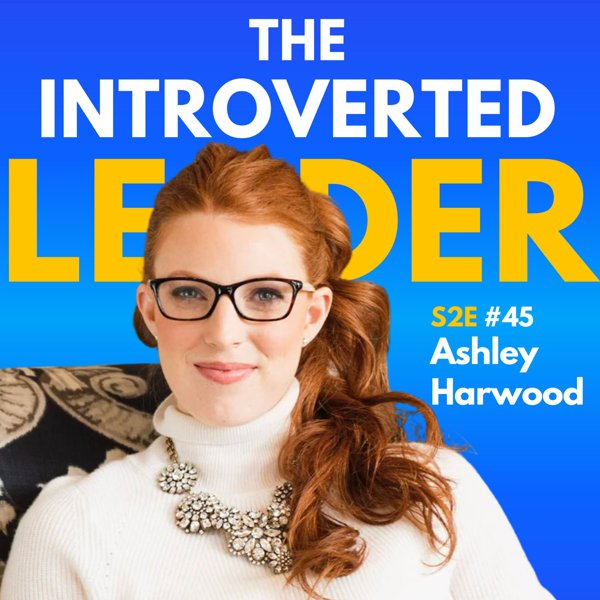
Ashley Harwood is a top real estate agent, coach, and author of "Move Over Extroverts: How to Build a Successful Real Estate Career as an Introvert," who spent years struggling in one of the most extrovert-coded industries imaginable before Susan Cain's "Quiet" gave her the framework she needed to restructure her business around her energy. Her core argument is that personal energy is a finite resource that must be managed with the same intentionality as a budget — and that introverts who do this show up sharper, more effective, and ultimately more successful than those who try to out-last extroverts by brute force.
Your personal energy is a resource. If you invest it with intention, you can thrive in even the most extrovert-friendly professions — without burning out.
Before any important meetings or events, I would make sure to rest instead of having three coffee meetings back to back throughout the day.
Rest doesn't necessarily mean sleep. It means being away from people and trying to shut your brain off — even for 30 minutes.
Just move over for a little bit — you'll realize there's half the population sitting here with things to say.
Key Stories
- Struggling without knowing why: Ashley was building a real estate business for years, running herself ragged, and couldn’t understand why she was so tired and stressed all the time — because nobody had ever told her she was an introvert and she wasn’t managing her energy at all.
- Listening to “Quiet” in the car: Ashley’s therapist recommended Susan Cain’s book for personal reasons, not business reasons; Ashley listened in the car and had a series of epiphanies that translated directly into practical changes — focusing on in-person over phone, and taking intentional rest before important moments.
- The writing tutor meeting: Ashley recalls sitting in a staff meeting as a writing tutor in college, having good ideas but not wanting to fight for the floor; when her advisor looked at her directly and asked “I want to hear what you have to say,” she shared the best idea in the room. “That feeling has always stuck with me.” She now tells leaders: always solicit the quiet ones.
- Domain name origin story: Ashley typed “Move Over Extroverts” into GoDaddy in frustration when every other domain was taken — it was available, and she kept it. The brand name captures a feeling every introvert has had.
Techniques & Frameworks
- Energy audit: Map your calendar to identify what drains vs. restores you, then design your work week around your true energy patterns — not the extrovert’s template.
- Pre-event rest blocking: Schedule deliberate rest (alone time, phone off, no screen) before your most important meetings, client interactions, or networking events — not back-to-back coffee meetings that leave you depleted going in.
- Guilt reframe for rest: Treat rest as a performance tool, not indulgence — “I’m going to come back to my clients at a much higher level.” When you notice irritability, treat it as a dashboard warning light and triage your calendar.
- Mirroring and energy matching: When meeting clients, match their energy level rather than trying to perform your own — this is less draining and builds faster rapport.
- Introvert-native selling: Focus on in-person relationship-building over cold calling; lean into listening, consulting, and helping people make the right decision rather than pushing for a close.
- VICTORY networking: (Melita Campbell’s framework, also discussed here in passing) — give yourself structured permission to limit what you do at an event, step away to recharge, and leave if needed. Don’t overstay until you’ve depleted yourself and dread the next one.
Full transcript
Do you ever feel like in order to get ahead, you’re fighting this unspoken requirement just to be on all the time. More social, more available, more outgoing, even when you know it’s quietly draining you. If you’re an introvert, this constant pressure to interact to get ahead can start to feel like attacks only you seem to be paying. If you don’t manage it, you won’t just get tired, you can flame out. Welcome to the Introverted Leader, a podcast helping introverted leaders embrace your underrated, quiet strengths so you can get promoted and start earning what you deserve. I’m Greg Weinger. I have over 25 years of leadership experience and yes, I am an introvert. In this episode, I’m joined by Ashley Harwood. She’s a top real estate agent, coach, and author of Move Over Extroverts, how to build a successful real estate career. Ashley has built her work on a simple but powerful idea that your personal energy is a resource, and if you invest it with intention, you can thrive in even the most extrovert friendly professions out there without burning out. In this episode, we’re going to cover one, how to audit your calendar so you can learn what drains you and what restores you so that you can design your work week around your true energy patterns. Number two, how to protect your time for rest in preparation. So before your most important moments, you’re showing up confident, sharp, and collected. And number three, how introverts can sell authentically by leaning into their strengths of listening, consulting, and thoughtfully helping people make the right decision without feeling push your fake. Sound doable? Let’s dive in. Here’s my conversation with Ashley. Just a pleasure to have you here today. Welcome. Thank you. I’m very happy to be here. Great. And with a title like Move Over extroverts, you are clearly placing yourself on the introverts spectrum. Correct. Yeah. Yeah. Awesome. When did you first realize you were an introvert? It was probably nine or 10 years ago at this point, but it was well into my real estate career. So I had been building a business and learning the real estate industry for several years, struggling. And a big part of that struggle was not knowing that I’m an introvert. So I wasn’t managing my energy. I wasn’t taking the time I needed to recharge. And I was just running myself ragged and didn’t know why. Yeah. So I had imagined you had mentors early on in the real estate industry. I’m guessing none of them were introverts. No, not so much. That’s right. So what kind of led you to the realization? Ashley, I’m going to walk back that firm now because I think some of the are introverts. However, some didn’t realize they were. And even those who realize it, it wasn’t part of the conversation. It was more just, here’s what you do. Here’s what works. Go do these couple things. So I realized I’m an introvert by reading Susan Keynes book. Oh, yeah. Yeah. Have it here right here by my desk. You and I and many others. It was a turning point. So yeah, tell me about that. Absolutely. It was recommended to me by a therapist. And I think she could probably tell that I was an introvert and she wanted me to self-discover. So she recommended this book. And I remember listening to the audio book in the car and just having so many epiphanies and breakdowns. And once I realized how my system works and how my mind works, I took that back to my business and I realized, okay, here are the changes that I need to make in a very practical sense. And when I did that and implemented, I started actually seeing a lot more results in my business. So that was a major turning point. Wow. And the book isn’t there’s no section in there for real estate agents. No, no, there’s not even for business owners. It’s not about that. But a lot of the principles can be applied to how we structure our days. That’s right. So let’s go back a little bit before that then when you were working in real estate, what are some of the challenges that came up? It’s a lot of people in both in finding clients and building a book of business and then servicing those clients and making sure people are taking care of. It’s a very, very social industry and there is really no getting around that. So the challenge is managing that and fitting in those pockets of rest in a very intentional manner. Wow. It’s absolutely true. You’ve got the events, the open houses where you’re showing people around and that’s like a full house party. Yeah. Wine and cocktails and things. And so you’ve got to meet everyone. You’re the host of the cocktail party and it’s a lot of energy right there. And then once you start forming those one-on-one relationships, then there’s a lot of time that you spend with clients. Yeah. And there’s a lot of networking too because if you’re like I was and you’re not from the area, you can’t just call ever when you went to high school with an ask for business. You have to go be out in the world, networking, joining groups and meeting even more people. I think there are events right for real estate agents. Like it’s agent-only housing tours or things like that. There are those as well. Yeah, it’s a lot of different things. But you are drawn to this for some way. What was the draw into real estate for you? The draw had to do with the opportunity and the flexibility having the opportunity to be my own boss and not have a ceiling on my income. I had always been fascinated by real estate as well since I was a child. So that was always kind of a given that I was going to be in this industry in one capacity or another. And again, when I was making these plans, I had no idea I was an introvert. I still think I’m well suited to the industry with these important changes that I now teach people. Yeah. And I think introverts are well suited to many industries like that, including leadership, obviously small business ownership, public speaking, communications. It’s just we have a little bit different operating instructions. Hey, exactly. So you came along, you were struggling. It sounds like this really wasn’t working for you. So we’re kind of working with the therapist at that point. I was for not for business reasons, but just for personal reasons, because I couldn’t figure out why I was so tired and stressed all the time. And that was really one of the main root causes was I was doing too much and I was spending too much of my energy and not getting it back. All right. So with some help and then in particular with some help of Susan Cain’s book, you started to figure it out. So what were some of the things that you realized and worked out? The biggest changes I made were focusing more in in person events versus cold calling. I realized that I’m much better in person. It’s easier for me in person than on the phone. And this of course, we’re going back to 2013. So even now in 2025, cold calling and being on the phone is not quite as popular as it was back then. Yeah. But I was much better at building relationships quickly in person. So I focused entirely on that instead of dabbling in that. And then the other major change was taking more time off, which is very counterintuitive for somebody building a business. But it was important for me to be able to recharge my energy before the really important parts of my day. So before any important meetings or appointments or even before a big networking event, I would make sure to rest instead of having three coffee meetings back to back throughout the day. And then I was exhausted going into this event in the evening. That’s great. And what does rest look like for you? Being away from people. So either at home alone or in the car, in the quiet, it doesn’t necessarily mean sleep. It just means trying as much as possible to shut my brain off for a little bit of time. Have you found any particular techniques helpful with that? Yeah. Turning the phone off is a big one. Yeah. Airplane mode. It’s great. Yeah. Yeah. No, that’s great. I have some similar experiences. I’m in a more of a corporate environment. The natural thing to do is just to be checking up on something. If you’re not talking to somebody you’re in Slack or you’re answering emails. And if you’re not, then you’re checking your phone, like for a break to look at news or something like that. And yeah, anything that requires more energy, particularly for me later in the day, breaks are enormously helpful. It just takes discipline to be able to do that. It does. I see it as building a habit, especially if someone has been in their industry for a while, they already have their habits formed and checking device that’s so close to us all the time. It is a habit for most people. So it’s first, I think it starts with understanding the importance of breaking that and having true rest where we’re not staring in a screen or scrolling or intaking information and then implementing it slowly, but consistently to reform those habits. Yeah. And I imagine it’s if you have your own small business, it’s true that you do have more control over that than someone that who might be in an office environment that you don’t always have control over your schedule. That said, there’s always things that you can do in an office environment, but the temptations to not do that are really, really extreme if you’re running your own small business because you’re like, you got to keep going. Do you have advice for people? How do you overcome that kind of barrier? It’s a little bit of trusting the profits. It’s a little blind faith to trust that is an important component that will set you up for a success long term and create something that’s sustainable versus I’m going to go hard for one or two years and then completely crash. I guess some of it is earning that trust is trying it out. And how long do you think you need to give it before you can realize some of the gains? That’s a good question. I think it depends how the frequency and intensity of the rest period, if someone’s taking five minutes here and there, that’s not really going to have the same result as taking a half day or full day off, which for a lot of business owners, a full day off is completely intimidating and might seem unrealistic. So having a team in place, having people that can support you and take over just babysit the business if you will while you’re taking some time, that can be really helpful. But at first, it will feel weird. It will feel, I felt guilty. That was my challenge. I felt a lot of guilt around taking time to rest and I just had to have a lot of self talk around this is actually an important tool for my clients because then I’m going to come back to them at a much higher level and be a better version of myself. Sounds like it was guilt for your clients. I may be letting them down if I’m not giving it my all. It was a little bit of that. It was more guilt around myself as a business owner, not quote unquote giving it my all, which is not realistic. No one can be working 24 hours a day. Bird, maybe someday when we’re not human anymore and we’re just AI robots, that’s yeah. But now we’re humans we need. Yeah, absolutely. And inverts in particular and you get into the book, you understand the wiring and how those situations are more challenging and naturally draining. But when did you start to see that this was allowing you to show up in a different way? And do you think you show up in a different way when you’re in the moment with clients? Are you interacting with your clients as an introvert compared to an extrovert? I’ll answer your first question first. I started to see a difference pretty fast almost immediately because a lot of it was that mindset shift. And then when I’m interacting with my clients, I don’t think I’m interacting as an introvert, or as an extrovert. I can’t I don’t think they can tell because I do make a point to match their energy level. That’s one thing that that we’re all kind of taught is this mirroring and matching concept to make the person you’re speaking with feel more comfortable and understood. You don’t want to be too loud or too fast or too different from how they’re speaking. But I do believe that I show up differently in terms of my reaction and my problem solving. That skill goes way up when I’m well rested. My tolerance for bad news, my ability to talk people through a situation, all of these things are much better when I’m well rested. Yeah. Like I can tell one of my triggers when I know that I need either food or rest or break from people is I’ll get irritable for no reason. Yeah. The science. Yeah. And you’re often your car often all day and so you go from appointment to appointment so making sure you have time for meals and rest seems like it can be challenging. It can be. Yes. And that’s where business owners have more flexibility in our schedules. To some extent we also tend to be more reactionary. The client says, Hey, can you meet me this afternoon? It’s hard to say no to that if you’re available. And so if you have rest time, for example, if you have the afternoon sectioned off as rest, but you have to be at this point, that rest time has to move somewhere else. Or you have to have somebody else cover the appointment. Those are the two options. But what a lot of people do is they say, well, the rest is an important. So I’m just going to work with the client, go to the appointment, and then go back to my normal workflow. And that rest gets eliminated instead of moved. That’s not good. Yeah. And the temptation to do that every time, you know, especially if you’re feeling stressed about money or worried about your business, you’re going to be like, I have to do this. Yeah. And you might have to, but then think thing else has to move later on. Yeah. How do you make sure you honor your need for rest, even though like your schedule is shifted? Yeah. It’s challenging. And that is part of what I discussed in the book is some techniques for how to do that in a very practical way. But at a baseline level, it’s making that rest a priority and knowing that that’s going to be a tool to serve you long term. Yeah. A lot of the things you’re talking about, I think, are going to be very familiar to listeners. They certainly resonate with me just in terms of if you’re not taking care of the rest, the signs of feeling irritable or not good. So you start kind of going into a red zone. Do you have any advice when you start to notice, oh, I haven’t been taking care of myself? Yeah. When I hit that point, I usually will take something off my calendar, I’ll skip an event or I’ll stay home and sort of going out or something. I know that I’m seeing those warning signs and I know what’ll happen if I keep going and don’t take care of myself. It also doesn’t have to be a full day off or a full vacation. It can be a short period of time. I mean, think of just 30 minutes or 45 minutes of complete silence. How powerful that can be. Yeah. I started looking at what can I move? What can move? It’s like a triage and where can I just get a break, lock a dog, something like that? How do you decide to write a book? Well, the book had been an idea of my for about seven years before I actually wrote it. Yeah. It was a long-term goal and it came from my classes that I teach and my coaching that I do primarily with real estate agents, but I do a little bit in other industries as well. But it’s hard to reach enough people just in those mediums. So the book is kind of a project to get the word out there and help people realize here’s how you can use your energy in a meaningful way. Here’s how it transfers to your calendar and to your activities to build your business. So I’m glad that it’s done. It’s not perfect, but I’m glad it’s downed out there. Yeah. So when did you publish? Earlier this year, this spring. Oh wow. Yeah. You have a great website. Thank you. Yeah. Okay, so this was in your mind. When did the title come to you? The title I stole from my coaching company. Okay. Well, my company has been called Moveover Extra Bricks every since I launched it. It came to me because I was searching for domain names and everything that I searched was taken. So I was getting frustrated and I just I was on the GoDaddy website and I just typed in, you know what? Move over extra with available. So I said, all right, that’s it. I’m done searching the names. That’s it. And then when it was time to write the book and title the book, I played with a lot of different titles and different directions. And I just kept coming back to this phrase Moveover Extra Bricks, which is catchy and kind of aggressive in a playful way. I just couldn’t find anything better than that. So that’s what the book is called. But I think anyone who’s an introvert has had that feeling about, you know, like stop hogging all the oxygen. Just for a second. And then, you know, we’ll get tired and you can take over again. Exactly. Yeah. We don’t need this spotlight for more than like 10 minutes. And then we’re fine. Yeah. Yeah. Just 10 minutes. You can have the other 23 hours and 50 minutes. We’re joking, but it’s funny because it’s kind of true. You know, it’s people just, we’ll sit there and just stay there and we get this impression as a society that introverts don’t have anything to say or you’ve got to be an extrovert to be a leader. But if you just move over for a little bit, you know, we’ll realize that we’re half the population over here sitting here and there’s a lot more people out there who have things to say. Yeah. Yeah. I was just reminded of a story. Is that okay to share a quick story from my college days? Yeah. That’s wonderful. Please. So I was working as a writing tutor in the English department. And it was where all my fellow undergrads would come to get help with their papers and learn how to use a comma, which I was always shocked with these kids in college. No, be sick grammar. So I said, well, I’m going to work here because I am good at this. And I remember sitting in a staff meeting with our advisor and all of the members of this tutoring center. We’re sitting in a circle discussing some kind of upcoming policy change. I don’t remember what it was, but it was something major. And everyone was talking over each other. And I’m just sitting there thinking and I had some thoughts, but I didn’t want to jump in there. I didn’t have the energy to, I just didn’t want to do it. So I was just sitting there thinking and our advisor looked at me. Once everyone stopped talking, she looked at me and she goes, actually, I want to hear what you have to say. And then I had the opportunity to tell everyone what I was thinking and not to to my own horn, but I had the best idea of the group. And everyone’s like, oh, wow, yeah, we can do that. I wish I could remember what it was. But that feeling of that moment has always stuck with me. And that was almost, I don’t know, 20 years ago. But that stuck with me because this leader gave me the opportunity to speak. And I think as any leader listening to this, make sure to solicit feedback from the quiet ones, because they’re probably as some golden there. Absolutely. Thank you for sharing that story. It’s absolutely been my experience in some of what I tried to encourage leaders to do because you really are not getting the benefit of all of your people. And meetings are not an ideal environment for introverts to share their thoughts and ideas. And try in the meeting. And even beyond that, I say, hey, if you think about it later and that comes to you, share it, and there’s things you can do to try to give people a heads up. So maybe they do some of that thinking before it and bring it to the meeting. But how wonderful and powering that was for you. It sounds like really made an impression. It really was. It really did. And I’m not in interviews very often nowadays. But when I do occasionally interview for something and somebody asks how I work or how I operate, one of the things I always mention is that I like to be asked for my opinion. Yeah. It’s important to tell people, I’m sorry, I know it’s completely a tangent. But I just keep it. No, no, thank you for sharing that. It’s very topical for the show. And it’s a great reminder because there is an expectation. And in general, I encourage introverts to put themselves out there and try to do that. But it’s just not always comfortable. And then things can get really loud in the aggressive. I find myself in situations where I’m looking for a way to get in. And I was like, all right, well, I’m just going to sit back for a little bit and let people tire themselves out. And then, you know, I’ll try again. We have other features now in meeting rooms. You have a hand raised button. So I don’t need to. I was like, okay, you know, could go five minutes, but I know eventually I’ll say what I want to say. And sometimes you feel like joining the fray and talking over people. But a lot of times I just don’t have the energy. Yeah. Same. I do like the hand raised button. That’s a nice feature. Yeah. Yeah. It’s a good one. So I really liked what you were talking about earlier about matching energy because that’s something it’s actually just related to what we’re just talking about. If you do join the fray, you have to match the energy of what’s going on. Yeah. That’s a lot. You have to have a lot of energies in reserves to be able to do that. Yeah. Yeah. And I wonder if just working one-on-one with clients, you have certain clients that require much more energy than others. I do. I do. And that’s okay because that’s who they are. So I’m not going to judge them for that. I just know the amount that I’m going to need to bring to the table to go into those interactions versus other clients that are more on my natural wavelength that don’t require quite as much energy output. It’s interesting. Yeah. Yeah. And ability. I wonder, is it everyone who has that kind of ability? It feels like something naturally that I’ve always had, but I don’t really know where that comes from. It’s just maybe all people have that capacity to do that. I think all people have the capacity. Not all people have the awareness that it even exists or that it’s important to do. Yeah. Yeah. I guess if you are high energy and you just kind of expect everyone to conform to you, then the world isn’t beating your head with anything making you realize anything differently. No. Those folks might have the opposite struggle where they’re bulldozing people without realizing it. Yeah. Yeah. I think that’s what happens. And then hopefully somebody shines a mirror up and say, you need to back off and that sort of thing. But it does strike me as a really great skill for you. I think for a lot of introverts because you might have a very different energy from the mass of people, but you’re able to dial it up and really interact and have meaningful connections with all kinds of people. Right. Absolutely. If you deem that it’s going to be worth it. Right. And sometimes you might come into the situation so, nope, don’t have the reserves. Yeah, totally. Yeah. And that’s okay. It’s all just this awareness of, do I, again, I think of it just like money? Do I want to spend $100 on this? Or do I have men and I’m going to spend 10 and then I’m out? Yeah. So you are coaching. How long have you been coaching? About eight years. Okay. Great. So that’s where the book has been brewing for all this time, working with folks. And that’s an addition to your real estate business. So it’s a sideline business. And what prompted you to do that? It was a time in my real estate business where I’d hit sort of a plateau. I’d hit a couple of higher levels. And I had a coach at the time who was encouraging me to take the next step and build a team, build out this whole real estate empire. And I said, you know, I really don’t want a team. I don’t want to be managing people. I couldn’t put my finger on it, but I knew that it was not going to be the best use of my energy. And the cons and the stresses of that would outweigh the pros. So I already knew that was a firm no. And I said, well, I really like teaching. I was teaching classes in my office for free just to help out. And I was mentoring newer agents and training them. And I enjoyed all of that. So that was a very natural next step. And my coach asked, well, there are a million coaches out there. Leadership coaches, even real estate coaches, what would make you different? What could make you a little bit different than all the others? And immediately I thought of, well, I had so much struggle in my first couple of years, not knowing I was an introvert. There’s got to be others out there like me. So that’s where this whole thing was born. It started with one class that I wrote. And I still teach it. It’s an hour. And that was the foundation for the concepts in the book. And it’s evolved and taken a lot of different twists and turns along the way. So it’s right now it’s some classes, some coaching, group coaching, the book club. And I speak on some stages. So that’s kind of in this bucket over here. And then I’m still selling houses over here. It’s great. It sounds like it’s a mini empire. It’s not a real estate empire, but you’re out having an impact and doing something that you enjoy. I am. And I don’t have any employees, which I also really enjoy because I see my colleagues struggle with that. And it’s just so much stress. And of course, sometimes it’s worth it, but a lot of times the turnover and the training and all of the just it’s a lot of headaches. Yeah, absolutely. That’s great. So let’s cover some more of the tactics. Yeah. People can have. Yes. The best place to start I would say for really anyone, no matter what industry you’re in or whether you’re an employee or an entrepreneur, I would say look at your calendar and go back over the past couple of weeks and just look at every piece of the calendar, everything you did, every interaction and think about how did I feel after? Did this activity use my energy to give me energy? How does this affect me? And you’ll start to see some patterns. And that’s a very helpful place to start to build that awareness. That’s really good. It’s sort of an inventory log. And yeah, you start to see patterns. Just me, for example, I come out of the day super strong. I have a meditation practice and it’ll often carry me into mid afternoon. And then if I’m not doing something at that point, then I’d hit a kind of an energy crash. That’s amazing that you know that. You know what your flow is going to be like. That’s huge. Yeah. Yeah. Can’t always do something about it, but yeah, aware. And then noticing things going into different situations. I’m going into the office today. And so my options for taking a rest or managing energy are more limited or different in that situation. Yes. Absolutely. And then another big piece of it is how you interact with the people in your home. A lot of times when I teach a class or speak, people come up to me and say that they either understand themselves better or they understand their spouse better. Interesting. Yeah. Yeah. It is very interesting. I find that a lot of times you have an introvert and an extrovert pair it up in a relationship. And it’s good to know kind of how you operate as an individual and also how the people in your home operate. Do you have an example of what kind of challenge could show up in that circumstance? Well, yeah, I’ll see the personal example. My partner is very much an extrovert. And he knows that he actually, it’s very cute. He wrote that intro to my book. Or the forward. Nice. And I asked him to because he has a great story about hearing me speak and giving me some loving feedback and then realizing, no, she actually is doing the right thing for her audience and there’s not going to be like the super crazy running around stage speaker. For example, we will go on these long walks and one of us smokes. It’s not me. So, if you’ve got a lot of walking and pacing and talking and he does about 95% of the talking. And I listen and I’m a sounding board and it’s interesting because both of us understand how the other one is operating in that moment. I know that for him to process information, he has to speak it. He has to talk it out. For me to process information, I have to be quiet. I have to journal. I can’t be talking to anybody. And during those walks, it’s a time for him to process and think and brainstorm and meet to give a little bit of feedback here and there, but mostly just listen and then be supportive. And that’s the time for him to process. And that’s not the time for me to process. And we both know that. The time for me to process is when he goes to the office and I’m home alone with the cat. That’s my time to process. And it just, it worked really well, but I can see the potential for couples to have fights if they don’t understand how the other one is working. Yeah, thanks for sharing that. That’s a really good example. And now I’m thinking about being my wife on our walks. We were 26 years married and we’ve known each other closer to 30 and we’ve always just gone for long walk. We talked, but I think we’re maybe a little bit more evenly matched that she’s definitely more outgoing than I am. Yeah, but that’s great. I think that’s an important pattern. And it’s an important thing to remember that the people around you have their own needs. For example, sometimes I’m stuck in meetings after meetings and I come out and she might be completely immersed in something and doesn’t want to be bothered. And so you just have to have awareness of the other person and where are they? What are they doing in respect for whatever the other person is doing? Yeah, absolutely. And I think it’s important for people listening or watching this who maybe haven’t had those conversations explicitly around energy. It might be a good excuse to start a conversation and just ask. If you’re not sure, just ask the other person. Do you ever need a long time? Do you ever want more a long time? A lot of people I feel if they live with someone, it can be challenging to bring that up without hurting feelings. So there’s a loving way to bring it up. For the other person on the other side, to understand that it has nothing to do with them. It’s not personal. It’s just this is what your partner needs. Yeah, that’s a great point. It helps to deeper understanding of each other’s needs. And yeah, it’s not that I don’t want to be with you. It’s just that I need this at this time. There’s time to connect later. And I’m sure the same applies for children as well. I don’t have children, but I know that season talks about that in her book, which is a whole sectional and parenting introverted children, which I just find fascinating. Yeah, and there’s the whole thing on schools and public schools and those environments aren’t very well set up for introverts still. Maybe a few schools, but in by and large, not not at all. I think most workplaces do or not the most conducive. Yeah, that’s very true. So we talk about calendar management, maybe inventory of what’s going on, how you’re showing up in there. What’s another thing that you recommend your clients work on? I recommend they look at the most important part of their week or their day. So for people in real estate, usually that’s their appointments with potential clients. You’re winning the business, listing appointments by our consultations for anyone who’s not in real estate. Just look at what are the most important parts of your calendar that are going to have the biggest impact. And then back into before that happens, what needs to happen? So before that meeting, let’s pretend it’s a meeting because that’s easier to talk about. Before the meeting, do you need to clear some stuff out to have time to rest or do you need to bake in some sort of restful activity? Maybe it’s canceling a meeting before the important meeting or rescheduling it so you have time to take a walk first or something like that, but being very intentional with the order of operations of the day. So when you get to the important meeting, you’re ready to go. And is there an element of preparation in that? That’s something that I think about, certainly in my business context, is rest beforehand for energy, but also the level of preparation has a big impact on how you show up. It does, absolutely. And I would even calendar that. I would have that as a time block of however long one or two hours or however much time you need to prepare to go into a feeling confident. For me, I like to do my prep either the day before or the day of, but not right before. I like to have a break in between where I can rest. In my world, it comes kind of naturally because usually in the car driving somewhere, but I’ll turn the radio off. I’ll turn the podcast off and just be in silence with my thoughts for a while. And I find that to be helpful. This image just came to me from the movie Ali, I think with Will Smith. They just show these just extended scenes of Muhammad Ali younger and just skipping rope and just silent. He was so famous for talking and all his banter, but they just show scene after scene and just silent, just doing his workouts and routines. And then like the very next thing is him showing up at a press conference and having all these witty things to say and being super entertaining and really larger than life. And the contrast shows of all that came out of those silent moments. So it makes me wonder, was he an introvert? Because no one would think that just to to produce all that, it was too good to just all be spontaneous. There was sort of an art and a performance all in that. So I don’t know, just thinking about driving through the car, coming off, showing off to the big show, your big show might be a real estate meeting with a client or just some other meeting. But I think it’s a similar thing. Absolutely. And there is an element of performance, not in a fake way or in authentic way, but you have to be on. You have to be ready for questions. You have to be ready for people to be stressed and freaking out, at least in my world. There’s a lot of that. And that’s that’s spread my job is to handle that to calm people down. So I need to be calm, but I also need to have a high level of energy for whatever they need. I feel like I have to, I just got this image in my brain of having a completely full glass of water. And I don’t know how much my clients can need of that, but it needs to be full because they might need the whole thing. That’s true. And these are very highly stressful situations for your clients. The purchase of a home is one of the major life events. I mean, they wouldn’t do the the biggest investments you’re ever going to make. It’s very long-term. And so there are stakes there. And it’s also deeply personal. So I think it probably brings all kinds of personal issues to the front that you get to witness. I think that I just, and selling a home is usually not a joyous occasion. Usually it’s tied to not always, sometimes it’s happy. Like, oh, we’re moving to a barehouse. But a lot of times it’s, no, somebody passed away, we have to sell house or we’re getting into force. We have to sell house. There’s just a lot of emotion there. And then with my coaching clients who are real estate agents, there’s a lot of stress there too because we aren’t paid a salary. We eat or we catch. And so there’s a lot of stress that comes with that as well for newer agents. So I’m dealing with stressed out people all day long. Yeah. So enough healer is the right word, but you’re there to be of aid to people. And almost like a more therapeutic kind of relationship. Absolutely. We always show them with their pests. Yeah. How many fields are out there where everyone is just secretly just therapists, at least the good people? Probably a lot. Probably anyone in a higher level sales role does a little bit because all sales is just listening and problem solving. Or at least that’s what it should be. Yeah. Yeah. I’m glad you touched on the sales bit because that is another thing that I think can be very intimidating. Or a lot of people who are introverts might feel like, how do I do that in a way that’s authentic? Don’t think of it as selling anything. You’re listening. You’re consulting, providing options. You’re helping your prospects get to the right decision for them, whatever that might be. That’s sales. I don’t care if it’s you on a by this house or do you on a by this pen. What’s your need? What are you going to use it for? What’s your budget? Here is the features and benefits of this particular one versus this one over here. What makes some sense for you? But we’ve all experienced that. We’ve all experienced people who are good at it and it feels like the person actually cares about us and helps us figure out solves a problem for us. And then you’ve had the person who just feels mercenary and like we all know the difference. Yeah. You do. So for introverts if you’re in a sales role or you want to be, that’s great. Because introverts are very well suited for helping people. We are good listeners and we do care about you. Not the extra rich don’t. I’m just saying like we naturally want to go deeper anyway. So that’s a huge advantage in sales. I’ve heard that and I haven’t had many people talk specifically about sales on my podcast. I know there’s Matthew Pollard out there who is the introverts edge. Yeah. And this is an advantage. His perspective and has certainly teaches that. But I love that. Anything that’s flipping expectations on its head like your move over extroverts. Introverts can do anything. We really can. We just have to decide what that is. To decide what you want. Like how do you want to spend your days when you’re choosing a career? Yeah. So I think our time is winding down. I’m wondering if you would have any kind of messages you would like to share with introverts out there. I want to share a message of empowerment and encouragement that there is no industry that we’re excluded from. And in fact, the highest level most successful people in, I would say pretty much any industry are introverts. Some of the most successful people in real estate are introverts. Big names that you’ve heard of. So don’t let that discourage you. Just find a way. If you want to be in some industry that seems very extrovert friendly, that’s okay. Just find a way to make it work. I will also say that the principles that I discussed in my book are very universal for all business owners. So if you’re in a different industry not real estate, it would still be helpful. Yeah. It certainly sounds that way. And I think that’s a really important point. It would look for the heroes and ask around and try to find a mentor who actually is that way because they can help show you some of those corners. But there is so much information out there starting with our book from our friends Susan Kane. You could extract all of these principles and apply them to different situations, but it’s really great that now 10, 12, 13 years later we have books like yours to help people in specific fields and examples of people who are being successful just by being themselves. Yeah. And I’ll second your shout out to Matthew Polygon has two books as well. The introverts edge and the introverts edge to networking. They’re both super helpful and great resources for injured roots who are business owners out in the world trying to now work very, very well written. Excellent. I’ll have to link those here. And if people want to find out more about you and your work, where should they go? They can go to my website moveoverextraverts.com and check out all the resources there. I do run a book club once a week on Zoom. It’s free. It’s open everybody. And that’s kind of a nice forum for discussion around some of these topics. That sounds fun. What’s the book right now? We’re going to your my book. Oh nice. Yeah. The chapters are all very short and there’s about 50 of them. So we’re doing one chapter a week. I’m just talking about whatever the topic is. There was one a couple weeks ago that we did that was all about saying no. So for half hour we talked about how to say no. That’s great. That sounds like fun too. Yeah. Thanks so much for being on the show today Ashley. I have pleasure. Thank you for having me. Okay, let’s take a moment to recap what Ashley shared because this one is just so practical. Number one, remember to treat your energy like a real budget. Start noticing what drains you and what replenishes you. For a simple first step, look back at the last couple weeks on your calendar and ask after I did this, did I feel better, worse or neutral? Number two, start protecting your time to rest and prepare before the moments that really matter. Whether it’s a client meeting, a big presentation or just a tough conversation, don’t arrive depleted. Build in that time beforehand so you can rest up and really bring your full self to the moment. And number three, reframe sales as a service. Ashley’s reminder was powerful. Great sales is about listening, consulting and helping people make the right decision for them. These are introvert strengths, especially when we stop trying to perform like someone else. If you found this episode helpful, the next step is obvious. Subscribe to the podcast so you don’t miss what’s coming next. More tools for quiet professionals who want real influence and real career growth without changing who they are. I’m Greg Guhanger. Keep leading with quiet confidence and I’ll see you next time. The Bleacher Report app is your destination for sports. Right now, the NBA is heating up, March Bandis is here, and MLB is almost back. Every day there’s a new headline, a new highlight, a new moment you’ve got to see for yourself. That’s why I stay locked in with the Bleacher Report app. For me, it’s about staying connected to my sports. I could follow the teams I care about, get real-time scores, breaking news and highlights all in one place. Download the Bleacher Report app today so you never miss a moment.