The Dramatic Mindset Shift for Introverts Who Finally Ask "What Do I Actually Want?"
Get Promoted Without Becoming Someone Else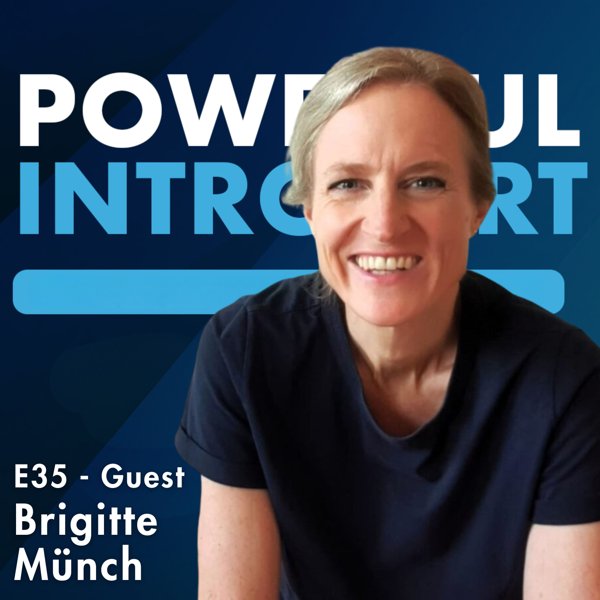
Bridget Munch is a high-performance coach based in Zurich with a career spanning classical music, IT law, corporate executive leadership across Europe, and solo entrepreneurship — plus a side career as an alpinist and ski instructor. She helps leaders drop their corporate conditioning and lead themselves like their own CEO. The pivotal question she asks every client — "What do you actually want?" — turns out to be one most people have never genuinely been asked, producing a shock of self-discovery that reorients everything: career trajectory, schedule design, business model, and identity.
No one had ever asked me what I wanted. And the day that coach asked me — I went home, I sat down, I cried. I thought: this is so horrible. I don't know what I want.
We build a business that serves our lives. Not the other way around.
The mountain is always stronger than I am. Turning around is not fear, it's not weakness — that's smart in the mountains.
Key Stories
- The rainy afternoon in Stockholm: While working in corporate and being asked to relocate again, Bridget worked with a coach who pushed back: “But what do YOU want?” She couldn’t answer. She went home and cried — not from sadness, but from the realization that no one had ever asked, and she didn’t know. That moment began a long transformation.
- The hiking boots falling apart mid-climb: On a recent hike in the Alps, Bridget’s boots disintegrated on the way up the mountain. She improvised, tied them together, eventually switched to sneakers, and kept going. She uses this as a live illustration of adaptability, plan B thinking, and accepting that the mountain is always stronger than you are.
- Bringing corporate conditioning into solopreneurship: After escaping corporate life for freedom, Bridget discovered she’d built a new hamster wheel with the same rules — reacting to everything, letting others dictate her schedule, assuming she had to scale and grow constantly. Recognizing the conditioning was the first step to dropping it.
Techniques & Frameworks
- The Alpinist Method: A goal-setting and strategy framework using mountain metaphors. The vision is what’s behind the summit (you can’t see it yet). The current summit is your next big objective. Your valley position determines your route. Huts and signposts are short-term milestones. Plan for weather changes. Know when to turn back.
- Personal calendar first: When building a business plan or leadership schedule, block personal life first (family, health, elderly parents, recovery), then allocate remaining time to business. This reverses the corporate habit and creates sustainable structure for introverts.
- Selling as serving/inviting: Same reframe as ep34 — selling means “offering people access to a solution.” Introverts who lead with listening and questions are better natural sellers than they believe.
- “Become your own CEO”: Lead yourself with intentionality — where do you want to go? What are your values? What is the business (or career) doing for your life, not the other way around? Strip out corporate conditioning assumptions about what growth must look like.
Full transcript
Nicole shops at BJ’s wholesale club for Easter ham, baked goods candy, and five dozen eggs. I’ve got a lot of baskets to fill. Get a $15 digital coupon when you spend 150-1 transaction through April 5th. Visit bj.com slash Easter coupon for details. BJ’s your Easter destination. The Bleacher Report app is your destination for sports. Right now, the NBA is heating up, March Manus is here, and MLB is almost back. Every day there’s a new headline, a new highlight, a new moment you’ve got to see for yourself. That’s why I stay locked in with the Bleacher Report app. For me, it’s about staying connected to my sports. I could follow the teams I care about, get real-time scores, breaking news, and highlights all in one place. Download the Bleacher Report app today so you never miss a moment. Have you ever been so busy checking off somebody else’s agenda? But you forgot to ask yourself the simple question, what do I actually want? I’m Greg Wanger, and this is the powerful introvert podcast, helping quiet professionals rise in leadership and earn what they deserve authentically. Today, I’m talking with Bridget Munch, an award-winning, high-performance coach in Zurich, with one of the most interesting career paths you’ll ever hear, from classical musician and IT lawyer to corporate exec, and now a solo pranur. She’s also an alpinist and a ski instructor on the side. Bridget helps leaders embrace change and learn to lead themselves like their own CEO. In this episode, you’ll learn one, how to simplify your goals and build a rhythm that lets introverts do their best work. Two, how to sell without feeling salesy by turning sales into a service, leading with listening. And number three, how to navigate change without burning out by dropping the corporate conditioning and creating space for what really matters. Here’s my conversation with Bridget. So glad to have you on the show today, Bridget. Thank you, Greg, for having me. I’m glad too. Yeah, it’s great. This is the powerful introvert podcast I would be remiss in not asking you. Do you consider yourself an extrovert or an introvert? I’m keenly an introvert. And I don’t think it’s just test results. I feel that I’m an introvert. Yeah, you feel it in your bones. Definitely. Yeah. That’s great. Was there a certain point in your life when you realized that you were an introvert? I was told that I am honestly, I don’t think I ever thought about it really. But during my own leadership career and corporate, we went through different leadership programs, leadership development and personal development programs. And then of course you do one of these big tests, so the highest breaks or a Clifton’s strength spinder. And yeah, it was pretty clear that I’m an introvert and I thought, is this weird? Because I never thought that leaders or people in leadership positions can be introvert people. I thought they are shy and they don’t like people and they always said somewhere in the corner and don’t speak at all. And that was not me. But then I started to really read more about it and observe other people. That’s something I really like being an introvert. And it was pretty cute to me. I, okay, I get it, but it’s not necessarily what I thought it is. That’s right. So it sounds like you are not necessarily shy, which is an important distinction, as we know. And you were already in leadership at that time. You were outgoing enough and you had started your leadership journey. Exactly. Exactly. Yeah. And it’s still like this. I like people, but I think what makes me really an atypical introvert is that I need the new time. I need to eat time alone. I need quiet. I’m really reacting quite strongly to noise. And that’s not only physical noise, but also mental noise. So I need my downtime. I need the time for myself to recover. And one distinction I can also make is that I love to think before I speak. So I’m not so much a thinker while I’m speaking, but I like to think beforehand. I think that sometimes when you are in an extrovert, dominated environment, and you know, that probably in the so tech space, then it’s sometimes difficult, you know, in meetings to find this space to think first and speak up later. And then people ask you, but why did you say anything? So yeah, I was still thinking. No, that’s right. So this process wasn’t done yet. Oh, you’re right. Yeah. I love hearing everyone’s story and I love hearing your story. I really do think that thinking before you’re speaking really speaks to the heart of the difference between introverts and extroverts. It’s that delay. Really, it’s that intention to go inward or that tendency to go inward first, which is the distinction. We go inward to figure out what we’re feeling and thinking. And what’s the opposite for extroverts. But I love that you weren’t shy because you’re just another example that busts a lot of myths. Everyone thinks all introverts are these shy wall flowers. And I personally love all of you shy wall flowers. You do. You do. My heart is part of you because I’ve been that too. But I just love that there’s just so many different ways to show up for introversion to show up in the world. Absolutely. Absolutely. Okay. So I read in the introduction, you have a bunch of very interesting activities, music, skiing, law, coaching, the things you do now. Is there some theme that ties all of these things together? Yeah, I think there are probably two things which are intertwined. And one thing is the aspect of clay. So I’m a half professional musician. So I started to study music and I play concert and I taught others to get a few in the piano. But I never finished it because I was not that introvert that I was just spending 20 hours per day in a tiny little room and just practiced. I just wanted to play. And when you see skiing, of course, that’s play at its best. With law, it may not be that obvious. But in the end, I loved negotiating. And this was for me a bit this psychological play in a positive sense to see whether the other person come from and how can we reach a solution that serves everyone. And that was sometimes very playful because you have to be creative. You have to come up with really practical stuff. Now also in my consulting and coaching work, I work a lot with entrepreneurs, which I love. And that’s always finding creative solutions as well. And I honestly, I think we as adults, we are often so serious and we take things so serious and also serious. And things become easier when we play a bit more. And that’s one thing. And the other thing, I think is the other theme is simplicity. Really trying to simplify complex things. And you can have a very complex musical piece. And still you have simply, you have to play your instrument and your part. And in law, that can be very complex. I always try to simplify things. I worked a lot with business people. So translating the legal language and the legal structures into something much simpler. And skiing can be the same. You have sometimes a complex technique in certain disciplines. You can be in a very complex environment. And then, okay, okay, we simplify this. And that’s what I do with my entrepreneurs as well. Very often they come overwhelmed, overworked and their business has become complex. And they are just dashing around and trying to find some space for themselves and the room to play a bit more and have a bit more fun and joy at work again. And then the first thing we do is simplify. So that’s probably, I would say, the two things that I would write. Yeah, beautiful themes, both of those. And just you can see that aspect of play. We all need that more in our lives. I understand you were hiking with a friend earlier this week in the Alps, which sounds very fun. Yes, yeah, it was, it was great fun, but I told you, I had a bit of trouble with my equipment so my hiking boots gave up on the way up, which was not very practical because I also had to climb down again, kept off the slate. So, yeah, but then you start playing and improvising. Okay, what can I do and we tried to bind it together and stick it together and that didn’t really work. And in the end, I took my sneakers, which was not good for my feet. You can see it still, but that’s what you do then. You work with what you have. Solving complex problems. Exactly. Which is another thing, I introvert brains, mine, in particular, love to do is take in lots of information and process our way to figure out how to simplify that and help navigate complex situations. Yeah, would you describe yourself as overthinker? Correct. Sorry to ask a counter question to you. No, I love it. Thanks for asking. I’ve 100% been describable that way in my life. One of the things I’ve done as I matured or I’ve gotten in recent years as I have meditation practice to combat that and spending time not thinking as much as possible. It’s not a surefire thing to reduce thinking but balancing periods without thought, periods of play with periods of thought and it makes the thought so much more productive than fruitful. Yeah. What makes you ask that? No, because we talk about thinking and processing and taking in a lot of information. And sometimes I catch myself that I think, okay, just stop thinking now, it’s good. You have thought about it, but I have to remind myself sometimes quite actively. That’s right, yeah, that’s the pitfall of being so inward directed in thinking oriented is knowing when to stop. Exactly. Exactly. You also talk about, part of your work, becoming your own CEO, what does that mean in practice? I think it means two things. So for me, having been in leadership positions before I started this whole personal and leadership development journey, was quite challenging to be honest. It’s also, I remember when I took on my first team lead, leadership role, I was promoted so to say, from a peer to become the team lead. So my former peers have been my direct reports now, which was a bit of change in dynamic. And when I started with these personal developments, programs, I realized, okay, I have to lead myself first and not react more to things, but create and design the things for my team and for myself so it works. And I see it quite often today, especially with solo partners who work for themselves. And they just do everything. So suddenly you are not just the IT guy or the IT lawyer or have a certain role within this whole thing, but you are everything. You are the consultant, the coach, the leader, the marketer, the sales guy, the accountant, the content creator, all of that. And they wear so many hats that they don’t see the woods for the trees. And then this ability just to take a step back and we say, okay, where do I want to go? And what do I really want in this whole thing? Can be quite challenging. And I remember when I started my own solo printer or entrepreneurial journey, I was new to all of this. Yeah, I had a career, but then it was for me as a way me to start having scratch. And then you are so open to everything which you read and you hear and you listen to it, especially the online world is so, so noisy and everyone comes with a program and an advice and a recommendation and you have to do this. And this is the key to success. And you try so many things and I completely lost. The connection to what do I really want my business to look like? There’s so many people that telling you, this is how your business should look like or how your role and your leadership should look like. But this connects you to myself and how can I make it work for me? That’s quite difficult. And I think it’s super important that we become clear about that. How do I want my business to look like? What do I want my business to do for me in my life, situation I’m in? Or my leadership role? It’s really important that we take this, be the shook first. So much of that resonates with me, particularly stepping out creating the podcast and there are so many different messages out there. This is the method and this is how you write hooks and this is how you promote and market and it gets overwhelming very fast. It sounds like where you come in and what you’re recommending is for people to refocus on themselves and gain that clarity about specifically what they’re trying to do for them. Yeah, absolutely. It’s in the end, it brings us back to the two themes we talked about before. How can we simplify things? Let’s cut through the noise. What does it mean for you? What is your vision? What do you want to achieve? What are your values? What’s important to you? And then start developing a strategy from there and play around a bit more. Yeah, I love to get more into the play there. So if we were going to develop that vision and strategy, are there particular methods you use and it’s one thing to develop it about how do you remember this and make this something that has always with you and you’re embodying every day? Yeah, so my method as you can imagine is I sometimes call it the alpinist method. So living in beautiful Switzerland in the middle of the Alps, I think it serves so well as a picture of what you want to achieve. So I’m always talking about the vision, which is something that is behind the summit. You can’t even see it when you’re down in the valley but you imagine what’s there. You just see this next summit, which is your next big goal or overall objective. And you see, I want to go there. This is the direction. Then we see, okay, where do you start? In which valley are you now? Because depending on where you are now, the route will be different. And then you start walking. You need the right equipment before that, of course, you should train a lot and you should build up your muscles and the strength to get there. And then you have maybe little points in between, little huts or viewpoints, a signpost, whatever. We say, okay, this is my next little goal. And this is what I do this week, what is launched. And so you can visualize a lot when you use these openest, yeah, pictures. And I use that a lot, you know, because I think sports or mountain sports and though they’re business running a business, being a leader, they have so much in common. Physical and mental resilience. Yeah, and it’s an endurance effort and lots of planning and strategy go into it and you have to remember to look at the beautiful sites along the way and enjoy yourself. Absolutely, yeah. And things can go wrong, like my hiking boots last weekend. It’s, yeah, some of you equipment doesn’t want any longer. And then, okay, what’s my plan B? Yeah, all the weather conditions are not good or whatever. Yeah. The unpredictability. Absolutely. Yeah. So someone’s developed this vision and it’s often the distance they’re working toward that. But when you’re a solopreneur, your days are your own, they’re pretty unstructured. How do you help people develop that structure and manage energy through the day? Yeah, we really develop a very concrete plan and action plan. And what I like to start with is, okay, we make space for your personal life first. And when I introduce this, people look at me quite strangely. Because they have not heard that. Yeah, and in all our hustle culture, you know, do more and do it faster and you have to be the first one and you have to shout louder. And I think we build a business that serves our lives and not the other way around. And depending on your life situation, you may have more or less time for your business. So me, for example, I’m also taking care of my elderly parents and that takes time. So I know, okay, I need at least one or two weekends per month to go there, to travel there. And what does that mean for the time for my business? And we start with this personal stuff really. And what is also your social life? What about family, friends? Maybe you have kids or you have hobbies where you just want to hang around and read a book. I think that’s also a very valid reason to just cut off time from your business. Yeah. And then we take the time that is remaining. I say, okay, this is what you had for your business. This is your availability. What do you want to achieve? And we set business goals, we set personal goals, we set financial goals. And how can you make that happen? So there are always different parameters. I have many clients do you need per month? Does that fit to the office you have? Do you offer one to one on me? Do you have to do something with your pricing then? Now all these little screws you can turn. And yeah, we really make a holistic plan so that people stick to it. Because otherwise it’s not sustainable and it doesn’t work. Excellent. So it sounds very individually tailored. And no, as introverts in particular, probably not all your clients are introverts, but managing your energy through the day also is a big part of that. And so have you talked about those kinds of things with your clients? Absolutely. Absolutely. So I practice it with myself. When I’m on a podcast with a nice person like you, right? I always have a buffer after that. I go out and take a walk. So there is some time for me to wind down and really rest for a moment and process. Think about it. OK, what’s the good? What could I have done different? What did I like really? And yeah, really let that settle in and get me the space to come down. Because I know if I would schedule five client meetings per day, I wouldn’t perform. I wouldn’t be good. And I want to generate the best for my clients. So I limit my client meetings to two, maximum, three, but three is already the exception. You’re doing tons of preparation for each of those meetings and make them as impactful as possible. I would assume. Absolutely. Now. Having a solo printer, just being an entrepreneur in general, you are empowered to create your schedule exactly how you want it in a way that you don’t have that same level of control when you’re in a corporate environment. So in a lot of ways, recognizing for introverts that you do need to manage your energy, this is kind of an ideal setup for you to be able to set up your day exactly in a way that is going to allow you to perform your absolute best. Yeah, absolutely. And it’s interesting that you say that because, I think in the beginning, I was craving this freedom and flexibility. I think that’s one thing why AutoHos set up in own business. We want this freedom and work from wherever we are and whenever we want. And I somehow couldn’t in the beginning. And what I didn’t realize was that I’d brought all my corporate conditioning into my solo entrepreneurship. And that’s what I see with a lot of clients of mine as well who have a corporate past. Now, they create a different hamster wheel, their own. And they still react to everything and let other people dictate what they do and what they don’t do. And it’s so interesting how we bring this corporate life into our tiny little one person that he is. Absolutely. That would be just the natural thing to do, not knowing a different way. And I think until you have that perspective, it’s hard to see how crazy some of the behaviors that are considered completely normal are in the corporate environment, is the idea that you could be interrupted by anyone at any moment that you can be pulled into meetings and whatever you’re trying to accomplish, that’s up ended. And so there’s almost no way for you to do deep work, deeply creative work in a corporate office, a corporate setting. You have to work at it. It’s not that it’s impossible, but it is very challenging. Yeah. And that was probably one of the most challenging things in my corporate life, the least over the space, workplaces. I hated it really and it’s difficult to really focus. And it was good. I worked in a technology company. So we had the possibility to work from home one day a week or something and yeah, that really helped. And I realized how much more I get done during those days. Yeah. And that’s been one of the wonderful shifts since the pandemic. It’s become much more acceptable for most companies to have some kind of hybrid or remote. A payment tip from Northwest Natural. Northwest Natural offers flexible payment plans and build discount programs for customers who need extra support. That’s good energy, reliable and ready. Learn more at nwnatural.com. Environment, the pendulum swinging back and they’re trying to get rid of jobs with AI, of course, or use that as a pretext to eliminate jobs. I’ve been fortunate with my work to have a remote setup, but I still think that’s much more accepted and supported than it was before the pandemic because everyone realizes what the possibilities are. I think it’s also very introvert friendly. That’s your introvert showing. It’s like, boy, these open offices really aren’t designed for introverts. And I don’t know, don’t really. Yeah, and there are some other crazy things we pace at the corporate world, right? It’s also being on this constant growth track in terms of promotions and the next title and the big team. And I realize how many people bring that also into their little business. And once they have a solid foundation and it’s running, it’s immediate and you have to scale. You have to work back, you have to have a team. You have to hire now, you have to increase your rating. And I always say, OK, let’s pause for a second. Is that really what you want? And then we have back to that question, what do you really want for yourself? Yeah. And many of my clients don’t want that to melt. $1 million business. So yeah, it’s always a big, higher hype out there. It’s very interesting to me. Just that assumption of growth is, yeah, that’s deeply embedded into that corporate hamster wheel culture like you described. And it’s not accounting for the individual tastes or desires. Really what you’re doing is making people aware of their choices. All these things become choices in your own business that were not choices before. Yeah, absolutely. What are some unique challenges for female solo prenoirs? Visibility, kill. That’s probably a bit more at the beginning of their journey. So when they start building their business and suddenly have to sell themselves and then the whole selling part, I’m not sure. Honestly, if that’s a female thing, I know a lot of introverts who don’t like selling because they use a pushing end, you know, some all slimy and salient end ask people for money, which it isn’t, I think, selling. But yeah, I think this visibility thing which comes back to a lack of confidence in the end, that’s more on the female side, I would say. So that’s something you work with your clients on. Yeah. How do you help your clients with self-confidence in particular? We go back to the value. So we become really clear on the value they add in the market with their service, with their personality, their very own character strength. And there is this term, your unique selling proposition. I don’t like that term a lot, but what makes you unique? Why do people get value from you? Why should they work with you? And this value work, that is work which really helps people. Perhaps them realize their unique value and we all have unique value because we’re all unique individuals and have unique experiences. And that becomes your unique value, your unique perspective in the world. Yeah. And if you connect that with their vision, with the why they do what they do, and they’re passion, why they build up this business and the wide dreams at the very beginning of the journey, suddenly things begin to click. I say, ah, yeah, that’s why I’m useful out there. And that builds confidence. And then really taking action, making an action plan, not only on paper, but really, okay. This week you do this, next week you do that. And we all know that it’s, that we build confidence by doing things and the more confidence that we have, the more it should we take. So it’s burning up, I think in both directions. It becomes self-reinforcing. Exactly. Yeah. Yeah. So you spoke about that question that you ask your clients, what do you want? And why do you think people are avoiding that question so much? Well, it’s a difficult question. I remember, I mean, my personal story with this question, honestly, I didn’t even avoid the question. I didn’t even become aware of that question. I didn’t have the idea to ask myself what I really want because there was always someone telling me what I wanted. And I remember when I was still in my corporate role and I lived in Sweden at that time. And then there was another reorganization. And yeah, they wanted to send me off to another country. And that’s a long thing. But I worked with a coach for the first time in my life. And I remember this rainy afternoon in Stockholm, Sweden, meeting with a coach. And she was quite a strong Norwegian lady. And we talked about the options. And I didn’t really think I had any options. And at one point, she was almost angry. And she was quite direct and said, but what do you want? What do you want? And I just looked at her and I said, I don’t know. No one has ever asked me. And the day was really, it was, I went home. I was sitting when I saw her. I cried because I thought, this is so horrible. I don’t know what I want. So it was a very harsh but good wake-up call for me. And the beginning of a long thinking process, what is it that I want? Am I even allowed to ask this question? What do I want? Sounds so egoistic. I grew up in an environment where you don’t think about yourself. Always think about the others first. Yeah. Thinking and feeling sounds like there’s maybe some grief in that feeling of, boy, I’ve never even considered what I want. And here’s my thing. I do have things that I want. But what are they? Yeah, it’s shocking, really. Yeah. Yeah. And I also think another aspect of this might be that, especially in corporate, we build up this work identity which becomes our personal identity. So we work so much that we become one with our job and our title and we somehow identify with our work. And asking the question, what do I want? It might be a bit dangerous. What if this title, this role I have is not what I want? What do I do then? What about these years that I’ve invested in this? Yeah. There’s a lot of investment in that title and the role and what if it’s not what you want. So this saying, make sure that the letter you climb is not leaning against the wrong wall. But what it is, what do I do then? Do I change the letter? Do I change the wall? You know, you know? So that’s probably also a reason why people avoid this question. I just keep going. Don’t think about it. Yeah. Yeah. And then if it’s really not a fit, it turns into health issues. Yeah. Or if you’re made redundant in the camp, it happens so many things. No, it’s not one of that. So many people just break down after job loss, even though they will find another job quite easily, maybe even. But I think it’s this identity thing. It’s like my identity crisis. Yeah. There’s an aspect of whatever energy you’re putting into that feels good. Maybe it’s not the most important thing. There’s a lot of things coming your way across the desk. And it feels good to resolve things and solve problems and be needed. And you can drive a lot of your self-worth just from that. Yeah. Yeah, it’s actually. But yeah, it gets pretty disconnected from that question. That difficult question, what do you want? Yeah, exactly. And a corporate is very good and not giving you the time to think about it. You’re so busy all the time that, yeah. So if you have clients who are feeling overwhelmed or disconnected, how do you help them through that? I think there are two elements to that. So one is the outer support I can give them with structures and stripping back things and doing this work of what do you really want? Where is your vision? Why do you do things in which direction do you want to go? And how do you get there? But of course, the real work happens inside of them. And you mention it at the beginning, doing meditation is something. How can you create little spaces in your day where you connect with your inner world? And that can be meditation. It can be journaling. It can be playing an instrument. It can be doing sports. It can be painting. It can be going for a walk. And connecting them will try to help them find their way of connecting. That’s what I do in my work as well. It sounds very helpful. It’s so essential. It is, absolutely. And I think it’s better to have 15 minutes, 30 minutes a day than an hour per week. You know, I have these little breaks during the day. Okay, let’s quickly check in. And maybe I just hit here in the sunshine, feel the sunshine on my nose, live into the birds, and try to think about anything but work or not take it all. I think there’s a lot to that. One of the things I do, I track, we’re one of these horror rings. And over time, they’ve developed this way to track your stress levels through the day. And I chart that. And you can see that taking breaks brings your stress level down into a restorative state. And if you’re not giving yourselves those breaks, you just stay up in these high-stress states. And so, yeah, spreading it out, it is really effective. It’s just down-regulating your nervous system. Yeah, and your thinking is just better after that. Yeah. It’s not that you lose 15 minutes or 30 minutes. You gain so much more. Absolutely. We talked about selling there. And I think for anyone with a small business, you just don’t have a good small business without selling. So it’s something we all have to do. And something that introverts do you struggle with. What advice do you have for people if they’re resistant to selling? I hate it selling. If they started, who is my business? I thought, oh God, it’s horrible. And then you learn all these methods, how you should do it, and follow up and just spam people. And I don’t know, you made it three times a day. And all of that. I can’t. And I don’t want to. And for me, the shift and perspective, what is selling if you really think about it? And I think, I once looked it up, I think the origin of the word selling means serving. And that is something, okay, serving. What does that mean? And then we come back to the unique values thing also, okay, what is it I’m offering to the world? And why am I offering this? What value does it add to people’s life or business or whatever it might be? If I don’t offer it to them, they don’t know that it exists, but solution to their problem. So I don’t do them a favor if I don’t sell. And that’s it. And for me, the shift and perspective, if I say, okay, selling is offering people, inviting people to help them with a specific thing, then it doesn’t become that awkward anymore. And expecting that people say, no, or not now or not yet, or this is not for me. And that’s also fine. I think that’s why so many people hate selling. It’s the fear of rejection, isn’t it? Yeah. So hearing the no, and we don’t like to give it. And that’s, I think, very human. So the mindset shift there is into one of service or giving, you actually can’t help people unless you get out there and you can’t actually serve them unless you approach them and try to sell to them. Maybe I take some of the sting out of the rejection because if they say, no, you’re like, well, they’re not ready to be helped right now. My job is just to find the people that I need to help. Yeah. Yeah, I think it’s this mindset shift and some little changes in the process. So if you look at this traditional sales process where you spam people and, or you call, call them and just start talking about yourself without even knowing if the other person needs your stuff, I think we as introverts have an advantage here and the selling process. If you think about selling is more listening than talking and listen closely and asking questions, then it becomes easier for us. And I always, we always train sales conversations also very often with clients come with us, okay, so I call this person when I talk about my offer. But how do you know that this person is even interested in your offer? What about asking a question first and listening? Ah, I didn’t think about this. So if you do little tweaks also in the process and shift from talking to listening and from selling to serving or offering inviting, then things become much easier. It was really great advice. I was just listening to some research yesterday about how many questions you can ask per minute to be an effective seller. And you can ask up to three questions a minute and they find that that’s too much. But if you’re asking two questions per minute, then you’re actually in the sweet spot for selling. Sales people who ask questions at this rate are perceived as much more likable and helpful and much more favorably than people who ask fewer questions. Interesting, yeah. And that’s a great point. This is a skill that introverts can do very well. It can be an advantage. Yeah, I think it comes very naturally to us. Yeah. Maybe one more point here. It’s also what I encourage my clients to do is always to say no themselves. So if you notice in a conversation, you are not the really right person to help the other person, don’t make an offer. Try to think about, do I know someone who could help better than I could? Because on the long run, you will get clients back and refer us by that. But also have the courage to say no yourself. I think that’s an important thing. It gets forgotten because it’s all about just sell, you know, and make the money. And I don’t think that this is why. Right, having the right clients who are right fit for you is really important, especially as a solopreneur. If you have a client that isn’t a good fit, they could end up really draining you. Yeah, especially as an introvert. I mean, it would just suck out everything. Oh, she was Shenipet. Not really. Not play, not fun for anyone, but it also is such an energy killer. Yeah, this is really wonderful conversation, Bridget. I was wondering, can we dig into one more lesson from your mountaineering past that someone could take away with them today? Yeah, of course. Is it anything specific you’d like to? No, anything you could think of that would be helpful. Maybe it’s someone who’s feeling overwhelmed or afraid of change. Yeah. For someone who is afraid of change or doesn’t know where to start, we touched a bit upon that. What if you are in the middle of a hike and the weather conditions change? I don’t know, the thunderstorm is coming up or the wind starts blowing or something becomes freezing cold. In a way, expecting this when you are out there in the wild, and that can also be the… entrepreneurial or the leadership-wilded-ness and stay flexible. Now, okay, I can change my mind. I can turn around. In the end, the mountain is always stronger than I am. So sometimes there is a situation where I better turn around to save my life. And that’s not haier, that’s not weakness, that’s smart in the mountains. So be aware of that changing your mind and adapting to strong conditions out there. It really is not weakness, it’s not haier. And you pay for it. That’s right. Again, you can always, okay, not today, but I try again next week or next year. To bring it back to your earlier metaphor, maybe the latter is on the wrong wall here. Yeah, exactly. Yeah, and if you are on a tour across the glacier, you have letters, or you try to somehow climb with ice crews and stuff like that. So yeah, maybe it was the wrong ice mold to lean into your letter against. I would love to come pay you a visit and tour those mountains. It’s making me very jealous. Beautiful surroundings. I hope you get out there and enjoy it this weekend. And it’s been fun playing around with you with this conversation. If people are looking for more information from you and your materials, where can they go? Well, the easiest way is to connect with me on LinkedIn. I’m not on any other platform because I’m an advocate for simplicity. So I can’t do more than one. And that’s LinkedIn. And then I have my website. So that’s my name. Brigitte Munch with Ooli in the middle. Or you can also use bm-blue-dot-crong, which is the name of my company. So it leads to the same site. And yeah, easiest one link to connect with me. That’s have a chat. I love that because I’m just introvert, not shy. It’s not shy. Yeah. Thanks so much for being on the show today. Thank you so much, Greg. It was wonderful. All right. Let’s take a moment to recap today’s conversation with Brigitte. Remember, the first step to leading yourself like your own CEO is to simplify your goals. When you cut through the noise and focus on what really matters, you’re creating space for a meaningful progress. Number two, start noticing how you’re thinking mentally about selling, try reframing it as serving. When you lead with listening, you’re building real connections that attract the clients who truly fit you. You’re attracting the people you want to work with. And finally, number three, give yourself permission to navigate change without burning out. Drop the corporate conditioning. We all have it. Or some of us have it. Be aware of it. And so you can drop it. Make space for the rest and redefine success on your own terms. If this conversation has helped you reconnect with what you really want, make sure to follow the powerful introvert podcast on Apple Podcasts. So you never miss an episode. I’m Greg Winder. Keep leading quietly. And we’ll see you next time.