Confident Communication for Introverts—How Recording Yourself Builds Influence
Communicate Like a Leader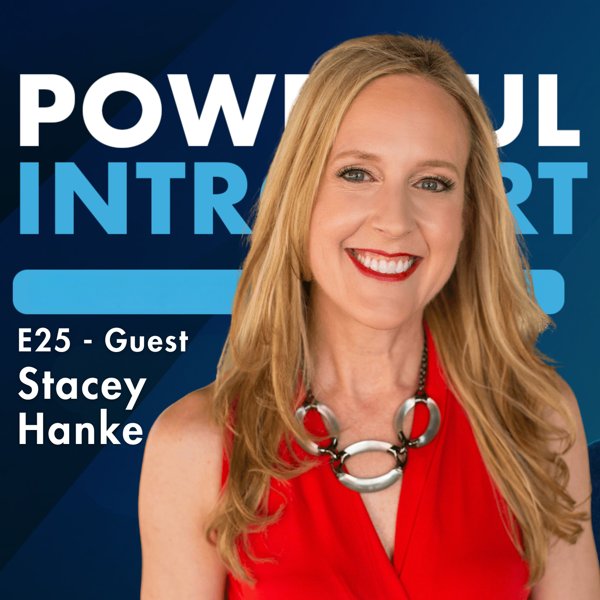
Stacey Hankey, a certified speaking professional inducted into the NSA Hall of Fame and author of "Influence Elevated," dismantles the gap between how leaders feel they communicate and how they actually come across—and gives a concrete, phone-based practice anyone can start today. Her core insight, forged during a humbling first radio commercial that took an entire day to record, is that feeling confident is not the same as communicating confidently, and that consistent self-recording is the only honest mirror available to most leaders. The episode is especially actionable for introverted leaders who want to build trust and influence without relying on volume or charisma.
We're influencing 24/7. If you're a parent trying to get your child to clean their room without telling them, that's influence. We are all doing it.
There's a disconnect—of how we feel when we communicate, verbally and nonverbally, versus what everyone else sees and hears. Usually that disconnect is that people feel most confident exactly when they've gotten the laziest.
Consistency communicates trust. Think of it as an equation: consistency plus authenticity equals trust.
Influence is not determined off of doing things some of the time. It's what you do all the time.
Key Stories
- The Radio Commercial: Fresh out of college, Stacey thought recording her first commercial would take an hour. It took all day. Listening to the playback, she realized her words were sloppy, there was no articulation, and she sounded nothing like she felt. This became the founding insight of her entire career.
- The Client Who Defined Influence: A client called to give feedback on “Influence Elevated” and summarized it as: “Influence is more than what people say about you—it’s what they say about you when you’re not there.” Stacey uses this as her north star for why consistency matters.
- The Corporation That Called Five Years Later: A company she met just before 2020 didn’t have budget. They followed her on social media for five years, experienced consistent messaging, and called in 2025 ready to engage. The example of influence operating on a long timeline.
Techniques & Frameworks
- Monday to Monday: Influence is not built in the high-stakes moment; it is built through consistent, intentional practice in every conversation—with family, at restaurants, in casual meetings—so that when the stakes are high, the skill is already there.
- The Three-Step Recording Practice:
- Get clear on your personal brand (the “I want” question: what do you want people to say about you when you leave the room?).
- Record yourself during real conversations or practice sessions; note how you felt vs. what you actually see and hear on playback.
- Ask a trusted person in advance to watch for the specific thing you’re working on—then debrief after.
- Consistency + Authenticity = Trust: Stacey’s equation for influence. Inconsistency makes people start guessing who will show up, which immediately erodes trust.
- Impact IQ Assessment: A tool Stacey created (featured in “Influence Elevated”) to identify a leader’s influence type and how they can adapt to different personality styles.
- Don’t Let Feeling Be Your Guide: The most dangerous communication mistake is assuming that feeling confident means you are coming across confidently. The playback is the only reliable signal.
Full transcript
When was the last time you felt in control of your business finances? Expenses tracked, invoices sent, taxes ready. That’s where Fount comes in. Fount brings your banking, bookkeeping, invoicing, and taxes together in one simple app. Manage expenses, invoice clients, send payments, and prep for tax time right where you bank. Join the hundreds of thousands who have already streamlined their finances with Fount. Open a Fount account for free at found.com. That’s f-o-u-n-d.com. Found as a financial technology company, not a bank. Banking services provided by Lead Bank, member FDIC. We’re influencing $20 for $7. If you’re a parent, you’re trying to get your child without you telling them to clean their room, that’s influence. You’re trying to get your significant other to go to restaurant A versus restaurant B, that’s influence. We are all doing it. In Grigam, I’m so glad you’re bringing this up because it does get a bad rap. Hello, welcome to the powerful introvert podcast. I’m Greg Wanger. I’m here today with Stacey Hunky. She is a certified speaking professional who in 2022 was inducted into the National Speakers Association Hall of Fame. Her company, Stacey Hunky Inc, helps fortune 1,000 executives and other folks rid themselves of communication habits that would diminish their influence reputation and credibility. You can find at least some of these frameworks that are proven and her book, Influence Elevated, and her work has appeared in the New York Times, Forbes, Entrepreneur, Thrive, Smart Money Magazine, The Economist, and Business Week. So Stacey, what a pleasure to have you on my show today. Welcome. Thank you, and I love the title of your show. Awesome, thank you. It stands for powerful introverts who are everyone. Yeah, right, exactly. No, it’s such an honor to be here. Thank you for trusting me with all of your followers. Absolutely. So Stacey, I always like to start with personal stories and I read that you had learned your work ethic on a farm. So please tell us more about that. Yeah, I grew up in a farm in the middle of nowhere, central Wisconsin, and just watching how hard my mom and dad would work Monday to Monday, which you know from looking at some of my work. I talk a lot about showing up consistently Monday to Monday. I got that full concept from my mom and dad. If any of your followers understand anything about farming, you know that anything that you’ll plant in the spring, you have to Monday to Monday work that. You have to be disciplined. You have to be focused because that will always determine your finances. Once you hit the fall season, and that’s your harvest time. I always joke with my dad because he is, they’re still on the farm at 85 years old. They are still all there. When some of the things that they do, and that’s really where a lot of that work ethic, that discipline came in because I always saw how much discipline you would put into something was always the results. I’ve tied that over the years to this whole idea of communicating with influence. So that’s my background and as far as my career, it has taken me to some really large corporations where I was always in learning and development and doing training. At that point, I was training every possible topic grade. Things I should not have been teaching anyone on because I had no idea what I was doing. But the one thing I figured out really quickly is whether I was teaching a leader from our service, sales training, whatever it was, it didn’t matter what I taught them if they could not communicate their knowledge clearly, effectively and consistently. And during my career, that’s where I’ve really started to appreciate. Whatever you want to become, on-point community credit union can help. Want to become a teacher? Go back to school to learn how. Want to become a pilot? Spread your wings with some flying lessons. Do you want to become a homeowner, a business owner, or an adventure van owner who hits the open road? On-point has the financial tools and expertise to help. So become a member today. On-point. People are the point, federally insured by NCOA equal housing opportunity. Spiding language, messaging, and how that’s the core to everything that we do, whether it’s in our personal life or in our professional life. Short story with a long journey that got me to where I am today. Awesome. And definitely want to come back to the speaking and education. You know, I’m thinking of the discipline aspect of Monday to Monday. And that is so critical in consistency and showing off. And it strikes me that the farm is kind of a place where you only have that period of time. Like you don’t really don’t have time to lose. You need that discipline and that focus set of months. But then there’s a harvest and the fall. And then there’s a winter where there’s a period of rest. Do you incorporate cycles and seasons into your work? Yeah, I should do more of that. Meaning rest. I am not a life balance coach or anything like that. I know one that gets coaching on that. I think when I reflect back to the winter season, my dad, there was always something to do, right? He’s an entrepreneur and as an entrepreneur, you know this too, Greg, there’s always something to do. But you’re right. It’s a matter of where do we put the foot on the pedal and the winter months growing up on a farm. There were certain tasks that you needed to do to get ready for that next season. So if I will get our business, not share for summer to you, always come December the holiday season. I want to make sure I give my team a break if they’ve been running really hard. And then it takes a little while before things get up in motion in January. But to me, those down times as an entrepreneur, those are the times that you can’t say, well, I’m going to take my foot off the pedal because no one else is working. I find those are the more precious times because that’s when I’ll be doing strategy work. That’s when I’ll be taking advantage of, well, maybe I’m not on the road every week. So take advantage of that. But what needs to be done here so that I’m continuously developing. So when the key notes come up or that busy travel season that I’ll have on the road, I’m prepared because I did the work behind the scene. And that’s another example of Monday to Monday, which I think ties to us as entrepreneurs, corporate employees, leaders, that it’s all about the consistency. What are we constantly working on to make sure that we’re always ready when the stakes are high? That’s interesting. And so that is a time for it. Maybe there’s rest, but really there’s still work there, but it’s reflection and time for creativity and strategic thought. Right. Exactly. It’s being able to recognize that. Like it’s recognizing when are you ready to go all in versus the slow times I find are harder for me because now I have to really figure out what do I need to do this moment in time that’s going to help me in the future. Perhaps the future that I don’t know what it’s going to look like yet. So that that on time is really, really important because it takes a lot of critical and strategic thinking. Yeah. There can be some discomfort in that because there is unknown. You’re ready to go to another level or you know, when you’re executing things are a little bit more feel more certain. Oh, sure, because you’ve got the confidence things are happening things are you’re getting things done versus the downtime, the strategic time. That’s hard. That to me takes more discipline. So you’re like, you could easily say, well, everyone else is slow. Do I really need to do anything? But you’ve got to be able to take advantage of the slow time just like you do the fast time. Definitely makes sense. I also read in your bio that you did voice over work early on too. And that played a role in maybe your attunement to communications later could talk a bit more about that. It was a big slap in the face. Greg, because I was fresh out of college. I had done an internship at a local radio station. Then they hired me the summer after and I kept begging them, let me be on commercials. I want to be on commercials. And they’re like, all right, we’ll give you a shot. We’ll let you record your first commercial. I was thinking the night before I did that that I’d be done in an hour. I’d have the rest of the day off how hard it can that possibly be. It took me all day to record that one commercial. It was that moment. You know, you always look back on your career when you measure backwards and you realize, while that was the turning point in my career, one of them, because I remember listening to the playback and realizing, wow, just because I think I sound good is completely opposite when I listen to it. We’re listening to it and realizing my words were sloppy. There was no articulation. It didn’t make sense how powerful the voice and how every word matters when you only have the voice to listen to. You only have an audio recording. That was a big learning point for me. And that’s where I started to realize there’s a disconnect, not just for me, but I’m realizing anyone that I work with, there’s a big disconnect, Greg, of how we feel when we communicate. Verily and nonverbaly versus what everyone else sees and hears. And usually that disconnect is people will say to me, I’ve been doing this work for a long time, I know what I’m talking about. I feel confident. I feel comfortable. And those I find when I say that, I’ll listen or watch a video or audio playback of my own and realize that’s when I got the laziest. That’s when it was sloppy that the executive presence wasn’t there. And that’s what I recommend to your followers to be really careful with is being careful with letting feeling be your guide to determine how effective, how influential your communication is. Definitely a lot to unpack in this too. So I’ve recently gone on a journey of spending much more of my time looking at myself and listening to my cell phone video and audio. And it was very uncomfortable initially because you really can’t argue with that. I mean, part of it is just, I think, getting used to that. But I do recommend that as a technique. Can you get to get past that discomfort and then get to more of a place of objectivity around that towards yourself so that you can, in a sense, depersonalize it so that you’re just looking at how do I communicate better? So I’m curious, are there any elements of that in what you do in working with your clients? Yeah, everything that I do, whether it’s my team does workshops for corporations, I do a lot of executive mentoring and speaking at events. We always incorporate this. I’m holding up my phone right now for anyone that can’t see this. We’re always recommending that if I’m coaching you, mentoring you, Greg, I’m teaching with skill, a technique, I’ll have you practice that skill or technique while you record yourself. Then I have you watch it. And there’s several reasons behind that. First, it’s simply my opinion if I just told you what I think. Really not going to do any good. You get to watch or listen to your own playback. I always encourage individuals keep in mind of the reputation you want. What do you want people to say about you when you leave the room? That to me is true influence. When you can really identify what you want when it comes to influence your personal brand, what does that look like? What does that sound like? You’re watching these playbacks. You will quickly pick out what is consistent with that personal brand, what’s not consistent, where do you need more work? The power of recording ourselves audio or video gives us a real close 100% no sugar coding perspective of how does everyone perceive me? How do they perceive me every time I show up? Am I consistent? Whether I am virtual, whether I am in person, whether I’m shooting off a social media post. What to me is probably the biggest gap between someone who’s a good communicator, Greg, versus someone who has really elevated their influence, their consistent with however they show up, where they show up and how they’re doing that. Tell me a little bit more about consistency. What is that the key to? Is that because you always want to have that presence? Is it that every opportunity that you have to speak is an opportunity for influence, therefore you want to maintain that level of consistency? All of that. In addition to consistency communicates trust. If you can visualize an equation, I see it as consistency plus authenticity equals trust. And think about it. Anyone in your personal eye for your clients, if they show up one way on a virtual platform on a Monday, then you have lunch with them on Friday. They’re two different people. Or someone that will say, you know, I’ll follow up with you. I’ll follow up with you by Friday. Now it’s Monday. Now it’s Friday the following week. So when we start messing with being inconsistent, people start guessing who’s going to show up. Any time someone starts guessing, now you start playing with your trust. Think about how individuals in your life, let’s just flip that concept, Greg. Individuals in your life who you rely on, you know that when you ask for something, they’ll always be there. If you needed help, they will always be there. You know, they always show up on time. Sometimes a little earlier. I mean, suddenly it’s, those are the people. I don’t know about you. Those are the people I always go to. And the clients in my life or people in my personal life that sometimes they show up, sometimes they don’t. And when I say show up, sometimes they show up. They’re all in. Other times they not. So suddenly I don’t trust them. Like I don’t trust that I can go to them or they’re going to follow through on it. And I don’t know if it’s lack of awareness that we’re not consistent. Is it sloppiness? Is it we don’t care? I’m not sure. I have quite a few clients that when I see them on my outlet calendar, Greg in the morning, I will put a little bit of even extra effort in how I get ready that morning because I know when they show up here, they are so put together. And it just, it pushes me. Those are the people I really want to be around. I want to be around someone that is so consistent and pushes me to be at my best even on the days. We’ve got those days, even on the days, I don’t want to do my hair. I don’t want you to do anything. I don’t feel like it. But what’s the cost? Because it’s your brand. And I think the one word, I’m curious if you can hear this too great with your clients, the one word that’s been constant all of this year is uncertainty. The Bleacher Report app is your destination for sports. Right now, the NBA’s heating up, March Manus is here and MLB is almost back. Every day there’s a new headline, a new highlight, a new moment you’ve got to see for yourself. That’s why I stay locked in with the Bleacher Report app. For me, it’s about staying connected to my sports. I could follow the teams I care about, get real-time scores, breaking news and highlights all in one place. Download the Bleacher Report app today so you never miss a moment. Right, and then there’s this huge fear that has been built around it. I was telling one of my clients through the day, so there’s one thing that we know that we can be 100% certain on. It’s us, our development, how we show up, the personal brand that we’re communicating, that that can be a constant and a certainty for you in your life. So if you’ve got all this uncertainty happening, control what you can control, and that’s you, that’s how you show up. Absolutely. And I just think back to the last time, I have a really great uncertainty, 2007. Some of the most creative companies or just creative works that came out of that uncertainty, in some sense it could be a freeing thing. Right. Yeah. So I really love all that, and that’s a really clear message why you want to be consistent because you want to be trusted. You want people to trust you, and that’s really core to authentic influence. I also want to try to broaden the applicability of this from my audience. So I mean, you were working with the executives. This is the kind of thing though that I think it works on any level of employees. What’s… You might be in a personal business, just also in life to build strong relationships with people around you. 100%. Right. If whoever’s listening to this right now, think about how many times you’ve communicated today, how many times you’ve communicated this week, we all do it. We’re all communicating. Because it’s the core to everything that we do. The people in our circle, it reflects the results we have, our productivity, the money in our pocket. It truly comes down to how we’re communicating, how we shell-up, how people experience us in the moment, and then what we leave behind. And that goes to my comment earlier. One of my clients about a month ago had called me up. He had just read the third book, Influence Elevated, that came out last fall. And he said, I want to give you some feedback on the book. Well, initially, Greg, I’m thinking, oh man, here we go. Something bad or what is he going to tear apart? And he said to me, he goes, after reading the book, he goes, I figured out very quickly that influence is more than by what people say about you when you’re not there. And I love that, Greg, because so many of my clients, they’re not consistent. And they will really put all the effort in right before the high stakes board meeting, investor meeting, sales pitch, whatever it might be. And then they go back to their comfortable self. They’ll say to me, keep in mind, you still can be super comfortable. I think you should. I think that’s where more of your authenticity comes through to build that connection. We just all could afford, no matter who we are and what we do every day. We I think could all afford to take a closer look at what everyone sees and hears when we show up versus what we believe to be true. Because there could be areas of that interaction that you could do some work. I’m going to try to articulate this, you know, I’m much more aware of how I’m presenting in the world because I really do want to have more influence. When I was younger, I had this idea that this is surface that maybe there’s an element of manipulation about it or idea. I kind of had a bad attitude about it. I helped bridge that gap for me. Like if someone is kind of thinking, yeah, well, this is kind of not for me and it’s phony or something like that. How could we help someone to think about that? Yeah, think about let’s define what influence is. We’re influencing 24 seven. If you’re a parent, you’re trying to get your child without you telling them to clean their room, that’s influence. You’re trying to get your significant other to go to restaurant bay versus restaurant B. That’s influence. We are all doing it in Grigam. I’m so glad you’re bringing this up because it does get a bad rap. Is it because if you go on TikTok, Instagram, everyone’s an influencer. So let’s take a step back of how we define it is that your body language and your messaging they’re consistent. Here’s what I mean by that. My eyes are darting and I’m just multi-tasking here and you know, like it takes me a long time to get to the point, but I’m really happy to be here, Grigam. Like none of that. None of that communicates a truly I’m happy to be here. The other part of influence me that you have the ability to move people to take action after the conversation has occurred. Grig being entrepreneurs, you and I both know that influence doesn’t happen in the first interaction all the time. A series of conversation where someone you’re consistent with them, they always know what to expect from you. It’s a series of consistent conversations that will influence change, meaning they take the recommendation you are asking them to take. I’ll give you an example of this. We received a call this week from a corporation and met them before 2020. It was like right before 2020. And at that time, the budget wasn’t there. They’ve been following us on social media. They’ve been seeing the consistency of our word. And this week they called up and said, okay, now we’re ready. So no matter what role we’re in, it’s not about changing you. It’s not about being something that you’re not. It’s about how do you make sure that when you show up, people feel like they can trust you. They can follow your message because you’re clear. You communicate with brevity and you always make it worth their time. And how do we not make it worth their time? We’re too long-winded. And our body language is really distracting. Right. It’s about kind of distilling your message so that people are really receiving in a clear way what you have to give. And if you do want to make things better or have an influence, whatever it is that you’re trying to achieve, then this is something I’ve only kind of, as I grew that I saw that, well, okay, I did have an influence back there. And it has these long-ranging impacts over years. Mentorship is a wonderful way to have influence, even if you’re not on entrepreneur and giving back in the community. Yeah, exactly. And we were just even thinking for the next week, for your followers, how many times will be in a conversation where there’s some type of influence that they need, which means creating connection to make sure someone trusts you enough that they’re going to take your recommendation and take action. We’re doing it almost 24-7. We might not just have to slot it that way. And we all have value to add. And really, every one of you is having unique thoughts and ways that you can contribute and make things better for you and for other people. And if you’re not giving some attention to this ability to communicate it, then you’re not helping in the way that you could. Yeah, you’re doing a disservice. You’re not speaking with confidence of what you can give, whether that’s in your personal life, who we all play so many roles, whether that’s in your personal life or your professional life. That’s great. Okay, so I’m sold now. Let’s talk about your Monday to Monday framework a little bit. And just walk us through that. Yeah. And then that’s a great place to, we want to make sure that we clarify what that is. Monday to Monday or your influence doesn’t take the weekends off. Your level of influence is not determined off of doing things some of the time. It’s what you do all the time. If you follow any, gosh, anyone that is in the public eye. So I think of like an athlete, actor, actress, musician, they are not just going up for the big opportunity and practicing the night before and then showing up because that’s what most of us do in the corporate world. We have a big presentation, a big meeting, and we’ll put all this work into a couple of days before practice the night before and then bam, we’re going to hit it. We all know wonder so many of us don’t do it effectively because Monday to Monday means if you’re deciding, you know, I really need to work on my clarity, my brevity, you’re working on that skill in conversations with family. You’re thinking about it in moments throughout the weekend, especially when you’re first making that switch or bringing your awareness to it. So one of your followers to think like an athlete or someone who’s in the public eye like a musician, it’s the practice they’re doing all the time. For us, the good news, we have so many conversations in a day, you can be practicing anything about your body language, your verbal communication, how you show up, you can be practicing that all the time. And that’s when you were asking before we start recording, you know, what would I recommend for introverts? Whether it’s an introvert or an extrovert that I am coaching, I always start coaching them by asking them to take a closer look in how they interact, really nonverbally, in their family life, and just hanging out with friends family, and interacting at a restaurant with the wait staff. I mean, there’s so many times that we’re communicating. That’s where I would start with someone. Then from there, once I give them the core skills like a golfer or a tennis player, then we start taking it to these high stakes conversations or these conversations at work that they’re more uncomfortable. So you see the correlation, how I show up with you now is how you would experience me if we were having coffee right now. And when I finally figured that out great, that is so much easier than just suddenly turning it on, your skills, your communication, and then turning it off. That’s a lot of work. Yeah, that makes so much sense where it becomes part of who you are is to communicate clearly and to have that clarity of message. That’s probably the biggest mistake. I think people do that jeopardizes their influence, long winded, hard to follow. Certainly, it sounds like they’re having the conversation with themselves. And everyone else out in front of them is either on their phones or zoning out. Yeah, tuning out. So what’s a practical tip we could try with our spouses or our families maybe this weekend? Oh my goodness, your followers made that like me for this one. Because I’m sure we all have someone at home or in our personal life that can’t wait to give us feedback. They will always raise their hand of volunteer for that. I would highly recommend first. I’m going to give you three steps because it makes sense to have a sequence. First, before you ask for feedback, before you watch your own recordings, ask yourself and do some brainstorming when it comes to influence what do you want? And just chat it down. Just get some ideas down when it comes to influence what do I want? You’ve got to have clarity of what you want, meaning your personal brand before you ask for feedback. Then in no particular order, ask for feedback from people in your life that you trust will tell you the truth. Avoid the good, nice job. That was great because you don’t know what to do with that. So for example, my husband is also working out of his home. That’s where I am today as well. And some of my sales calls before I jump on a call, I’ll ask him to stand outside my office and I’ll tell him specifically what I’m working on. Because I know he’s not going to share your code. I do it with my team members too. If we’re going to hop on a call with a client before the client gets to the call, I will say to them, here’s what I’m working on. Would you watch for this? Would you listen for that? And then after the call, I’ll ask you, either my husband or my team, all right, what happened? What did you hear? Now, if you really want to elevate that full practice, that’s where the video or the audio recording comes on your phone. And even as we are here today, I’m not recording this. But there are calls, I’ll just record myself. I place my phone below my laptop camera. And that way when I watch it or listen to it, as is the big tip, keep in mind what you felt like during the recording versus what you’re actually going to hear and see on the video play. Because a lot of times we’ll say, oh, that was awful. Or wow, I think that was really good. Remember what it feels like. As you’re watching the play back number two, keep in mind that I won statement. What you want when it comes to influence, does it come across? Do you come across confident if that’s what you want? Do you come across trustworthy? And if yes, then what are you doing? What are you saying where that is coming across? And you keep practicing that. We want to elevate our strengths. Anything that you don’t like, we either you’re strength will outweigh that or they’ll be roomed for you to work a little bit on those weaknesses too. But those three, and they’re constantly in rotation for me and my team. That’s great. I know that professional influencers in my company, our sales folks, we record every single meeting that we have and every sales person has time with their manager to review and gather feedback. I think that’s a key to be constantly holding a mirror up to yourself with the benefit of honest feedback to support that as well. It sounds like those are common elements. If this is really what you’re doing. Yeah, I’ve been doing this work for 23 years and I’m still watching my playbacks. I’m still listening to those audio playbacks. And there’ll be times you see it or you listen to it and you’re thinking, oh, great. Now I picked up that back. But now I have to work on that. Give yourself grace when it comes to elevating your influence, which is your communication. Because this is a journey. It’s never when and done. There’s no destination to it. I always think of yoga. I do yoga and it is a huge struggle for me some days. And my yoga instructor is always saying just it’s a practice. Honor it as a practice. And I think, gosh, that’s what elevating your influences. It is a practice. You just need to give yourself grace along the way because there will be times you’ll watch a playback and you’ll think, oh, I’m better off if I never talk again. It’s that bad because we’re our worst critics. That’s why I think having someone in your personal life and professional life if we can trust will get you feedback is always, always helpful when you’re beating yourself up. At least people will help bring it to reality of, okay, it’s not as bad as you’re making it. Right. That honesty functions in both directions. They’re going to be real with you, but they’re also going to protect you from yourself in a sense because we can all be our own worst critic. Yes. Yeah. That’s helpful. Most of us all have iPhones now, so we can make sure to point them at ourselves in our next meeting or call and just get a good brawman around how we’re doing. It’s so easy to do. And what I love about the playback, it never gets easier at least in my world. It’s never gotten easy to watch myself on playback. The benefit though, always the feeling of being recorded because when you watch the playback, I mean, that’s the truth. You’ll get feedback from others. True feedback though is when you watch yourself, it also will quickly increase your self-awareness. You watch yourself on a playback, then you hop on your next meeting, virtual or in-person meeting, you will be so aware of what you want to change because you just saw it or you just heard it on a playback. Yeah. Recall when the pandemic started, I think that’s when a lot of us went full-time zoom and then your face is there. And so now you’re actually stirring it yourself six to eight hours a day. Exactly. You’re like, oh, do I really look like that? Yeah, I think that’s full-time frame of only first all went on zoom at just magnified our communication that has always been there. We’ve just never seen it. That’s right. And a lot of ways it’s a gift. It is. With self-awareness, it just becomes more control and just more self-understanding, hopefully eventually more self-compassion. Yes. Forgiveness for yourself. I like to tell you frame that about leaning into your strengths as a communicator. What do you see is working there because we’re all uniquely ourselves and we all have flaws. We do. I mean, if anyone’s ever thinking, well, people are born this way. We are just born natural-vid communicators. I’ve never met them. I think we’re at different levels. Sometimes too great. The executives that I coach that will be so confident when they first show up in one of our mentoring sessions, start recording them and they’ve not seen themselves ever on a recording. They go to this place of, I am an executive and no one’s told me. Now, no surprise because we’ve heard it gets lonely at the top. If we’re not setting that culture of how to give feedback, how to receive it, what I find with my leaders or clients, they continue to climb and they hear more of good, nice job. That was great. They don’t get the hardcore feedback of, here’s what enhances your personal brand. Here’s what’s diminishing it. Here’s what’s holding you back. I think it’s the title. Who’s going to tell the CEO that they take too long to get to the point? Who has been to tell them? Definitely been there. I also want to tie, I mean, this video thing, it truly is not just for higher level leaders or extroverts. I had someone on my show recently who talked about, was a quieter person, he’s in the design field, and he first established his influence by recording videos of his designs, and these would be distributed throughout his company. It was an environment that was very comfortable for him, but he was able to send these out and develop this enormous influence and reputation, and was promoted all in a way that was comfortable to him. And he had to confront his voice and his face on video, and he said that there’s kind of a hump you have to get over and just in embracing that. But once you do, this is something that’s available to everybody. Yeah, it’s true, and it’s so interesting. I think the best way I can describe it, I remember when I first was recorded, it’s so humbling, because we see ourselves differently. We hear ourselves differently, and it also is like a sock to the gut. I mean, I just remember thinking, wow, I’m that bad. And then you start working on it, and you feel like, okay, I think I’m good. I’ll watch myself on a playback, and it’ll be another sock to the gut. But the good news is, if you’re constantly thinking about how you show up, and you’re constantly working on your development on your communication, you will climb, you’ll reach a plateau, you’ll watch a playback, and you’ll see something else you want to work on, but great, if you’re always developing yourself, you’ll never go back to where you started. And that’s a part of giving ourselves some grace. So I too, I take big stepbacks, but I never go back to where I started, only because I am, I’m thinking about how I show up. I want people to feel like they can trust me. I’m going to follow through, I will be there on my word. I just want to be walking around life with people saying, go to Stacy, she will follow through. We can rely on her. And we all have to decide what that personal brand is. And once you decide it, it’s one thing to decide, well, I want to be seen as trustworthy. Now you have to hold to it by watching those playbacks and seeing, when do I come across trustworthy and when am I not? Let’s come back to this, the personal brand. It’s encouraging to hear this was the way for you. You do this at such a high level. I think there’s something that’s inherent to the human condition where we can’t know how other people see us. When I hear myself recorded, my voice sounds different than it sounds in my head. The noise is conducted differently to my ears, to my skull. Is that really what I sound like? Yes, that’s really what you sound like. Yes, that’s really what you look like. I got this from Vin, I forget his last name. He’s on YouTube. He’s a great community coach. Yeah, we’re in the same circle. Oh, fantastic. Yeah. Oh, yeah, he has such delightful content. Yeah. But I love that too, because he has this really compassionate message where he’s like, yes, this is you, and this is beautiful. This is what you need to accept. And then when you do, that gives you this choice of, how do I want to come across? What is my personal brand? So when you talk to people, how do you help people understand what their personal brand is? Yeah, I always start with the I want question. That’s one piece that we start with. I also create it with my third book, Influence Elevated. We create it an impact IQ assessment. And it helps leaders, when I say leaders, I think everyone’s a leader in some shape or form, right? It will help identify what their influence type is, which helps you to determine how do you influence the different personality styles in your life, personally and professionally? So we start there. Then very early on in the training or mentoring process, I start recording individuals. Because if they know what they want, now they’ve got to see how close they might to 101. How close they might to my personal brand, based on the words I use, based on my tidy language. And from there, once we’ve got that baseline, then we start working on both of those to make sure they reach that. Once they reach it, now I have to go to the next level, how are they going to maintain that? How are they going to be consistent with it? Now here’s the good news when it comes to consistency. I don’t want to complicate it. Every interaction we have is an opportunity for you to practice whatever you’re practicing on. So that’s that Monday to Monday. If I’m practicing, say, when I get coached, my coach says to me, Stacy, you need to make sure that you have more brevity. Make your sentences even shorter. Well, I’m now going to practice that the first time delivering a keynote on a stage. I’m going to be practicing on my sales calls here, with my team, I’ll be practicing with my friends, my family, and that’s where people, the more they practice, they get more in tune with. What really is my brain? Now here’s the other thing about constantly watching yourself and doing these recordings. A year goes by and a lot of my clients will say, you know, my brand has changed. After watching myself often, listening to myself, I’ve decided this is really it versus this. Another reason why recording ourselves is really, really helpful for our development. It’s great feedback there. Feedback loop. What you’re describing is bringing to mind method acting, you know, in a way if you’re fully embodying a role. Yes. But it seems really critical that it’s not somebody else’s role. It’s your role. It’s something that’s truly authentic to you that is inspiring to you if possible, a distillation of your essence, of your personality. A counterpoint, you know, I’m just hearing the objections coming up, it’s like, Stacy, this sounds tiring, like what, I have to be on 24, seven. Now I’ve got to like be taping my recordings with my wife, what am I doing? Yeah, yeah, yeah. Yeah, we don’t want to go over the top here, right? We don’t want to go 24, seven. I, when I first start working with someone, it is like working with a professional tennis player. So is it professional tennis player or any athlete they’ve got their behaviors? It’s their natural way of how they swing the tennis rocket. Now let’s say they have not been coached in a while. Well, suddenly they hire a coach and the coach will say, let me see you swing the tennis rocket. I want to see your style, which is really your personal brand. You swing the tennis racket a couple of times and then the coach starts calling it a part and your body goes to an uncomfortable state where our bodies do not want to stay. And two things will happen. You will have your subconscious saying, you’re not comfortable. So this is wrong. While the willpower says, I have to be uncomfortable in order to get to the next level. So initially those first 30, 60 days, does it feel uncomfortable? You bet. Of course it does. It’s like going to the gym and you have not done a sit-up in a very long time. The next day your abs, you’re going to feel it when you’re trying to sit up on a bed. Instead you roll a lot of bed. It feels better that way. The initial timeframe is a commitment. Keep in mind though, you don’t have to schedule it. You just have to schedule your thought process that when you’re talking to your wife, your significant other, your partner, you’re thinking about, well maybe I should think about clarity for a moment. So it’s not like this huge task. It’s taking what we do every day, communicate, and adding this extra layer of thinking about your communication. And please no, I’m not recommending your followers be perfect. It’s be conscious. Conscious that when you’re behaving in a way that’s not consistent with what you want your brand to be, recognize that, and then make the change in the moment. You don’t have to record yourself, every conversation, starting off, I would do it once a day for at least 30 days. It always asks me, how long is this going to take? I always say to them, how hard are you willing to work? You do it here and there, it’ll take a little longer. You put more of an effort in 30, 60 days. You’re in a different place than 60 days. Does that help? Absolutely. Yeah, one thing that I’m trying right now is recording myself on camera just without script. I have conversations weekly now, which is great. This is an additional thing with just kind of a free form talking. I’ve accepted a 30 day challenge for this. So I’m working toward that. Yeah, good for you. I mean, I’ve never, in the years I’ve done this, have never had a negative impact of taking these steps. Have they been uncomfortable? You bet. That’s why I always say just give yourself some grace. This is a process. It’s never where I said, I wish I would have never put that work in. I wish I would have never recorded myself. I think in today’s world, with uncertainty, with the multitude of ways that we now can connect, it’s harder to grab attention, harder to connect than ever before, which means it’s not a bad idea to put some effort into the conversations that we have. And I think for a final point, because we’re running short on time, I’d love to draw out that point of connection, too, because I think that’s a deep yearning we all have. Part of all of this is in service of creating deeper connections. So how does this foster that for you? You know, I think one of the things that we forget for a deeper connection is, hang the right questions. And it’s not simply, how are you, Greg? That closed into question really shuts down the conversation before you even get started. When we look this week as the conversations you’re having, pay attention to how many times you do open ended versus closed ended. What are your thoughts around? What’s your feeling with? What do you recommend and just fill in the blank? That’s a big piece because it communicates empathy, that this conversation is not just about you. Your whole conversation here, you’ve asked open into question after open into question, you’re doing it. And we just are losing the ability to communicate with warmth and empathy, which ties to connection. So that’s one way. The second then ties to that, see the next week, how many of your conversations you speak 20% and your listener speaks 80%. Number three, connection ties to trust. And I don’t know if you picked up on it, but when I am speaking, whether it’s for children person, I call it eye connection, which is different than eye contact. Eye connection means you only speak when you see eyes or you see the camera. You don’t want it to be having a conversation like I am right now looking like I’m multitasking versus when you’re looking away from the camera or someone that you’re in person with, cause when you look away, only speak when you see eyes. And those three, those three will really elevate the connection that you’re after or you’re trying to sustain. Those are fantastic. Thanks so much for sharing those, Stacey. Where can people find out more about your work? Thank you. It’s really simple. The website is my name. So it’s Stacey with an EY, H-A-N-K-E, I-N-C-Dop. There are numerous break. We provide so many complimentary resources on that website. If you want to foul us, LinkedIn Instagram is where we post a lot of those free resources or even just recommendations on how we can help you even from afar. Fantastic. Check it out. Thanks so much for being on the show today and sharing this great wisdom. I could go on for a very long time, but we both have busy days. And yeah, it’s really great stuff. Thank you for being here. You’re welcome. Thank you for giving me a shot. Thanks for trusting me with your followers. The Pacific Northwest is a beautiful place, but with all our rain and steep slope to turn your beautiful yard into a muddy mess. That’s where we come in. Jake with the wall here in since 1985, our team has transformed the landscape around the Portland Metro Area. From a small backyard makeover to major hillside stabilization, the wall has he covered. Don’t wait for the next storm to cause damage. Give us a call today or check out our website by thewall.com. That’s BYthewall.com. Hold your ground with the wall. CCB 54495.