Trust Your Inner Knowing — The Introvert's Hidden Leadership Superpower
Beat Imposter Syndrome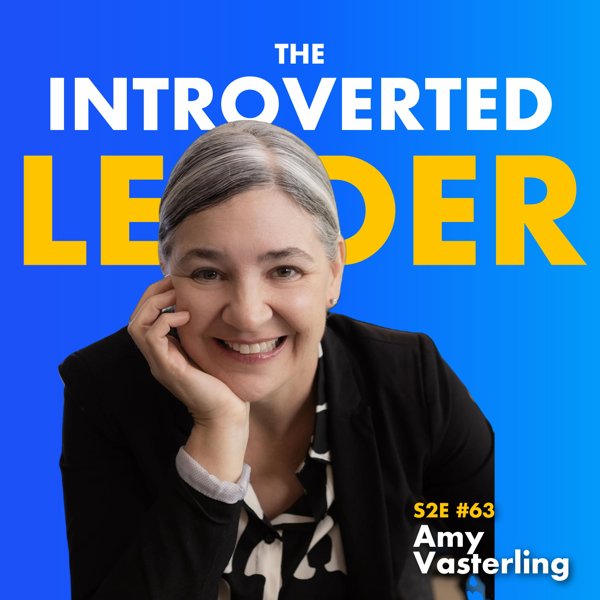
Amy Vasterling is the author of *KNOW* (K-N-O-W), a framework for accessing intuition and inner knowing as a decision-making tool. Her work sits at the intersection of personal trauma, leadership, and the introvert's natural strength: deep internal processing. She has been shaped by significant personal loss — her sister's death by suicide — and her research into narcissistic social dynamics, which she calls "narcissistic social disordering." This is a heavier, more personal episode that goes into shadow territory most podcasts avoid.
Inner knowing is not a feeling. It's data. It's every experience you've ever had, distilled.
Narcissistic social disordering is what happens when one person's reality becomes the only reality in the room — and everyone else's knowing gets extinguished.
Key Stories
- Her sister’s death by suicide: The personal loss that shapes Amy’s entire orientation toward inner knowing — she has lived through what happens when the people around you don’t listen, don’t trust their instincts, and look the other way.
- Narcissistic social disordering: Amy’s concept for the social pressure to suppress your own knowing in favor of a dominant personality’s narrative — a dynamic introverts are especially vulnerable to in corporate environments.
- The KNOW framework: K-N-O-W as an acronym — a structured approach to accessing and trusting inner knowing before acting, especially in high-pressure or manipulative environments.
Techniques & Frameworks
- KNOW framework: Structured four-step method for accessing intuition: Know yourself, Name what you notice, Open to options, Walk in wisdom.
- Narcissistic social disordering awareness: Recognizing when a dominant personality is systematically overriding the group’s collective knowing — and how to re-anchor to your own signal.
- Intuition as data: Framing gut instinct not as soft or unreliable but as pattern-recognition data accumulated through experience — a scientifically grounded reframe.
Full transcript
If you’re a highly sensitive person or an introvert, you know this. At times, you can read a room and immediately sense what’s going on under the surface of all the people in there. But so many times, this voice will rise up and say, stop it, you’re overthinking this. Just try to act normal like other people. But what if that self-doubt is blocking your greatest contributions in life? Welcome to The Introverted Leader. It’s a podcast helping introverted leaders embrace your underrated quiet strengths so you can get promoted and start earning what you deserve. I’m Greg Weinker. I have over 25 years of leadership experience, and yes, I am an introvert. My guest today is Amy Vasterling. She’s author of the award-winning book No, that’s spelled K-N-O-W. She’s spent decades studying why highly sensitive people learn to override their inner knowing and what it actually takes to reclaim it. This conversation is for anyone who’s felt like their environment they’re working in just wasn’t designed for them and quietly wondered if they were the problem. In this episode, you’ll learn, one, why highly sensitive leaders are systematically trained to distrust their intuition and what that controlling dynamic at work looks like when you name it. Two, how to stop playing your role in what Amy calls the model. Stop looking outward for validation and start trusting yourself. And number three, some really great practical phrases that you can use to reconnect with your inner knowing and immediately change some of the most challenging workplace and personal dynamics in your life today. This is powerful stuff. Let’s get into it. Amy, welcome to the show. Thanks for having me, Greg. I’m happy to be here. I’m so glad we’re doing this. I think your experience and ideas about personal knowing and what you describe as the model in your language, I think it’ll be really intuitive for people who are introverted leaders because we are people who are hyper aware that the world, the business world, the social world, the world in general, it’s not an exact fit for us in our personalities. And you have really compelling ideas about why this is and some indications about what to do about it. But before we get into the concepts, could we share with the audience a little bit about what you’ve done over your career and what’s led you to this work that you’re doing right now? Yeah. I think as a leader that’s introverted, things were natural for me. I became a public speaker because I got the nudge when my children were little to be able to speak profoundly about who they are when they have a major milestone in their life, getting married or graduating. And slowly little opportunities came, even though I might not be the person you would expect. I was very shy, like most people, about doing something like that. And then the nudge came to write a book. But prior to that, as a child, I could see things, I will say at the opposite of how others around me could see the world and see what was unfolding and how communication was happening. So as a child as well, I would say, I saw my family’s communication was about disconnection. That’s what I would have said then. And I didn’t know why and it troubled me because I’m a connector. I need that connection. Everybody does. But there was, there maybe was a bigger, something bigger for me in it, looking at why is that. And over the decades of my life, at one point, I realized, what if I looked at how we would collapse narcissism? What would that mean? How would that look? And why does it perpetuate? And that’s the core of my work. And then I wrote a book that came out in September of 2025. And it won an award. I’m really happy and pleased with that. I’m proud of that. But it’s a labor of love. Thank you. It’s a labor of love. And it’s exactly what I wanted to say. But I have a lot more to say about that topic too. Yeah. What was the event in your life that kind of catalyzed this? What happened there? Yeah, well, like I said, when I, in my youth, I could tell that the communication was about disconnection. And the one way I knew I was always connected is through my intuition. But I didn’t have that realization fully until I was in my early 30s. But realizing it, that I knew I was connected somewhere, even though I wasn’t connected necessarily to the people around me, the way that I understand connection. And it helped me to look at why is that, what’s going on. And it was so challenging to not feel connected to the people that are telling you they love you, that I needed some way to identify. And throughout my life, I knew things before people would say them. I had an experience when I was seven years old in my first grade classroom, a place where I was very, very scared, where I looked out the window as the teacher is screaming at me. And remember, this is the 1970s. And I saw a yogi floating outside of the classroom. And I was out there with it. But I didn’t know what a yogi was, but they were dressed with a turban all in white, cross legs floating. And I could see my energy right next to it in some form. And I knew in that moment it was safer to be out there than in the classroom. And these are little catalysts too that told me do the work from within yourself, don’t read other people’s books, don’t take in a whole bunch of other information, let the pattern come to me to see this way to collapse narcissism. And the reason I came to narcissism is it seems that in my life, there were people who just could never be wrong in some form or another. Sometimes that was really an art form that they were using to perpetuate it. But in my work, what I came to see is it’s really a fixed point model. So it would be like a metronome with a fixed point and it’s swinging back and forth. Both sides represent control. And when I was raising my children, I was in my early 30s, I came to see and feel physically like I was breaking into two physical pieces. And it was horrible for two years. I didn’t know what to make of it. I couldn’t talk about it. You can’t say that to somebody. They’ll think you’re crazy. But what happened is I was breaking out of what I now call the model, these two forms of control and moving into this powerful relationship with my own children. And fast forward about eight years of practicing that and really understanding it, people would come up to me and say, you’re a magic parent. And it wasn’t that I was magic. What I did was very hard one. But what was happening is I was relating at quite an ample level to the way that my children are naturally with what they know about themselves. And my breaking out of this model with them was I didn’t want them to hurt like I hurt as a child. But instead of enabling them and protecting them from hurt, I let them face their consequences that came their way. But I’d walk beside them and let them figure it out. So you grew up with this intuitive sense of what was actually going on. Where did the term about narcissism, is that how you kind of later came to describe what was going on here? Is that right? Correct. And I’ll say it that I knew that there was narcissistic behavior in many of my relationships in my childhood as well as even into my adulthood. But in my work of watching the patterns and writing this first book, what I came to see is I call it narcissistic social disordering. So in this book, no, which is KNOW, I don’t talk much at all about narcissism. I really only think I speak about it twice. But in the next book, I’ll talk about how we disorder. And I’ll just make a quick correlation here. My son works in physics. And he said, Mom, when a magnet is heated to a certain state, it disorders itself, meaning it can’t magnetize. And we often find parallels between my work and his. And I said, isn’t it interesting the heat from the narcissist, this authoritarian, is hitting this magnet, the enabler, they end up disordered, and they can’t magnetize to their life, leaving them stuck, confused, wondering, like, why am I in this situation, blaming themselves. So there, there’s that process of why we’re in this. And what I find is, it’s an epidemic. I mean, 15 years ago, I could see we’re all lying to ourselves, me included. And it was alarming. What do you say about that? You can’t go out and say it to society. This is what’s happening. As a child, I had a lot of power to speak up and say things and adults would stop in their tracks. My mom said, how do you do that? I mean, she felt she couldn’t do that. But as I grew a little bit older and my teens, I became more timid. I think I was playing into what is the model, because that’s what we do. It’s what we’re supposed to do to belong. And then I had children. And even in college, I could see the way that it’s done doesn’t work for me. And I didn’t know what to do about that. I thought just get through and be done. Then I had a health crisis for six years that was pretty intense. But that also was a great training ground to learn about the depth of our emotion, the depth of our health, the depth of this disordering within us. And I believe all of these pieces helped me pull together this information about what we’ve been paving over, which is a very simple thing is we know. And now we think we know, but we don’t know. And therein lies the lie is we are posturing in the model. And I say on the authoritarian side through boasting, telling, proving, or withholding through avoidance. And on the enabler side, we’re really using worry, guilt, drama, and withholding through what is essentially rumination. And to me, it’s a form of self abuse to posture in the model to hold that position within the hierarchy. So I define the model as the control that we assert to maintain or advance our place in the hierarchy. And I’ll take it one step further. I say this about highly sensitive people, but we could loop introverts in there to some degree where what I’m describing about being able to see things that others cannot tends to be the strength of an introverted and definitely a highly sensitive person. So what I saw in my children who are both highly sensitive people, and more so, particularly one of them introverted is what’s good for the highly sensitive is good for all people. But what’s good for all people is not good for the highly sensitive. And we can probably apply that to the introverted leader. And so that’s why I’m doing this work is the people who can see the other side of it tend to be the highly sensitive because they can feel and see the patterns that aren’t syncing up. And if they set the tone for society, our world changes where it works. From my estimation for all people, the ultimate or the beginning of the outcome of my work is natural equality, which also falls into alignment with the world works for all people. And natural equality isn’t what we think. It’s not by judgment or force. It comes a very different way. But when we’re with what we know is true, we tend to be very quiet. We tend to be what I call with ourselves, we can be in the future, the past, the present all at once. But we’re with ourselves in calm. So that concept of presence I think is too limiting for where we’re headed. Interesting. Can you expand on that? What you just said, where do you see the limitations and common understandings of presence? And how could that be expanded? Well, I mean, there are a lot of ways that I could probably make a correlation. Like I used to teach about intuition and I said, nobody can or should ever teach you about intuition. All they really can teach you is to trust yourself. And what I want is for you to be intuitive the way that you are and me the way I am and this person the way they are, because that’s what’s going to make us very strong as a human group of people to support each other. So when I say natural equality, my work is about expansion. And if we’re constantly present, we’re not expanding. But if we’re able to be in all of these places at once, which is quantum and hard for us to perceive, but it’s not overwhelming, we might think we’re in a constant state of expansion. Excellent. Just tying back into power versus control. You had a really interesting quote that I read it’s control is control and it steals our power from us. So how do you distinguish power from control? What is true power? Yeah, true power is when we are free in our expansion. So I think the easiest way to say it is we’re not self expressing. And that’s the problem. We think we are self expressing, but we have much more we can express. But our world has told us no based on trends and all these things. This is as far as we can go. This is the limit of the human brain. This is how it works. And I believe we’re hitting a time when all of that will burst open and we’ll see there’s so much more potential. So I spend a lot of time thinking about control and power. And when you look them up in the dictionary, they define pretty much the same way. But most of the action that we see on earth is about control. It’s not about power. Power is that piece where we know to let go. We know to not engage. We know to hold ourselves accountable to saying the thing and recognizing we don’t mind what the circumstances that unfold from that are because it will tell us what is true and that we prefer the truth over perpetuating the plopping over of the lie to maintain control. And we won’t advance if we maintain controlling. So when you work with people and someone who’s going to be open to this is going to be more sensitive or quieter who has the space and awareness to be open to this. But they’re still operating in our society which hasn’t developed. We haven’t hit that critical mass of people who are more like that yet. So what advice do you have for people who have some of this awareness and they still have to operate in this world that is still trying to control them and have the types of organizations and the types of leaders who are still controlling it narcissistic? Right. Well, we’re not going to change the narcissist. This is why I say that how do we collapse narcissism? And it’s done from the other side. The enabler is the one who can turn away from it. They heal themselves. And so with your question what I would respond is I say healing the shadow and we can heal it completely comes from doing inner child work. And when we don’t have those things that get us hooked up with, oh, all of a sudden I’m really scared but I don’t know why. I have no fear about what I’m about to do or so on. We recognize these parts within and that takes as long as it takes. It’s a process, of course. But the other piece of it is recognizing where we can be powerful in situations and where we don’t have any need to control the situation. I see a lot of clients have particularly our primary relationships are the most challenging. So we have to commit to wanting to overcome and break that model, break free of it and we do it our own way. And I think it does take, Greg, to your point, somebody who is quite self aware, I’ve had people say that you said everything I could feel but I could not articulate for myself. So I think that there’s that’s an example of something that is a bit universal, right? And it wasn’t like I’m so brilliant or so on. I just worked it until I was like, okay, I know this is right for the reader. So people will be attracted and that’s tricky. Mostly women and some men I think will be attracted to the book people that are introverted for sure. Yeah, I’m a big fan of the quieter men out there who I think kind of have more of the intuition. Absolutely. And I don’t think I fully answered your question. But that’s exactly it is if we’re working under a boss who’s narcissistic, we know that there is far more expansion. And I have noticed in clients and in my own life, there seems to be a timeline of us expressing on things. And it’s not that it’s always ready for us to express on this thing that we can feel inside or the frustration is there about working with somebody who I’m just going to say could be extremely obtuse, right, that they’re not forward thinking, they’re not thinking about everybody. But there can be some good, like, what do we say, you know, carbon that’s been pressed really hard creates a diamond. I mean, there is some of that to this, we see more clearly the things we need to see when the pressure is on. And you’re not going to outrun them. But you can there are ways we can put a narcissist in their place. I mean, it’s not always easy, but they can kind of see themselves for a second at least. But exactly, Greg, that’s my vision for the future is highlighted in two examples in my book. One of them is a man named Daniel Kish, who was at 13 months old. He was a very physical human being up until then. And he lost his ability to see his sight. And his mother didn’t hold him back. And she did what the most powerful mother would do and she believed in him, and knew he was this person to be very physical. And so he’d do things like climb a bookshelf and it would fall on him. And she’d take him to the doctor and she’d say he’s learning how to navigate his world. These are the natural consequences for him to understand how to navigate his world. And she’d go home with him. But eventually, Daniel learned how to echolocate by himself. And oddly, children, there’s an age range, where when they’re blind, they will naturally start to echolocate. But that’s not socially acceptable. So people stop them. And even at school, the teacher said it’s disruptive to the classroom. And she said, it’s his way of navigating his world, he’ll have to do it. So it’s not a choice. She just kept standing behind him. And this is what I mean, kind of walking parallel to a child, helping them stay with who they are. Daniel Kish rides a bike. Daniel Kish walks trails that people that are experienced hikers wouldn’t walk because he knows inside and he’s taught himself out of sense. Then they said to him, Daniel, will you teach people how to do this? And he said, why? Which is exactly what we want. That is outside of the model. He’s like, this is this was for me, I did this for me. Why would I? That is not narcissistic. He fulfilled his expansion of his problem through self expression. This is what I mean by expansion. But what actually is happening there is he eventually said, okay, I get it, people, people need this. And the way that he saw the blind were raised as children and so on, he’s like, that’s a limited life. So he decided to teach it. Well, now, for me, I take what Daniel Kish is doing. And I think, think of the high level athlete, we take an 80% of our stimulation through our eyes. If they’re able to close their eyes and do that thing, run the mile, throw the javelin. What, like, what’s going to happen to times into our brains? And this is the expansion. That’s the world I want to see. I want to see five bazillion Daniel Kish’s. The other one is Temple granted, but he brought something new to us. Temple granted did too with animal husbandry. I mean, she’s a more known person, so I won’t go into her story. But this is how I want our world. And Greg, it was just recently, kind of by accident, I realized, isn’t it interesting by humanity standards, both of these people would be considered disabled? And is it that they flew under the radar, their mothers both believed in them incredibly? And I believe that’s what championed this, this ability to come out of both of them and teach our world something that was very important and new. And that’s the world I want to live in. Yeah, just, there’s just incredible untapped potential in our humanity and all our capabilities. And it’s largely ideas that are keeping us from accessing them, discovering what is possible. I want to touch back on to what one does about this. And so you’re describing healing parts of yourself that are really bought into the system. Maybe it’s not your day-to-day conscious adult self, but it’s there’s other parts of you which maybe unresolved parts from your past, your childhood, which are really bought in and will grab the wheel if you try to, when you start to stray out of the lines here and you start trusting other parts of yourself or your intuition. So that’s that hard work where if you’re gaining awareness as a leader and you’re saying, okay, things don’t have to be this way. And I can start to stand up. In a sense, there is parts of you that are going to start to betray yourself, betray that in you, if you haven’t spent that time with them and to heal them and understand what that’s about. Yeah. And I think it’s they’re not even betraying you their inner child parts that are signaling, I’m scared and I don’t know what to do. And they feel whether it’s a three year old part or an eight year old part, it’s too much for them to navigate that adult world. And so bringing them home within. And I, you know, everything in my life was a wild experience, right? So I’ve done a lot of inner child work. I even at one point, I’ve done somatic work, family constellation and internal family systems, all the types that I know of. But, but I did internal family systems with a psychologist just two times. And I said, I brought my laptop and I opened it the second time. And I said, okay, I’ve got a spreadsheet of all the kids. I just asked the ages that were there. And she’s like, that’s not how we do it. And I said, that’s how I do it. And I say that because I encourage you to be freeform with it and just roll with it. They’re just inner parts, like they’re not going to overtake you. But I had a really wild experience with a significant age for me. And when push came to shove that, that representation of that inner child disappeared as though it was dead and gone. And I started crying. I was like, what am I, what do we do when that happens? I was terrified. Also sad. And just as soon as it disappeared, it came right back renewed. And I realized from that experience, our inner child parts, all of them, which I have many, many of us probably have many represent parts of our personality. And without one of those parts operating, we’re kind of walking with a limp, and we’re compensating in our life. So when we really work to heal all of this, we, we do honestly operate without a shadow, which is powerful. And we have shame. So we’re not going to go out and kill people are doing. We’re not going to get wild, but we’ll be with ourselves quite naturally. And then the other piece is recognizing, and I think this is harder for introverted men and women, because society is constantly pounding on us saying this is how it works. But I even had an experience where a man asked me when I was going to cut my hair and wear it down, because I often wear my hair pulled back. And I just I was like, well, I don’t know. And I thought, later, that was the model. Why, why does he govern my hair? Yeah, such a simple, it is crazy. But those simple places are where we want to call out, I wear my hair for me, and only for me, not for others. When we have these simple statements, and we build upon that, we start to stop that behavior. And when we’re showing that consistently, the universe stops delivering it, because it knows we know we’re done with that. I really like that. To take it a little bit more into the practical, are there any practices that you could recommend to a listener to tune into inner knowing? I mean, I think we all we know what’s going on, you know, like we’re in this controlling hierarchical system, we are all raised to buy into that, and it’s just not always a fit. And so we need to develop ourselves and the stronger we are in ourselves, then the more we can act from our own strength. And so what are some ways that you recommend or have worked with clients to go about that? Yeah, well, especially for introverted people, we might be in our mind a lot thinking, because it’s how we solve and fill in the pieces to understand and navigate our world. I do say, learn all of the things that interest you, such as meditation or get good at it. But I say then don’t practice it and only use it when you need it and for what it does for you. So for me, journaling lets my negativity off and my way to journal is to have a little cup of water, use the bathroom, and sit down and force myself to stay there and write until I break that spot in me so that we learn how to use something and we use it once and we move on. Because for me, what I see is psychology is telling us, calm yourself, do these things. And my sense is, we’re perpetuating the model by actually doing that. Instead, if we use what we need to move through that experience, but we’re meeting the emotions as they come, and it doesn’t mean you have to have a meltdown in the middle of work, you can say to yourself, I want to experience this, let it come back when I’m in the car and I have time to be private with this. I’ve done that many times and it never fails. It might not come back in the car, it might come back later when you’re standing in the closet getting dressed, but you have time to get it out. But we want to deal with ourselves, what I say in my work is behind the scenes with ourselves. That process can be however it looks for you, but the fluidity of it is supported by knowing what modalities help you. If sitting and meditating gets you out of your head pretty quickly, like for me, Tai Chi, even 10 minutes of it, can help me stop that brain from moving. We want to just know what works for us, but really, I want to paint the picture that you’re here to live and expand. And that’s what I would say is the main piece. Yeah, find ways to disrupt negative patterns, negative thoughts, but you don’t have to dedicate your life to that. So you can still show up very much in life and show up in your workplace and be more and more yourself. Yeah, and drama-free too, that you don’t, oh my gosh, I have to go and meditate. That’s the signal that you’re in the model with it. When you get quiet with it and you’re like, I love to meditate. I don’t even ever have to tell anybody about that. It’s mine. That’s when the magic is there. You’re outside of the model with it. It’s yours. You have the love affair with it. That’s how we live. That almost sounds like a spiritual ego. Is what you’re describing. If my meditation is about control and I’m better than or I define myself as this, then that’s ego. Exactly. And so I say once we release ourselves from control, we actually free ourselves out of the ego that is a manufactured one. Knowing is in everybody. You knew when you were hungry when you were a baby. You knew when you needed to be held. But soon after, your parents start to decide for you, even well-meaning parents, and we get convoluted by age six or seven. We’re not sure if we should raise our hand in class because where are our parents? Where’s the answer? Women are really controlled and I see it a lot pervasive. That is an unseen. Men don’t see it. Some women don’t see it. And that’s also why I do my work so that all people can be free of that. We need to be done with that. Yeah. You have a resource called a conversation compass. Could you describe what that is? Yeah. Well, this might be a quick one for you working with your narcissistic boss or friends that can be tricky. But there’s simple statements that I use or and teach to help us understand how to meet a situation in a moment’s notice and change the tide of it. When somebody is saying something to you and you don’t have an answer for them, you can say, I can’t say. And then if they say because you don’t know or what do you mean, you can say it again. I can’t say. And when we say it confidently like that, what is really happening energetically is we’re saying, I don’t know and I don’t need to. And you don’t need to know either. And they tend to calm down and let go of that because there’s no drama. You’re not in the model. You’re not moving in that direction either. So it’s simple things like that. And I say this to I’ll just give this little tidbit freebie. But when teaching parents, I say, the way that we know that we’re a good enough parent is we buy ourselves time. We say, I’m going to think about that and get back to you. And with children, we say, I’ll let you know by five p.m. Or we give them some sort of, you know, when they’ll know we’re not letting them hang around with that. But if we’re disciplining them or we’re giving them information, it shows them how to be adults. And it also shows them that parents step away and have a thoughtful moment about what they’re doing. They’re not going to pick that up until they’re raising their own kids. But they will recognize that and stop the shenanigans of just belting out something because they’re angry, because it’s scary, whatever happened, or it’s frustrating, right? So we want to think about that in our lives, too, is where can we buy ourselves time? If the boss is firing on us, hey, I’m going to have to take this and think about it. I’ll get back to you in the afternoon and walk away. I mean, maybe we need to cry. I’m a sensitive one, you know. But then when we get beyond it, we might have some really powerful words instead of controlling words to, you know, do what we’ve done in the past, pushing them back versus saying, this is what this is what’s going to work for me. And then see what the boss says there. Yeah, seems very applicable to work situations all day long. I see that a lot with introvert extrovert dynamics, extroverts love to think aloud, and that’s no good for introverts. And so like, we need an answer right now, let’s sit here and talk about it for the next two hours. And you know, that’s the last thing you’re not going to get value out of quieter people that way. So it’s incumbent on us to take that space and say that, you know, I’m going to need some time, give me a couple hours, we’ll let’s regroup a little later. Just in terms of phrasing, does anything come to mind a phrase that someone can use in the in the moment that’s that’s powerful? Anything else? Yeah, well, I mean, I would recommend grabbing that conversation compass because there are a few ways that we can use language and they’re also really memorable and easy. But I do think that physically, when we are not resisting, people tend not to resist us. And this is going to be a long answer. But when I had somebody in my life who would come to a holiday event and would push buttons on certain people and I was one of them. And after I left after years of this, I said, what do I need to do to change that? And it took me two months of recognizing what if I learned how to love them with no triggers, nothing in the way like I knew and I this is such a silly term, but I can hold a pure stream of love for them like there’s nothing involved that would get in the way of it. And it did take me two months to realize what that was. And what came out is their needs. Who can I and can I not be for them? And when I was clear on that inside of myself, the next holiday that we were at, they pushed everybody else’s buttons, but they stopped pushing mine. And at a significant event, at one point down the road, they also heard me and respected me when this person’s penchant is to be arrogant and be better than. So there’s this power to and in really dealing with ourselves on the other side of the table and recognizing what is it that allows me to be really free with that person? Even your boss, it’s not that you’re going to love them, but you’re going to say what would keep me really free of that with them. Another thing I’ve tried, but I don’t like this one for long term use is if you’re saying before you go there, I want to go and experience joy and laughter. And I want to leave feeling peaceful, particularly with those people that make you ruminate when you leave. And then your only job is when you’re there and you can see how your knowing works in action doing this. When they say something that triggers that spot of you to go and fall into the behavior of something from the past or they apologize for something that’s not truly apologized worthy on your head to the table, you pause and what you’re going to ask yourself is what the hell do I say? But what’s going to come is you say what comes first. You’re going to know what to say, even though you think you’re not going to just pause long enough to let it come in. You will get it. You’ll say the thing to them and it’s coming from power. They’ll settle down and they tend to say what’s true. They tend to say it while I’m really anxious, or I’m struggling with this, because there’s nothing resisting. The reason I say don’t do this is a regular practice. You shouldn’t be around people that are creating that with you. You’re meant to find people who flow with you and are easy and see you and you see them. So but as a trick and a pinch hit, it’s nice and you leave feeling peaceful because you met yourself and you stayed with your knowing while you were with them. But sometimes it’s not worth the effort. Yeah, you access that power. Exactly. Yeah. Amy, if you had one message you could leave with people who sense that there’s satisfaction and their environment doesn’t feel like it’s designed for them, what advice would you give? The main core is listen to yourself, which sounds so trite. But the other piece of that is where we get convoluted is we say to a coworker, I think I need to leave my job. Don’t do that. I’ll miss you. Or there aren’t many jobs out that we hear all of these things that are terrifying. I left my family. I left my marriage. I left my country. I’ve left a lot of things and a lot of relationships. And people said things to me about that. But the reality is that’s what it took. That’s how far away I was from who I am. And if you’re feeling that inside, you need to make that step to move away from relationships. And it’s okay to just say I need to take a break from this step away and see what happens in that break could be indefinite. But sometimes when we like we can’t heal that inner child, we can’t heal the control sometimes inside of the relationships that created it with us. So when we separate from that, there are times when we have relationships that fall away for a bit, but they come back once we’re back with ourselves and we’re able to function outside of the model. So that’s what I would recommend, even though that’s really goes against society, like you only have one family and well, these are model type messages. There are other people in the world for you who really will help you sing, help you express at your highest levels. And I’m going to say this one last thing. I said to my kids, why did I why did I divorce, you know, your dad and I divorce? And they said, because you wanted to express the highest expansion of who you are. And I said, yes, because that’s my job as your mother is to show you to never hold back. And that’s your job as a human is to move into not I’m going to make this thing because it sounds good. I’m going to have the audacity to fight through or do the thing that’s hard to really expand into what is true about me, even though that’s at points can be really hard, because that’s what’s most important for our world. And I could swear here, I won’t because I’ll be polite, but we need that. We need that more than ever and more than anything. Yeah, we do. Absolutely. Thank you so much for sharing your message here and your thoughts and your wisdom. If people want to learn more about you, where to get your book, where should they go? Yeah, my website’s the best place. It’s just my name, Amy, AMY, Vastirling. V is in Victor, A is in Amy, and then Sterling like the metal. So AmyVastirling.com. I also would turn you to YouTube. It’s Amy Cerny Vastirling, which if you go to my website, you’ll see how to spell that name. But that has a lot of media information to help you better understand the breadth of this work, but easily. And Greg, thanks for having me. Absolutely. Thanks so much for being on the show today. Okay, let’s take a moment to recap here. Number one, if you’re a highly sensitive person or an introvert, your ability to read a room and feel what’s true before anybody said anything about that, that is not a problem to be managed. That’s your superpower. And the thing that’s making you doubt that is your conditioning. It’s an external model of control that you are just trained in. It isn’t you. Number two, you can’t collapse or end the narcissistic dynamic by fighting it. Amy’s framework is clear. The power lives on your side of the table. When you do your inner work and stop playing that role, the dynamic shifts, it just falls away. That’s not a small idea. That’s you reclaiming your power. Number three, your inner knowing is recoverable. It got trained out of you at a young age, but with simple practices that work for your wiring, buying yourself time, grounding yourself before you walk into a meeting, journaling to work through the emotions that come up. You can get back to acting from your own center, even inside systems that haven’t caught up yet. If this conversation resonated with you, please check out the links for Amy. And please subscribe to The Introverted Leader, wherever you listen. Every episode is another conversation built to help you lead more and more authentically. I’m Greg Weinger. Keep leading with quiet confidence, and I’ll see you next time.